
The expert council “Think Tank Republik 21” has issued a warning regarding the consequences of Germany’s energy transition. A report, which came to light on November 20, 2026, estimates the costs through 2045 at between 10 and 13.8 trillion euros—an amount equivalent to two to three times the nation’s annual economic output. According to the authors, the economy and society would not be able to withstand the current trajectory. They argue that security of supply is at risk, warning of potential blackouts and further deindustrialization driven by persistently high energy prices. The criticism stems from the fact that coal, gas, and nuclear power are being replaced by—rather than supplemented with—renewable energy sources. Furthermore, Germany would be forced to import energy infrastructure on a massive scale, thereby increasing its dependence on supplier nations such as China.
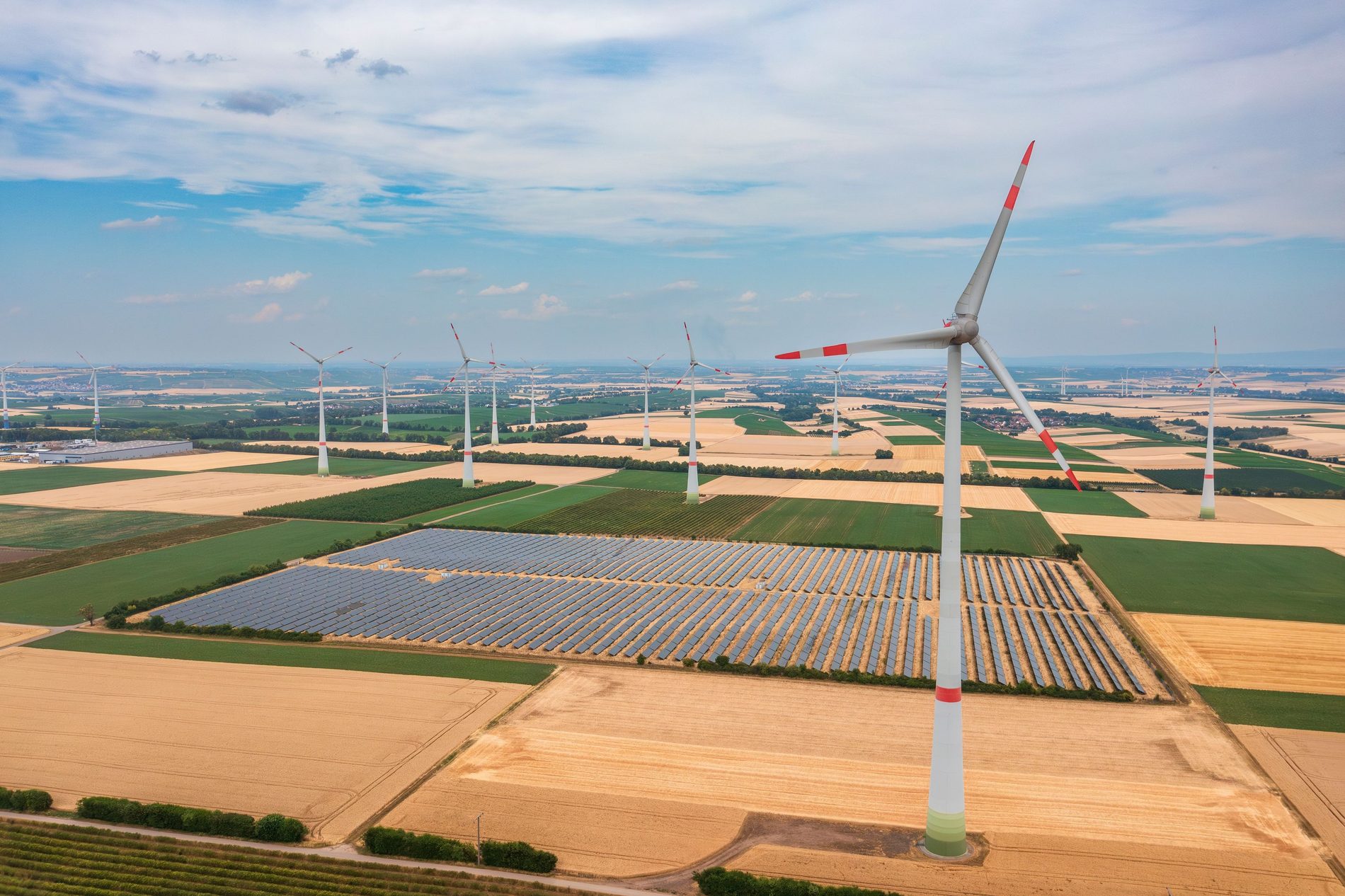
Image: Shutterstock
Halt the energy transition? Expert council calls for a change of course
The council is demanding a radical change of course. It proposes that Germany largely abandon its national climate policy and shift governance to the EU level, where a uniform CO₂ price would apply across all sectors. Furthermore, the experts call for an immediate halt to the dismantling of nuclear power plants, fossil-fuel power stations, and gas pipelines. They argue that nuclear plants not yet demolished should be brought back online, and they also advocate for the development of new, modern reactors. Another element they propose is the use of fracking combined with underground CO₂ storage. Overall, the panel calls for an energy system that is open to all technologies, rather than one fixated solely on renewable energy.
The Expert Council for Climate and Energy is led by economist Joachim Weimann from the University of Magdeburg. He summarizes the situation as follows: “The energy transition is taking an ever-greater share of our income without giving us anything in return.” Council member Martin Wiesmann points out that countries such as the USA, Canada, Finland, Sweden, and Poland have already adjusted their strategies, whereas Germany remains committed to its current path. Other members of the council include energy economist Manuel Frondel and nuclear energy expert Anna Veronika Wendland. The think tank identifies itself as being rooted in market-economy principles and advocates for emissions trading.
“Dunkelflaute” (a period of low wind and little sunshine) and blackouts: How great is the risk in the winter of 2026/27?
A “Dunkelflaute” refers to periods characterized by little wind and almost no sunlight. Analyses indicate that a 24-hour “Dunkelflaute” occurs nearly every month. Three-day events happen about twice a year, while periods lasting longer than five days remain the exception. The Federal Network Agency (Bundesnetzagentur) therefore sees no cause for panic. It has confirmed a grid reserve of 7,407 megawatts for the winter of 2026/27—an increase of 914 megawatts compared to the previous winter. The agency identifies gas-fired power plants as essential for ensuring a secure energy supply.
Critics, however, view the situation as more precarious. In November, gas storage levels are at their lowest point since records began. The association INES, which represents operators of over 90 percent of gas storage facilities, warns of a significant threat to supply security. Crisis preparedness expert Herbert Saurugg assesses the residual risk much more critically than the Federal Network Agency does. Meanwhile, the agency is developing a “security platform for electricity” (Sicherheitsplattform Strom), which is expected to be operational by the winter of 2026/27. In the event of a prolonged electricity shortage, this platform could coordinate mandatory load reductions for large-scale consumers. Consequently, the agency explicitly does not anticipate a widespread, large-scale blackout.
Electricity Costs and Grids: What Analyses Say Regarding the Warning
Other analyses provide context on pricing. According to the European Commission, German households paid approximately 31 percent more for electricity in 2025 than the EU average, while commercial customers paid about seven percent more. In a February 2026 modeling study, McKinsey projected annual system costs of 87 to 90 billion euros by 2035. It should be noted, however, that these are not costs that have already been incurred, but rather scenarios based on specific assumptions. Furthermore, digitalization is lagging behind: by the end of 2025, only 5.5 percent of electricity customers had an intelligent metering system, compared to an EU average of approximately 63 percent.
The statements made by the expert council cannot currently be verified, as the full report is not yet available. Moreover, a “Dunkelflaute” (a period with little to no wind or solar power generation) does not automatically result in a blackout. Whether existing reserves would suffice in an extreme scenario depends on factors such as temperature, energy imports, and the fill levels of gas storage facilities. Low gas storage levels exacerbate the situation, as gas-fired power plants are required to supply electricity during such periods of low renewable output. Consequently, the energy transition remains a matter of security of supply. The Federal Office of Civil Protection and Disaster Assistance already advises households to maintain a ten-day supply of essential goods; those who prepare in advance are significantly better positioned to cope with a regional power outage or, in a worst-case scenario, a total blackout.
Author: Blackout News
Sources: TKP (20.11.26) – Diebewertung (20.11.26) – Euronews (13.11.26) – Berliner Zeitung (13.11.26) – Deutscher Bundestag (29.10.26)