
In Germany, a period of low wind and solar output—known as a “Dunkelflaute”—drove exchange-traded electricity prices up nearly 24-fold over the course of four days in late October 2026. Between October 25 and 29, the daily average price climbed from 13.12 euros to 314.85 euros per megawatt-hour. This was triggered by a massive, roughly 90 percent drop in wind power generation. At the same time, conventional power plants had to step in to compensate for the shortfall, while high gas prices further increased the cost of electricity production. On October 29, the price of electricity even reached 574.28 euros per megawatt-hour at certain points. Companies that procure electricity on a short-term basis and consumers with dynamic pricing tariffs are particularly affected.
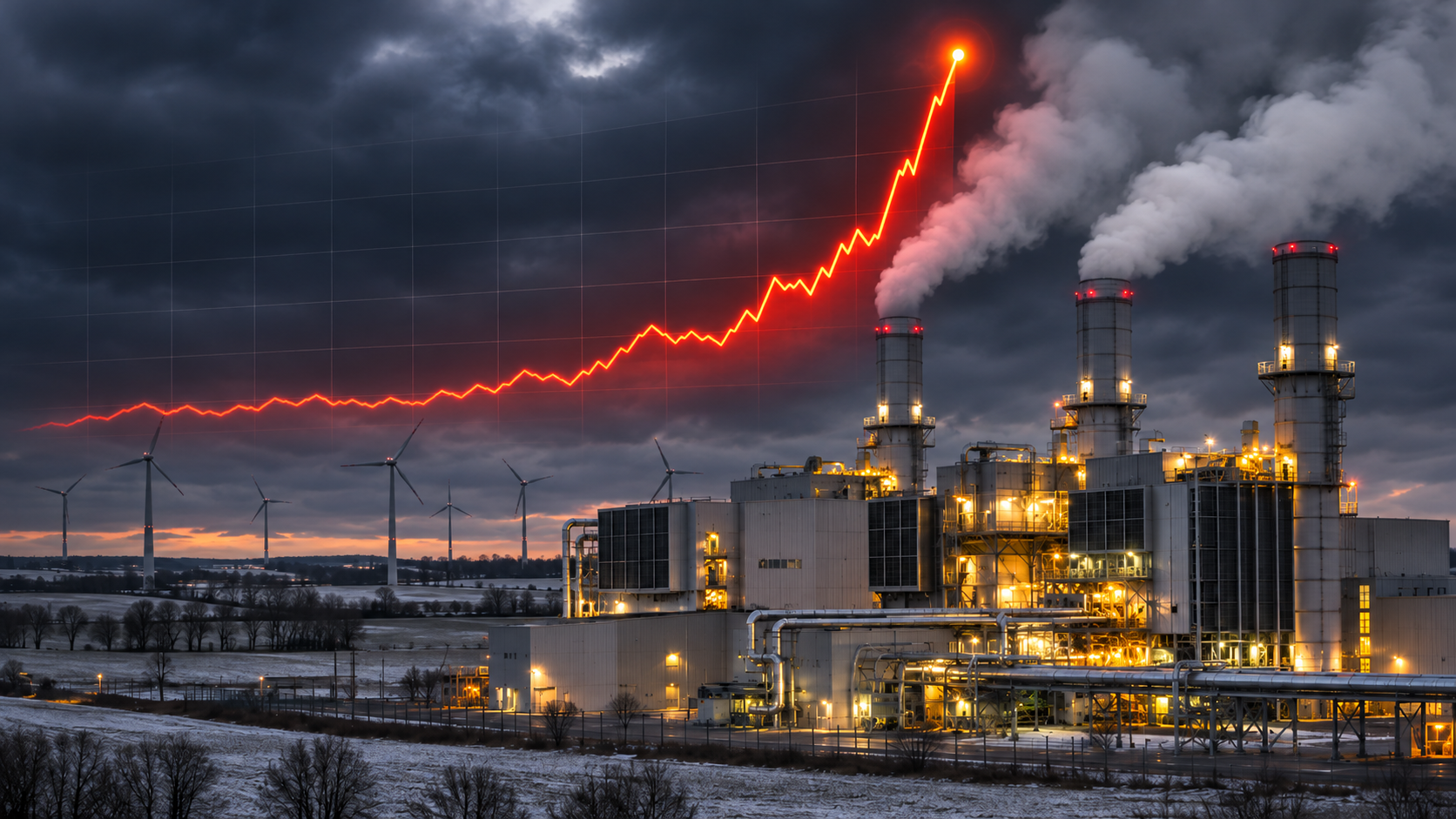
Image: AI-generated
90 percent of wind power vanishes within a few days
On October 25, German wind turbines were still generating approximately 1.11 terawatt-hours of electricity. Four days later, that figure had dropped to just under 109 gigawatt-hours—a collapse in wind power production of about 90 percent in a very short span of time. At the same time, the share of electricity demand met by wind and solar power fell significantly; on October 29, the two technologies combined provided only about 19 percent of the grid load on average for the day.
The situation became particularly acute on the evening of October 29. At 5:15 p.m., the wholesale electricity price reached 574.28 euros per megawatt-hour. Furthermore, Germany had to import a net total of approximately 138 gigawatt-hours of electricity that day. The price surge was not limited to a few isolated minutes, either; with an average price of 314.85 euros per megawatt-hour, the entire trading day was exceptionally expensive.
“Dunkelflaute” makes expensive gas-fired power plants indispensable
This price surge highlights a fundamental weakness of weather-dependent power generation. When winds are strong, wind turbines produce vast amounts of electricity, driving down market prices. Conversely, during periods of calm, this production can largely vanish within a few days. At such times, gas-fired power plants, coal-fired plants, and electricity imports are required to secure the supply. The situation becomes particularly costly when fuel prices also rise.
The European electricity market system amplifies this effect. In the “day-ahead” auction, the price is determined by the most expensive bid required to meet demand; consequently, if costly gas-fired plants must step in, the price for electricity from cheaper sources rises as well. At the same time, operators continue to rely on conventional power plants as a hedge against prolonged gaps in generation. The expansion of wind power has not yet fully replaced this firm, reliable capacity.
From a surplus of green energy to costly electricity imports
The events of October 24th illustrate just how much conditions can fluctuate. On that day, the average daily output from renewable energy sources theoretically exceeded Germany’s total grid load, resulting in a market price of only about 30 euros per megawatt hour. By the following Sunday, the daily average had fallen even further, to 13.12 euros. Yet, just a few days later, significant quantities of electricity had to be sourced from abroad.
This trend underscores the distinction between high installed capacity and the ability to generate power at any given moment. Even with more wind turbines, output remains minimal during widespread calm weather. While energy storage systems could partially offset these fluctuations, they require sufficient capacity—and energy that has been stored in advance. For extended periods of low wind and sunlight, Germany therefore remains dependent on dispatchable power plants and the European electricity market—both of which entail additional costs for their availability and operation.
Winter could further exacerbate electricity prices
The recent “dunkelflaute”—a period of low wind and solar output—coincides with the onset of the heating season. Energy analysts are already warning of significantly higher electricity prices in January 2027. According to an assessment by the industry service Montel, German wholesale prices could more than double compared to the previous year, even in the event of a mild winter. In a scenario involving extreme cold and low wind, analysts suggest that the average price for January could reach as high as 260 euros per megawatt-hour. It should be noted, however, that this is a scenario rather than a definitive price forecast.
Furthermore, there are the high costs associated with natural gas supplies. When wind-based power generation is low, gas-fired power plants take on a large share of the additional electricity production required. If the demand for gas for heating rises simultaneously with fuel prices, the cost of electricity also increases. Consequently, even an overall mild winter does not guarantee low electricity prices. The decisive factor remains how frequently periods of low wind coincide with high energy demand.
Industry Bears the Costs of Fluctuating Power Generation
Energy-intensive companies are particularly sensitive to such price spikes. For an operation with a short-term electricity demand of ten gigawatt-hours, a price increase of 300 euros per megawatt-hour would—theoretically—result in an additional cost of three million euros. However, this calculation only applies to volumes that must actually be procured at the higher price; long-term supply contracts can help mitigate such burdens. Conversely, for companies that purchase energy on a short-term basis, sharp price fluctuations undermine planning certainty.
Private consumers are not entirely shielded from these developments either. While short-term spikes on the power exchange do not immediately alter existing fixed-price contracts, the Federal Network Agency (Bundesnetzagentur) reported a modeled price of 38.62 cents per kilowatt-hour for new customers as early as September. Furthermore, the agency anticipated additional price increases for October. This highlights the economic challenge inherent in the power supply: Germany continues to expand its weather-dependent generation capacity while simultaneously requiring additional, reliable (dispatchable) power plant capacity. Consequently, a technically stable power supply is no guarantee of consistently affordable electricity.
Author: Blackout News
Sources: Berliner Zeitung (04.11.26) – VoltWatch (04.11.26) – Münster Aktuell (29.10.26) – e-motion (30.10.26)