
The only clinic on the island of Heligoland filed for debtor-in-possession insolvency on October 29, 2026. The move was prompted by demands for repayment from health insurance providers, amounting to a mid-seven-figure sum. The Nordseeklinik Helgoland has 24 beds and employs approximately 40 staff members. It ensures medical care for about 1,300 permanent residents and serves as a point of contact for nearly 300,000 vacationers, spa visitors, and day-trippers each year. The situation is particularly critical given that the mainland coast lies some 50 kilometers away; without an on-site surgical unit, injured individuals would be dependent on transport options that are difficult to secure during poor weather. For the time being, however, the clinic continues to operate as usual.
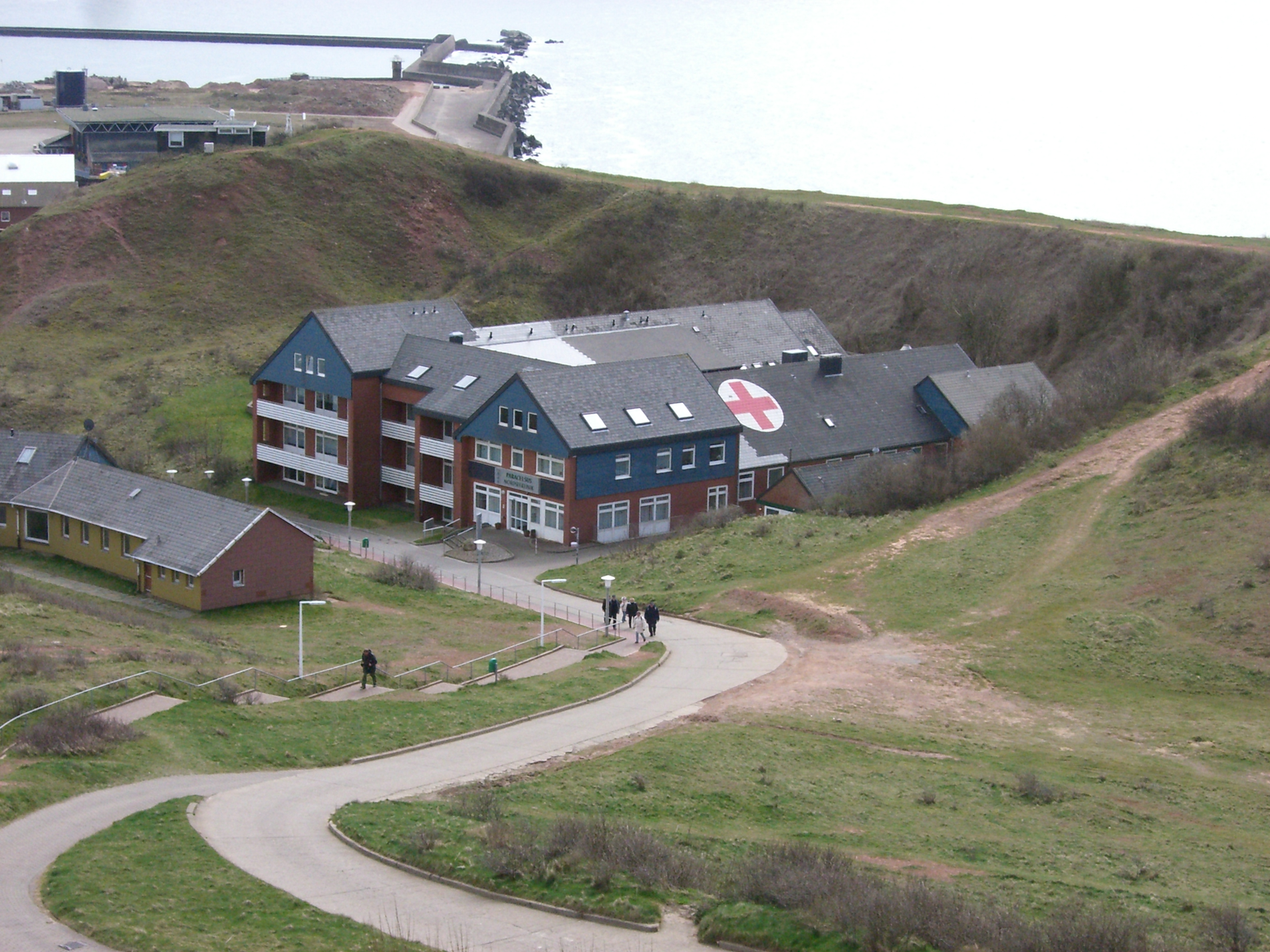
Image: Timo Kamph, Hamburg, CC BY 2.0, via Wikimedia Commons

Health insurance funds demand the return of millions in subsidies
At the heart of the hospital’s insolvency lies a conflict regarding the financing of medical standby services. Health insurance funds are seeking the repayment of “service assurance subsidies” (Sicherstellungszuschläge) that had already been disbursed. According to restructuring expert Frank Kreuznacht, the amount in question is in the mid-seven-figure range. The hospital is unable to meet these demands and disputes their validity. Consequently, the insolvency proceedings are also intended to facilitate an agreement regarding these legacy liabilities.
Service assurance subsidies are designed to fund hospitals that must maintain essential services despite having low patient numbers—which is precisely the economic challenge faced on the island of Heligoland. Maintaining a surgical standby service entails significant fixed costs, while the small local population generates only limited revenue from medical treatments. Yet, the hospital must remain operational even when no surgical emergencies occur for days on end. Thus, these multi-million-euro demands strike at the very facility whose unique role in providing essential care is precisely what justifies the allocation of additional public funding.
Hospital reform could put an end to surgery on Heligoland
Beyond the dispute over funding, the hospital reform threatens the existing range of medical services. The North Sea Clinic on Heligoland (Nordseeklinik Heligoland) is set to transition into a cross-sector care facility. While this model integrates outpatient and inpatient services, it focuses primarily on basic internal medicine and geriatric care. According to the clinic’s management, no provision is made for a dedicated surgical department. Consequently, Managing Director Sten Wessels is calling for a special arrangement to ensure that surgical procedures can continue to be offered.
The island’s geographical location makes this demand particularly urgent. On the mainland, other hospitals or private-practice surgeons are often within easy reach; Heligoland, by contrast, has no such alternatives. In the event of severe bone fractures, deep lacerations, or other surgical emergencies, precious treatment time could be lost. The clinic’s management argues that the hospital reform does not yet sufficiently account for these unique circumstances.
State government disagrees with clinic management – special arrangement remains unresolved
The Ministry of Health in Kiel, however, disputes the suggestion that a simple state regulation could resolve the issue. An initial legal review indicates that such a measure would be insufficient. Furthermore, the Ministry emphasizes that the hospital reform is not the cause of the clinic’s insolvency. The state government intends to maintain both inpatient and emergency care, though how it plans to secure long-term funding for surgical services remains an open question.
This creates a twofold uncertainty for the island. On one hand, the clinic must address existing claims amounting to millions; on the other, it requires a new financial foundation. Compounding this is the island’s reliance on ships and rescue helicopters—both of which can be rendered unavailable during severe storms. Heligoland’s mayor, Thorsten Pollmann, points to scenarios in which the island can remain cut off from the mainland for several days at a time. Simply relocating surgical services would not resolve these transport-related challenges.
The specialized Parkinson’s clinic is also set to be discontinued.
The financial difficulties now extend beyond surgical care. According to Mayor Pollmann, the neurology department—with its specialization in Parkinson’s disease—is also slated for closure. Moving forward, the Westküstenklinikum (West Coast Clinic) in Heide is expected to take over this role. This would mean Heligoland loses a medical specialty that has been developed over more than 40 years. For Parkinson’s patients in particular, this will result in longer journeys to access specialized treatment.
Until now, the neurology department has been an independent component of the local medical services, offering patients—among other things—precise medication management and complementary therapies. However, this planned closure is part of a separate development, distinct from the ongoing dispute over millions in funding. The clinic’s insolvency, combined with the planned reorganization of the specialized departments, further intensifies uncertainty regarding the future scope of medical care.
Hospital Operations Continue – Financing Remains Unresolved
The Nordseeklinik Helgoland is set to remain fully operational throughout the self-administration insolvency proceedings. The Pinneberg District Court has authorized preliminary self-administration, with Managing Director Wessels remaining in his position. He is being supported by restructuring expert Kreuznacht, while a court-appointed custodian oversees the process. Furthermore, pre-financing for insolvency payments has been initiated for the approximately 40 employees. The Schleswig-Holstein emergency medical services cooperative has also confirmed that its collaboration with the hospital will continue unchanged.
However, the continuation of operations does not equate to a long-term rescue. The critical factors are reaching an agreement on “security surcharges” (supplementary payments to ensure service availability) and securing reliable funding for medical services. Without these, it remains uncertain whether the existing emergency care can be maintained at its current scope in the long term. The insolvency thus highlights a fundamental contradiction: a medically essential facility can fail economically, even when there is no comparable alternative available locally.
Author: Blackout News
Sources: IBDat (04.11.26) – CNV Medien (02.11.26) – Schleswig Holstein (02.11.26)