
Virginia – On the morning of July 22, 2026, a power grid disturbance affected large parts of the largest US interconnected grid. A regional transmission line failed, prompting numerous data centers to automatically switch to emergency power supplies. As a result, more than three gigawatts of demand dropped out of the PJM grid within a short period—equivalent to around three percent of the interconnection’s total power consumption at the time. Voltage fluctuations extended from Washington to Chicago; meanwhile, customers reported flickering lights and unusual noises coming from electrical appliances. PJM also recorded a frequency fluctuation but no widespread blackout. According to Ting Labs, full stabilization took approximately ten minutes.
Power grid disturbance spreads across hundreds of kilometers
PJM supplies power to around 67 million people across the region stretching from the Atlantic coast to the Midwest. Consequently, the disturbance was not confined to the data center hub in Northern Virginia. Ting Labs’ sensor network detected voltage fluctuations along the U.S. East Coast and as far away as the Chicago area. In Northern Virginia, air conditioning units, refrigerators, and lighting systems also showed audible or visible reactions to the degraded voltage quality.
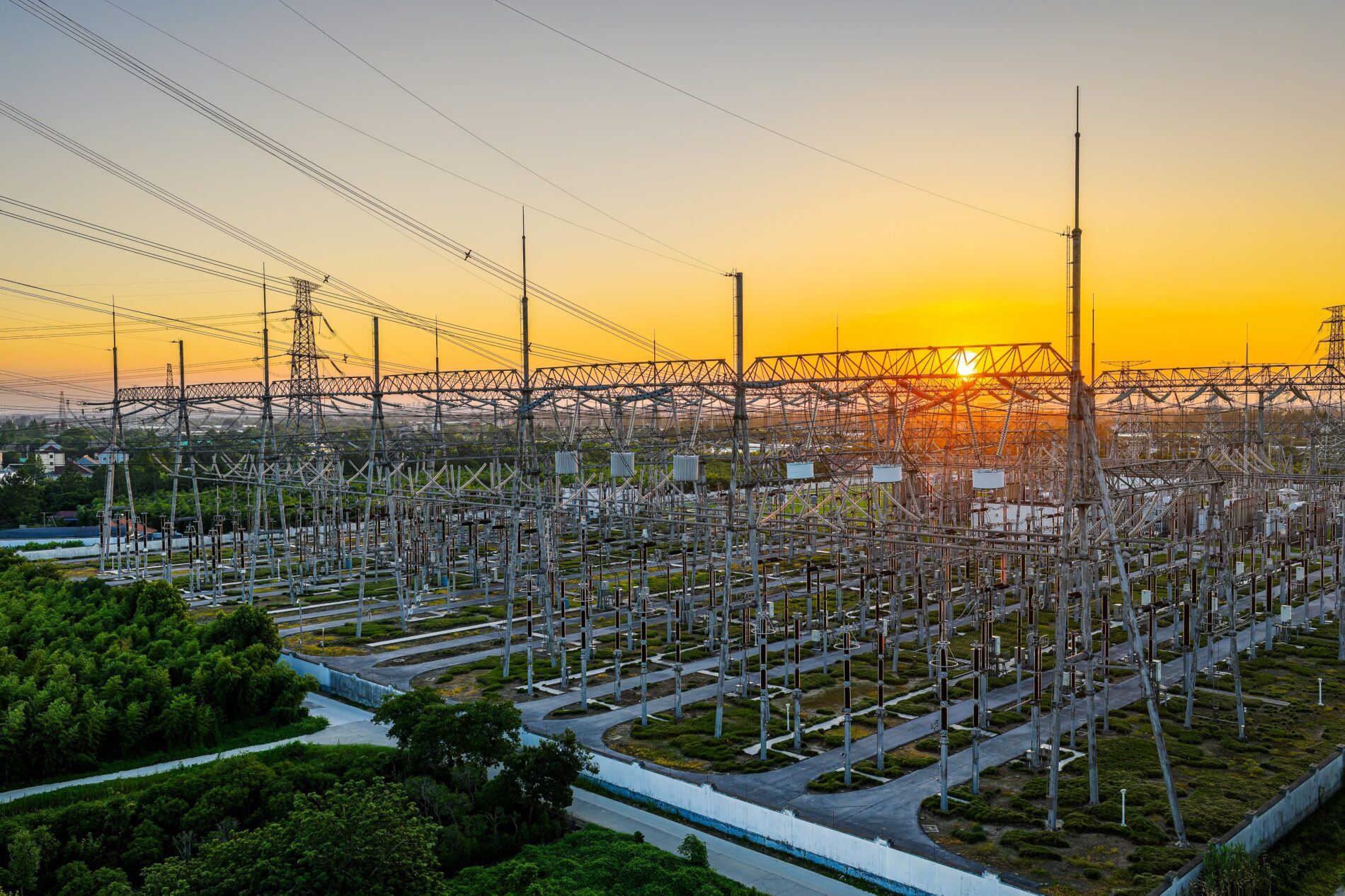
Image: Shutterstock
For grid operators, a sudden loss of load is just as critical as the unexpected failure of a large power plant. When demand drops, an excess of generation capacity remains in the system. This causes the frequency to rise, forcing power plants and balancing reserves to rapidly reduce their output. The grid disturbance thus demonstrated how local protection systems can trigger a need for large-scale balancing interventions.
Data centers turn a line fault into a massive load step
This event was not an isolated incident; it significantly exceeded previous occurrences in the same region. In July 2024, following a line fault, approximately 1.5 gigawatts of data center load switched to internal power supplies. This was followed in February 2025 by around 1.8 gigawatts across 18 substations and 44 transformers. However, the latest load step surpassed both these figures, affecting numerous facilities almost simultaneously.
Consequently, NERC now assesses entire clusters of sites—rather than just individual data centers—as potential sources of grid disturbance. Facilities in the same region often react to the same voltage dips and protection signals. As a result, a single line fault can cause several gigawatts of load to drop off the grid at once. This grid disturbance has now made this clustering effect visible on an unprecedented scale.
New rules aim to prevent simultaneous shutdowns
On July 16, the US regulatory agency FERC mandated new reliability standards for large, computer-intensive energy consumers. Consequently, the NERC is required to submit rules regarding their grid integration and binding registration criteria by the end of 2026. Key areas of focus include ride-through capabilities, protection parameters, measurement data, and coordinated reconnection procedures. Without such guidelines, data centers could continue to react correctly as individual units while collectively causing harm to the grid.
PJM is also planning a registry for consumers with a load of 50 megawatts or more at a single site. The grid operator intends to use this to track the location, capacity, and on-site power supply of large facilities. PJM projects an additional 70 gigawatts of demand from new large-scale consumers by 2038. At the same time, the most recent capacity auction fell short of the reliability target by approximately 6.8 gigawatts. Moving forward, the grid must therefore manage two opposing challenges: rapidly rising consumption and abrupt load losses in the gigawatt range.
Author: Blackout News
Sources: The Wall Street Journal (24.07.26) – Data Center Dynamics (24.07.26) – Reuters (23.07.26)