
Near Borna in the Leipzig district, the existing wind power site close to Thräna is set for a major overhaul in 2026: three older turbines are to be replaced by two turbines standing approximately 250 meters tall as part of a repowering project. The initiative is taking place against the backdrop of new wind power planning for the Leipzig-West Saxony region, while local residents and the citizens’ initiative “Gegenwind” complain of a lack of public input. Ultimately, however, the permitting process is the decisive factor: provided that regulations regarding noise, shadow flicker, species protection, and other requirements are met, political influence on the specific proceedings remains limited. For the affected communities, the project therefore entails a changed landscape, potential disturbances, and years of disruption to their immediate living environment.
Opportunities for input often end before the actual building application is submitted
The planned expansion does not involve a completely new wind farm site. Three older turbines with a combined capacity of around six megawatts are already located near Thräna. Now, however, they are to be replaced by two significantly larger wind turbines. While this reduces the number of turbines, their visible height increases substantially.
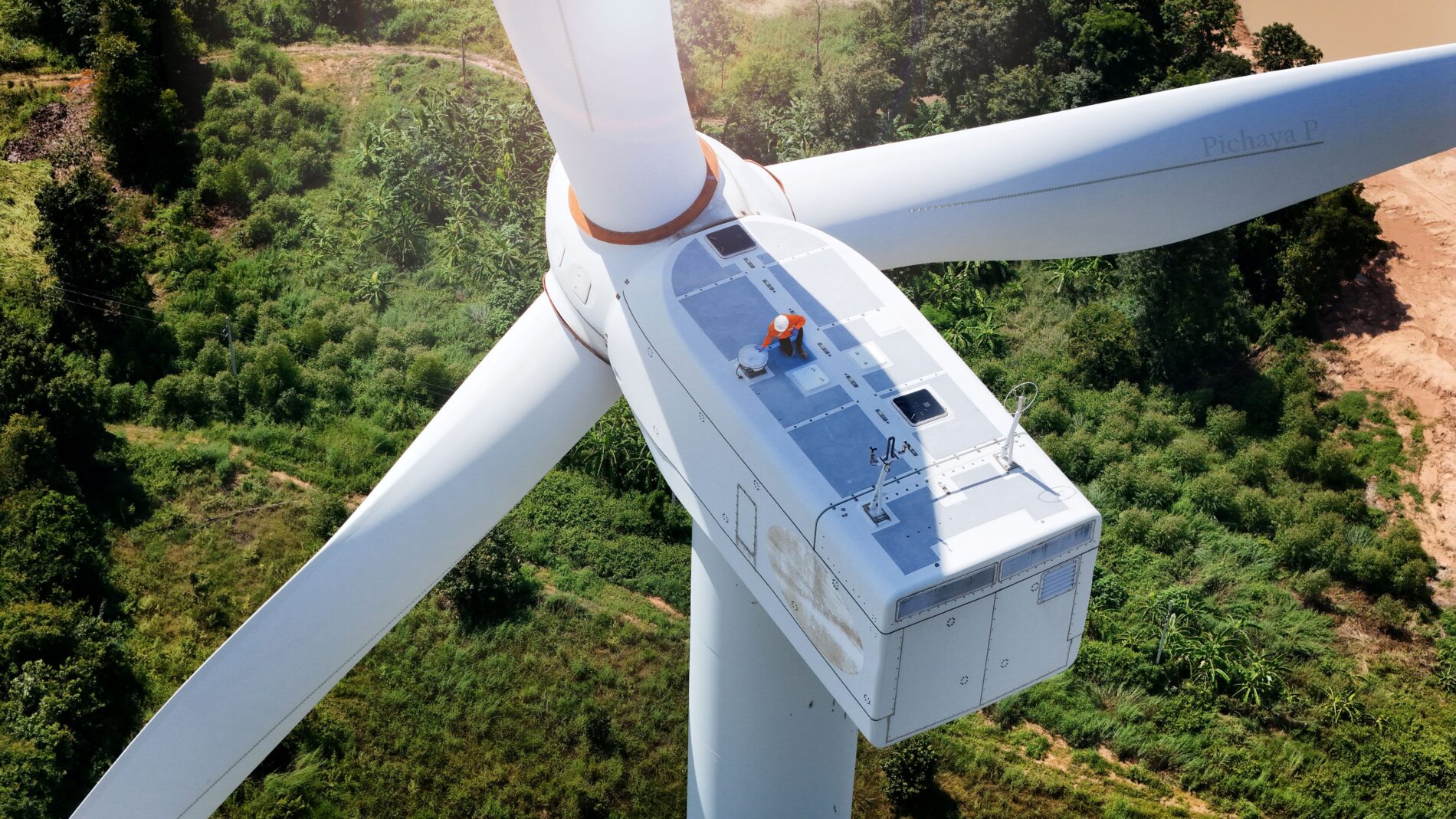
Image: Shutterstock
Modern wind turbines in the Leipzig district now frequently reach total heights of 250 to 290 meters. Consequently, the new turbines near Borna would significantly tower over many older wind farms. Moreover, structures of this size dominate the landscape over long distances. For local residents, therefore, it is not just the number of turbines that matters, but above all their height.
Permitting laws limit political influence
Conflict also arises from the nature of the approval processes. Citizens often expect to have a direct say in specific construction projects. However, this is only possible to a limited extent with wind turbines; the permitting procedure under immission control law applies to any turbine taller than 50 meters.
For projects involving only two turbines, this procedure is often streamlined. In such cases, there is no automatic public participation unless an environmental impact assessment is required. A project can thus move forward legally, even though many residents expect greater involvement. The crucial decisions are actually made at an earlier stage—during regional planning.
Regional plan sets the framework for new wind energy zones
The Leipzig-West Saxony region is currently revising its land-use planning for renewable energy. Documents for the second draft of the partial plan update were made available for public review until mid-June 2026, allowing citizens, municipalities, and associations to submit comments. Nevertheless, many affected residents feel sidelined when a specific project takes shape right on their doorstep.
The city of Borna also provided information regarding wind power and photovoltaics, and the Wyhratal local council addressed the Thräna site. Yet the criticism remains that providing information is no substitute for genuine participation. From the residents’ perspective, early notification is insufficient when the final decision rests with the permitting authority.
Leipzig District Calls for Setback Distances and Fair Distribution
In its wind power planning, the Leipzig District emphasizes the importance of minimum setback distances, the protection of sensitive areas, and a more balanced distribution of turbines. At the same time, the region is required to designate new land for wind energy; following a policy change, Saxony now mandates that 1.3 percent of the region’s total area be allocated to wind power. Consequently, existing sites are coming under greater scrutiny.
Repowering is considered a preferred approach because it allows for the continued use of established sites. However, the new generation of turbines changes the scale of many projects. Near Borna, for instance, three smaller turbines are set to be replaced by two significantly taller structures. While this increases output for operators, local residents would face a more pronounced visual impact.
Several points crucial to the project’s assessment remain unresolved. These include the precise locations, the distances to the communities of Thräna, Wyhra, and Neukirchen, and potential requirements regarding noise, shadow flicker, and wildlife protection. It also remains to be determined whether an environmental impact assessment will be necessary. Only when these details are clarified will the true extent of the impact on the affected communities become apparent.
Author: Blackout News
Sources: Leipziger Volkszeitung (20.06.26) – Landkreis Leipzig (Stand 30.06.26) – Regionaler Planungsverband Leipzig Westsachsen (Stand: 30.06.26)