
Lufthansa plans to further scale back its European short- and medium-haul network and withdraw up to 15 aircraft from service at its German hubs. This move is driven by persistent losses on European routes, even though some individual connections remain profitable; the group, however, no longer intends to use these profits to permanently subsidize underperforming routes. Consequently, the impact will be felt by travelers, smaller European destinations, and—above all—the Frankfurt hub, which operates at higher costs than Munich.
Lufthansa reshuffles its European network
CEO Carsten Spohr explained the latest cutback to employees by citing the earnings situation in European operations. “We still have too many routes that are generating losses,” he said. Consequently, the short- and medium-haul fleet is set to shrink further in 2027.
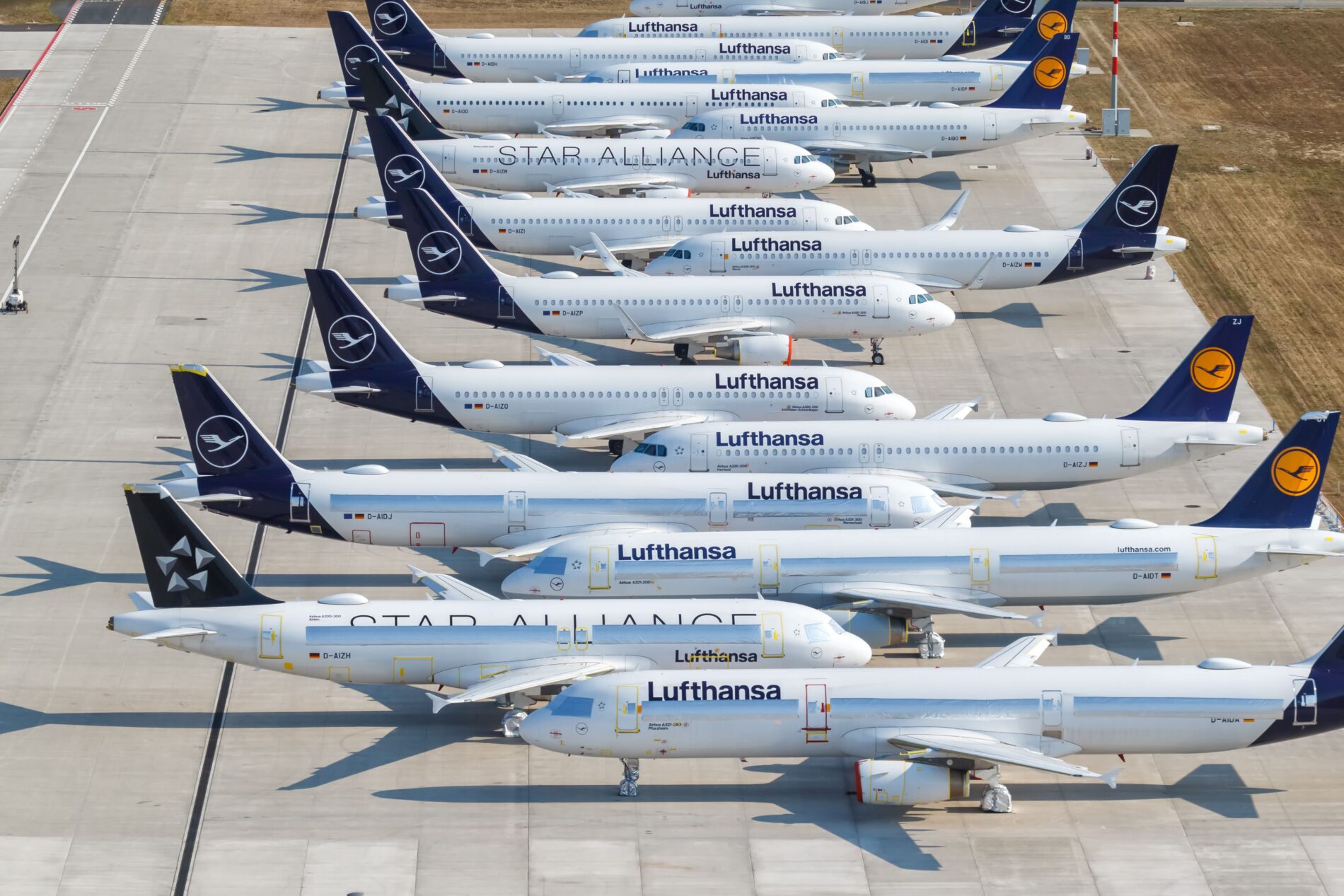
Image: Shutterstock
This move follows cutbacks in the current summer flight schedule. Lufthansa had already cancelled around 20,000 short-haul flights through October due to fuel costs, strikes, and the grounding of CityLine operations. Furthermore, the discontinuation of CityLine has resulted in the loss of 27 operational regional aircraft that previously served many feeder routes.
Frankfurt loses ground while Munich grows
The restructuring is particularly evident at the two German hubs. While Frankfurt remains the largest base, the group’s management notes a cost disadvantage of around ten euros per passenger compared to Munich. Consequently, Munich is likely to benefit more from capacity expansion.
The long-haul fleet is also shifting its focus toward Bavaria. The eight remaining Airbus A380s will stay stationed in Munich. Lufthansa is also expecting deliveries of new Airbus A350-1000s and Boeing 777-9s, though the first 777-9 is not scheduled to arrive until the first quarter of 2027.
Collective bargaining to determine future consequences
Behind the scenes, the group is negotiating with the pilots’ union Vereinigung Cockpit and the cabin crew union UFO regarding productivity and costs. Lufthansa aims to make its core brand more cost-efficient rather than simply cutting routes. However, the pilots’ union has criticized management for “apparently playing for time.”
The dispute is therefore critical for employees. If the cost base does not decrease, lower-cost subsidiaries within the group could take over a larger share of European traffic. Internally, Spohr has made it clear that he will not accept a model in which other airlines within the group grow while the core brand continues to shrink.
Fewer Options for Passengers
For travelers, the restructuring primarily means fewer direct flights on lower-demand European routes. Some destinations may become less frequently accessible, while others could be served via hubs such as Munich, Zurich, Vienna, Brussels, or Rome. Additionally, layover times may increase as the group consolidates feeder flights more heavily.
Although the German government is lowering the air travel tax starting July 1, the reduction for short-haul flights is modest—dropping only from €15.53 to €13.03 per passenger. Consequently, this relief does little to address the underlying problem, particularly given that Germany continues to lag behind the rest of Europe in air travel recovery. Industry data indicates that seat capacity from June to November 2026 will reach only 92 percent of 2019 levels, whereas the figure for Europe (excluding Germany) is significantly higher.
Author: Blackout News
Sources: Süddeutsche Zeitung (29.06.26) – Aero (29.06.26) – Welt (27.06.26) – BR24 (21.04.26)