
Tschernitz – In early August 2026, final efforts to save Glasmanufaktur Brandenburg (GMB) definitively failed. No new investor was found for the insolvent manufacturer, even though talks with an interested party were still underway as late as April. As a result, the European solar industry is losing its last source of solar glass production. The company’s workforce—numbering around 160 at the end—had already received termination notices in the spring. Key factors included a lack of financing options and years of international price pressure; GMB also pointed to cheaper, and in some cases subsidized, competition from China. Plans are now in place to liquidate the machinery, equipment, and the property.
Search for investors fails – focus shifts to machinery and land
As recently as April, the insolvency administrator had held talks regarding the continuation of operations at the site. However, these discussions proved fruitless. Subsequently, no interested parties came forward to take over production and financing for the glass manufacturing plant. Consequently, the proceedings are now focused on the liquidation of business assets. Mayor Frank Zeißler fears that the site will be broken up and dismantled. He aims to prevent the creation of an industrial wasteland in the middle of Tschernitz.
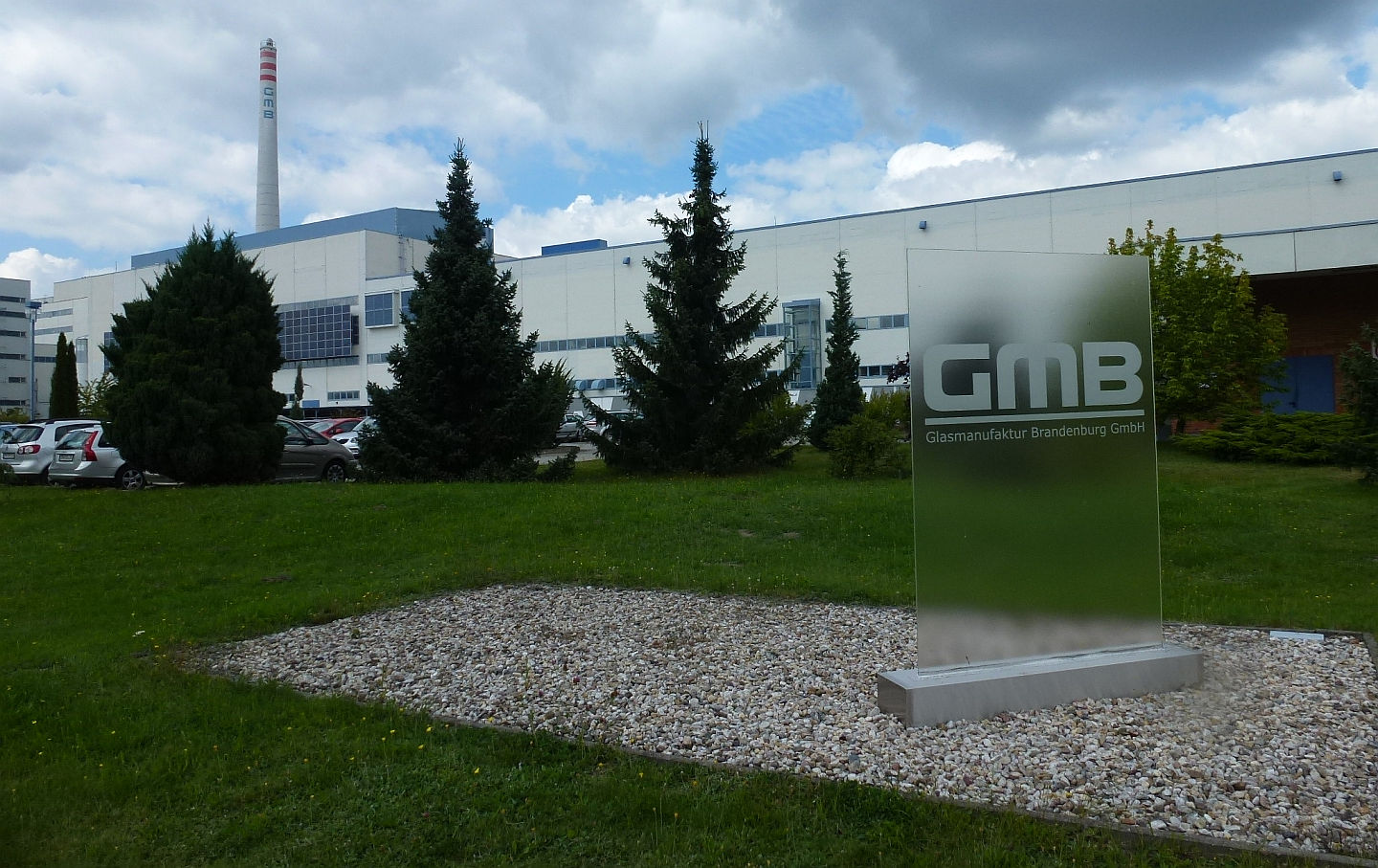
Image: Tnemtsoni, CC BY-SA 3.0, via Wikimedia Commons

However, the decline of Glasmanufaktur Brandenburg (GMB) began much earlier. GMB filed for insolvency in July 2025, having previously relied on short-time work for months. An investor deal intended to save the jobs of the approximately 220 employees at the time had already fallen through by late November. Many staff members had been placed on leave since December. Ultimately, in the spring, the remaining workforce of around 160 employees received termination notices. For the solar industry, this means the loss of not only a supplier but also specialized manufacturing expertise within Europe.
Solar industry loses strategic manufacturing capacity in Europe
Glass production in Tschernitz has a long history. GMB itself was established in 2007 and commenced production in 2008; prior to that, Samsung Corning had manufactured television glass at the site. In 2022, the Indian specialty glass manufacturer Borosil Renewables acquired a majority stake in GMB. At the time, the company had even planned to expand capacity in Europe. However, those expansion plans increasingly gave way to a struggle to ensure the economic viability of the existing plant.
GMB had warned of a potential closure as early as 2024. At that time, the company called for political measures to protect European manufacturers. However, a “resilience bonus” that had been under discussion was not included in the German government’s solar package. Brandenburg also subsequently advocated for better competitive conditions and lower energy costs. Meanwhile, the solar industry remained heavily dependent on imports. The EU Commission continues to identify China as the dominant supplier of imported solar modules.
EU aims to boost production – but help arrives too late for Tschernitz
The EU responded as early as 2024 with the European Solar Charter. It aims to strengthen European PV manufacturing through support programs, procurement criteria, and investment aid. Additionally, the initiative seeks to diversify supply chains and retain strategic production capacities within Europe. The Commission points to multi-billion-euro programs for clean technologies; however, these measures did not arrive in time to secure a viable investor for Tschernitz.
For the Lusatia region, this closure signifies more than just the loss of a single facility. The trade union IG BCE sees few comparable alternatives in the region, particularly for younger skilled workers; consequently, it is assisting former employees with further training and job placement. At the same time, the region loses an industrial employer with a decades-long tradition of glass manufacturing. Europe is now reliant on production outside the continent for solar glass. This means that import dependency is increasing for a key photovoltaic component—of all things.
Author: Blackout News
Sources: Tagesschau (10.08.26) – rbb24 (10.08.26) – Brandenburger Wirtschaftsministerium (28.11.25)