The solar company Energiekonzepte Deutschland (EKD)—a nationwide provider of photovoltaic systems, battery storage units, and heat pumps—has filed for insolvency. The Leipzig-based firm submitted its insolvency petition on October 2, following a refusal by the British financial investor Pemberton to provide further funding. Despite having installed more than 45,000 solar systems—with a recent rate of approximately 1,000 installations per month—the company’s financing ultimately collapsed. While business operations are continuing for the time being, many customers now face uncertainty regarding the completion or repair of their systems. Of particular concern is EKD’s announced termination of warranty coverage; affected customers could face significant additional costs, while approximately 400 employees are left fearing for their professional futures.
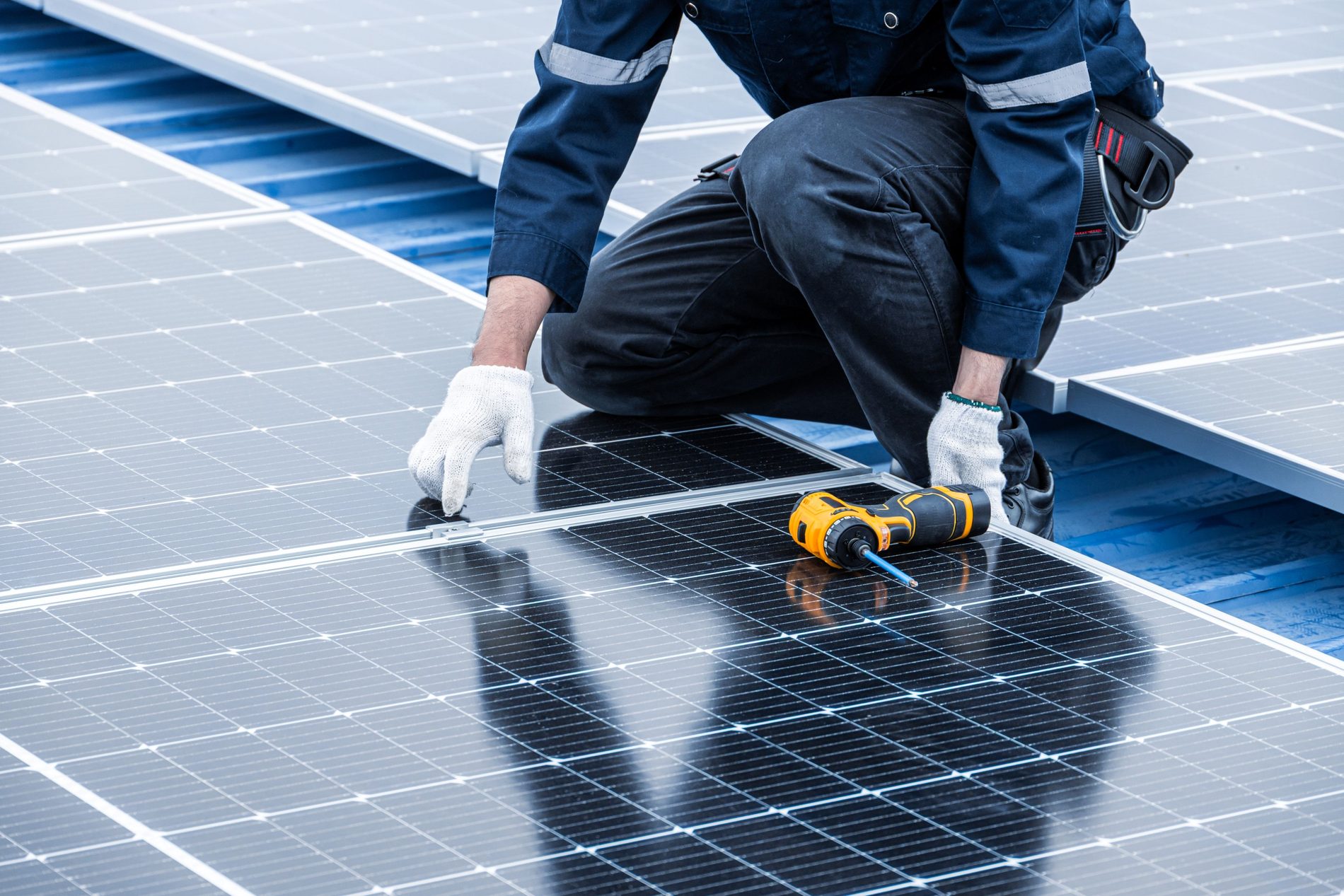
Image: Shutterstock
Insolvency of the solar company jeopardizes repairs and guarantees
For many customers, bankruptcy begins a financially risky state of limbo. Attorney Daniel Blazek already represents dozens of those affected with various problems. Some are waiting for their systems to be completed, while others are asking in vain for technical deficiencies to be corrected. What is particularly serious, however, is the announcement by the insolvency administrator that he will no longer provide guarantees in the future. This means that owners could have to pay for necessary repairs themselves. Although statutory warranty claims continue to exist in principle, their enforcement against an insolvent company is uncertain.
A case from Dresden shows how serious the consequences can be. A homeowner there bought a photovoltaic system including battery storage and heat pump from EKD. However, the solar system is not allowed to go into operation because the responsible network operator objects to the electrical installation. The owner reports damaged cable insulation, faulty wiring and missing test documents. Despite complaints, the defects initially remained. This means that the customer cannot use their investment as intended, while there is a risk of additional costs for technical improvements.
Financing Fails – Investor Withdraws
The economic difficulties faced by the solar company have a backstory. Founded in 2018, EKD expanded significantly during the German photovoltaic boom. The company established 15 locations nationwide and, by its own account, installed more than 45,000 solar energy systems. Nevertheless, its business model began to falter in the face of declining demand and financial distress. In 2025, the London-based financial investor Pemberton acquired EKD and subsequently supported a restructuring process. However, in early October, the investor ceased further funding.
Pemberton cited the persistently weak solar market and a lack of viable economic prospects as the reasons for its withdrawal. Prior to this, the investor had provided financial aid, overhauled the company’s management, and supported restructuring efforts. Evidently, these measures were insufficient to secure long-term financing. Consequently, six entities within the EKD Group filed for insolvency, and the group announced that a seventh entity would also file for insolvency. The approximately 400 employees will initially receive insolvency benefits for a period of three months, while the future of the company’s various locations remains uncertain.
Failure of System App Reveals Further Dependencies
Beyond outstanding repairs, customers face additional challenges related to digital services. In one instance, a system owner experienced a temporary outage of the app used to control their solar installation. This was caused by EKD’s failure to make payments to the relevant system operator. Although the application is now functional again, the incident highlights another vulnerability: even technically sound solar installations can face operational limitations if essential software services are no longer available.
Photovoltaic systems equipped with battery storage often rely on digital energy management systems. These systems coordinate functions such as self-consumption, battery storage operation, and, in some cases, connected heat pumps. However, the actual scope of functionality depends on the specific technical equipment installed. Consequently, the insolvency of the installer does not necessarily mean the system will cease to operate. Nevertheless, customers face an additional risk if maintenance, software access, or control functions are dependent on the original provider.
Insolvency administrator promises continued operations – customers left in uncertainty
The provisional insolvency administrator, Lucas Flöther, intends to keep the business running for the time being and complete existing customer orders. However, this does not guarantee the final completion of all systems. The economic developments during the provisional insolvency proceedings will be the deciding factor. According to current information, a decision on whether to formally open insolvency proceedings is expected on December 1st. Only then will it be possible to reliably assess which contracts the company can still fulfill.
Attorney Blazek considers it unlikely that the entire corporate group will continue to operate as it has until now. He views it as more probable that individual parts of the business will be sold off and subsequently continued under new ownership. Meanwhile, according to media reports, some sales staff have already moved on to other companies. The consumer advice center (Verbraucherzentrale) therefore recommends that affected customers secure all their contract documents and proof of payment. Furthermore, they should contact the insolvency administration and refrain from making any further unsecured advance payments.
Customers could be left facing significant financial losses
This insolvency highlights a fundamental issue when purchasing energy systems intended for long-term use. Homeowners often invest five-figure sums, anticipating decades of savings on their electricity costs. However, if the installation company fails, warranty claims may become economically worthless. While manufacturers may continue to provide guarantees for individual components under certain conditions, they are not automatically liable for faulty installations, defective wiring, or incomplete work.
The situation becomes particularly difficult in cases where systems have been largely paid for but are not yet operational. If owners hire other contractors to complete the work, they may incur substantial additional costs. At the same time, the use of the system is delayed, while financing installments may continue to fall due. Whether any resulting losses can be recovered depends on the specific terms of the contracts and the insolvency payout (the percentage of claims that can be settled from the company’s remaining assets). For those affected, what was intended as a sound economic investment can thus turn into a long-term financial burden.
Author: Blackout News
Sources: MDR (25.10.26) – MDR (22.10.26) – EKD (13.10.26) – Handelsblatt (01.10.26)