
In early November 2026, Miele is set to evaluate a further relocation of production to Poland. This could result in the loss of approximately 100 additional jobs in Gütersloh. As part of a restructuring of its production operations, the company had already announced the elimination of about 700 jobs at that location in 2024. Other firms, including Oventrop and the U.S.-based automotive supplier Inteva, are also shifting manufacturing from Germany to Poland. At the same time, the number of German companies being acquired by Polish entities is on the rise; the economic institute PIE has identified nine such acquisitions slated for 2025. Furthermore, on November 16, Warsaw strengthened its state-backed “Team Poland” initiative. These production relocations are costing jobs in Germany, while Polish investors are increasingly gaining control over German companies through acquisitions.
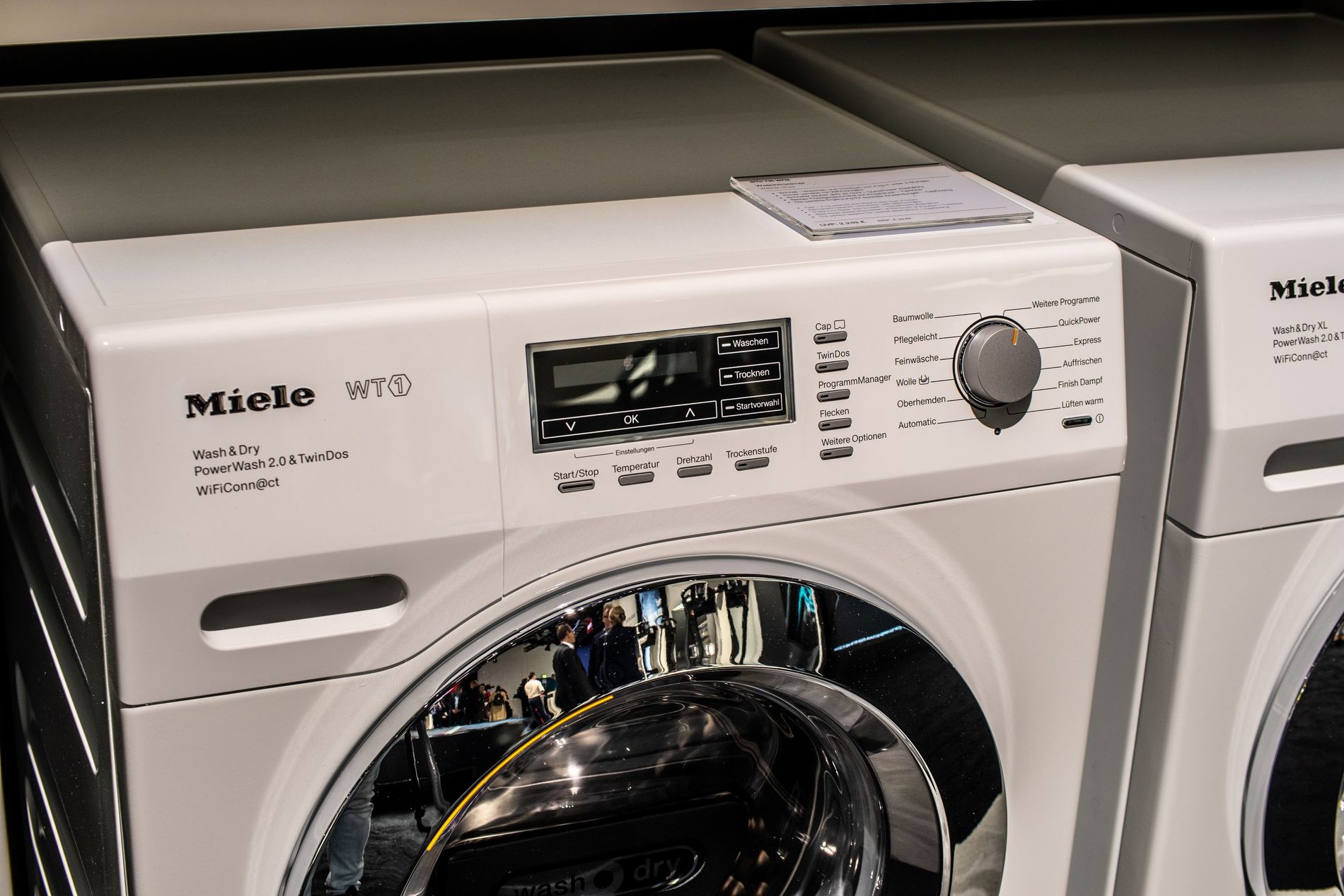
Image: Shutterstock
Relocation of production extends to Miele’s premium models
In 2024, Miele announced plans to assemble nearly all of its domestic washing machines in Ksawerów, Poland, by 2027. At the time, it was intended that high-end production would remain in Gütersloh. Miele is now considering relocating this remaining production as well, for the period after 2030. No decision has been made yet, but according to WDR, this option would affect an additional 100 jobs. For now, development, the press shop, and the foundry will remain at the company’s German headquarters.
At Oventrop, the shift in production is already becoming apparent across its sites. The valve manufacturer intends to close its plant in Olsberg and move assembly operations from Brilon to Szydłowiec, Poland. This will affect 185 jobs in Brilon, while the facility in Poland is set to expand from 15,000 to 25,000 square meters. Similarly, Inteva is moving production from Plattling, Bavaria, to Opole, Poland, where the workforce is expected to grow from approximately 550 to nearly 600 employees. Furthermore, plans are in place to begin manufacturing a front-end assembly for the VW ID. Buzz starting in 2028.
Polish Acquisitions Bring Control Over German Brands
In 2025, Polish companies acquired a total of 45 firms abroad, including nine in Germany. However, such acquisitions do not automatically guarantee new production capacity in Poland. For instance, office furniture manufacturer MDD acquired the insolvent German company CEKA in Alsfeld, where production has been maintained. In July 2026, PESA acquired the Leipzig-based tram manufacturer HeiterBlick, securing approximately 250 jobs. Consequently, Polish capital is gaining influence over German industrial enterprises without necessarily leading to the closure of every facility.
Other acquisitions extend beyond traditional industrial operations. In 2025, the Polish confectionery manufacturer Colian merged with Gubor. Additionally, Wirtualna Polska acquired the travel platform group Invia for approximately 243 million euros. Meanwhile, the planned acquisition of Harzer Reifenhandel by Grupa Recykl has yet to be finalized; negotiations are ongoing through the end of 2026, with the maximum purchase price recently adjusted downward to 8.37 million euros. Nevertheless, these examples illustrate that Polish buyers are seeking established brands, customer relationships, and technical expertise.
Warsaw Supports Acquisitions with State Capital
On November 16, PKO Bank Polski, the insurer PZU, and the Warsaw Stock Exchange joined the “Team Poland” initiative. This brings the number of participating institutions—which provide financing, guarantees, and support for international business—to nine. The state-owned development bank BGK plans to allocate an additional seven billion zlotys by 2030 to support exports and international operations, though these funds are not earmarked exclusively for acquisitions. Furthermore, the Polish Development Fund (PFR) offers equity capital to Polish companies pursuing acquisitions abroad.
The distinction from Germany is also evident in strategic orientation: Polish firms are no longer content to merely act as suppliers fulfilling external contracts. They increasingly aspire to become owners of foreign companies themselves. Nevertheless, Germany remains by far the larger source of capital: German direct investment in Poland surpassed 60 billion euros for the first time in 2025. According to the AHK (German-Polish Chamber of Industry and Commerce), 94.5 percent of the investors surveyed would choose Poland again. At the same time, many criticize the tax burden, bureaucracy, and a lack of political predictability there.
High Energy Costs Threaten Germany as a Business Location
For Germany as a business location, energy prices and labor costs are intensifying the competition to attract new manufacturing facilities. In the second half of 2025, Eurostat recorded electricity costs of 22.64 cents per kilowatt-hour for non-household customers in Germany falling within a medium-consumption bracket. This ranks among the highest rates in the EU—though Poland, too, is grappling with rising energy costs. A KPMG survey reveals that 26 percent of the companies polled are considering relocating production to Central and Eastern Europe; however, only four percent have concrete plans to do so within the next twelve months. Consequently, while German industry is not seeing an immediate, across-the-board loss of manufacturing, it is actively re-evaluating its existing locations.
The long-term damage to Germany as a business location will not be determined solely by what happens on assembly lines. For instance, Miele has kept its development operations and key manufacturing stages in Gütersloh, even as Polish investors gain decision-making power through acquisitions. To succeed in this, Poland requires a reliable tax framework, well-developed industrial sites, and secure power connections. Germany, for its part, must improve energy costs, streamline permitting processes, and enhance investment conditions if its industrial sector is to remain competitive. Otherwise, the relocation of production will continue, and Germany will gradually lose both jobs and industrial value creation.
Author: Blackout News
Sources: Polnisches Wirtschaftsministerium (16.11.26) – PFR (16.11.26) – WDR (10.11.26) – PFR (04.11.26) – AHK Polen (29.10.26)