
In Germany, cement consumption figures from late June 2026 starkly illustrate the severity of the construction crisis. According to the Federal Association of Building Materials – Stones and Earth, cement consumption is approximately 30 percent below 2020 levels. The association also notes that, regarding this building material, Germany and France have reverted to levels last seen before the Second World War. These trends are driven by high financing costs, rising construction prices, expensive ancillary building costs, and weak investment. Consequently, cement plants, concrete manufacturers, raw material suppliers, and construction companies are all facing simultaneous pressure.
Cement becomes the yardstick for the construction crisis
BBS President Dominik von Achten describes the situation with unusual bluntness: “Cement consumption in Germany is currently around 30 percent below 2020 levels. This is no longer stagnation; it is recession.” Yet cement serves as an early indicator of whether housing, industrial halls, bridges, tunnels, and foundations are actually being built.
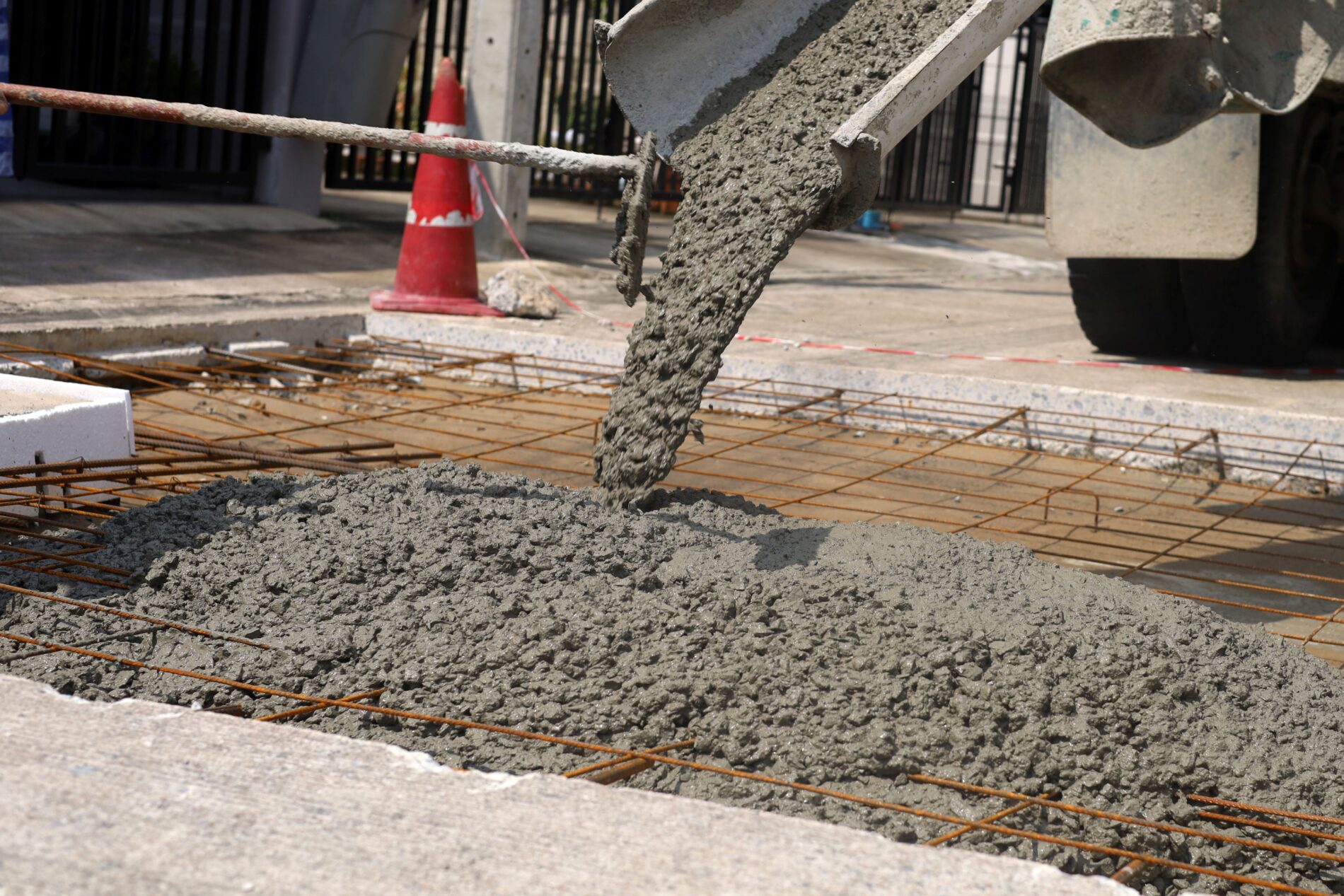
Image: Shutterstock
Lower cement shipments mean fewer structural shells and less infrastructure being built. Consequently, the slump affects more than just individual plants; it demonstrates that existing demand is barely translating into actual orders. Furthermore, the building materials industry continues to face high fixed costs even as capacity utilization declines.
Residential construction remains far below demand
Residential construction has so far provided little relief. Von Achten notes: “Residential construction remains in the doldrums.” Destatis reported only 206,600 completed housing units for 2025—an 18 percent decrease compared to 2024. As a result, Germany is drifting further away from its target of 400,000 new homes per year.
However, there are early signs of recovery in building permits. Between January and April 2026, authorities approved the construction of 83,700 housing units—up 13.2 percent from the same period the previous year. Nevertheless, this does not immediately translate into construction activity; months often elapse between the granting of a permit, the securing of financing, and the start of construction.
Building construction declines; civil engineering insufficient
Current order data confirm the divergence within the construction sector. In April 2026, the total volume of incoming orders in the main construction industry remained unchanged in real terms compared to March. However, orders for building construction fell by 6.7 percent month-on-month and were 6.5 percent lower than in April 2025.
Civil engineering, by contrast, performed better, with orders rising by 6.5 percent month-on-month and 7.4 percent year-on-year. Yet, this sector has not been enough to broadly stabilize the building materials industry, as demand for cement, gravel, sand, and concrete depends on a mix of residential construction, commercial building, and public infrastructure projects.
Special Infrastructure Fund Barely Reaching Construction Sites
The industry is pinning its hopes on the federal government’s special infrastructure fund. So far, however, the announced funds are barely translating into new projects. Consequently, the BBS has downgraded its 2026 forecast from two percent growth to stagnation. Von Achten cites a long winter, geopolitical uncertainty, and a lack of reforms as reasons.
The crisis is hitting a major domestic basic materials industry. The BBS points to a sector comprising 140,000 employees, 6,000 companies, and 38 billion euros in annual revenue. It is therefore not just a matter of housing and bridges; it is also about industrial jobs, the supply of raw materials, and the question of whether Germany can actually renew its infrastructure.
Author: Blackout News
Sources: Die Presse (28.06.26) – Welt (27.06.26) – Schüttgut (25.06.26) – BBS (Stand: 29.06.26) – Statistisches Bundesamt (25.06.26)