
When they return home, residents of the small housing development on the outskirts of Hudiksvall, Sweden, plug their electric vehicles into charging stations—but not just to charge them. They also use them to supply power to their homes. Thanks to so-called bidirectional charging, the eight families living there save significantly on electricity costs.
“We use the cars to power our homes when our energy demand is high,” says 33-year-old Filip Kiltorp. When not in use, electric vehicles store surplus energy. Using a bidirectional charger, this energy can be fed back into the grid to power appliances like the refrigerator or the lighting.
The system’s control software ensures that the car batteries are charged during periods of low household electricity consumption. During peak load times—when grid electricity is most expensive—or during power outages, it reverses the flow of energy, feeding electricity back into the local grid.
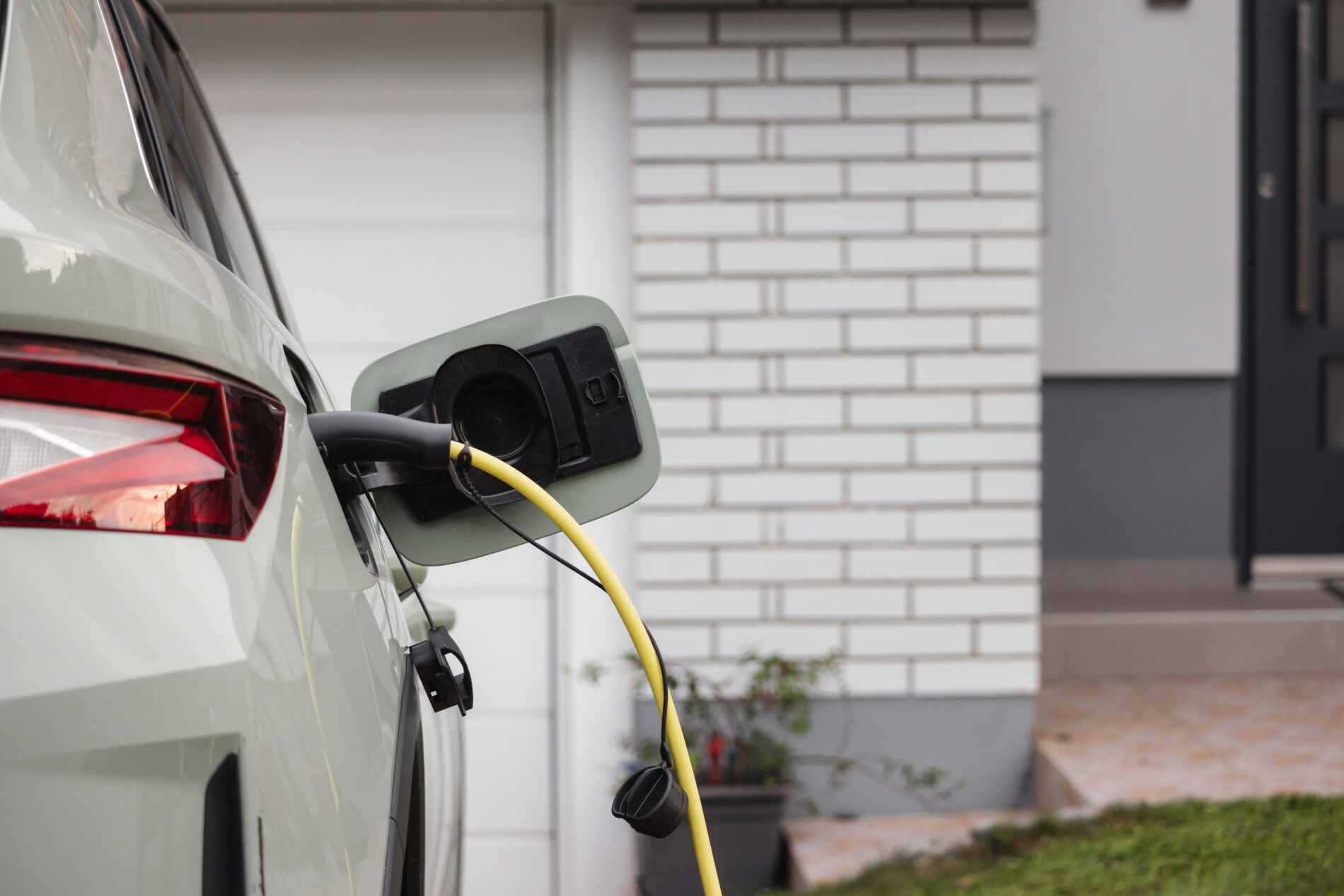
Image: Shutterstock
The eight families also share electricity generated by rooftop PV systems, battery storage for excess solar power, and a communal heat pump. According to Kiltorp, the overall system makes the residential complex “virtually energy-independent.”
Klas Boman, a long-time veteran of the automotive industry, is the driving force behind the Hudiksvall project. He notes that the charging system helps stabilize the power grid while simultaneously lowering residents’ electricity costs. “Life here is undoubtedly cheaper,” Kiltorp confirms. “We consume just as much electricity as other homeowners, but our bill is much lower.”
The pilot project is a joint initiative involving the housing cooperative BRF Stenberg, automaker Volkswagen, and Swedish energy provider Vattenfall. The goal is to demonstrate that bidirectional charging can work on a residential community scale. “We are trying to inspire others,” says Boman.
Bidirectional charging is also available in Germany; for instance, energy provider Eon offers a product package for it in partnership with BMW. However, these are typically “Vehicle-to-Home” (V2H) solutions, where the electric car connects to a home wallbox and supplies the household with power when needed. The Swedish project goes a step further with its neighborhood-wide approach—a precursor to “Vehicle-to-Grid” (V2G) systems, in which the electric car feeds power not only into the home system but also into the public grid.
Sweden is testing this in larger buildings as well, with a number of pilot projects underway at universities and startups. At the University of Gävle in central Sweden, researchers recently simulated a power outage during a speech by Education Minister Simona Mohamsson; the resulting gap in supply was compensated for by a connected electric car. The vehicle alone was capable of powering the premises for hours.
“I call it a battery on wheels,” says Nicholas Etherden, a lecturer and energy systems researcher at the University of Gävle. “Cars are driven about five percent of the time. They spend the remaining 95 percent parked. If you connect them to the power grid, you have a resource at your disposal that exceeds peak electricity demand at any given moment.”
However, widespread adoption of this model still faces obstacles. For one thing, it requires a large proportion of the vehicle fleet to be electric—something that is far from the case in Sweden, unlike in neighboring Norway and Denmark.
Critics also point to potential wear and tear on vehicle batteries. Lina Bertling Tjernberg, a professor of power grid technology at the KTH Royal Institute of Technology in Stockholm, acknowledges that this aspect requires further study. However, experience to date suggests that the batteries last longer than expected.
Etherden, for his part, is convinced that battery wear is not an issue: powering an average household consumes about as much energy as accelerating from zero to five kilometers per hour. “It’s like driving behind a donkey. So, you’re treating the battery very gently.”
Author: AFP
Sources: AFP Press Portal