
In late June 2026, a legal opinion commissioned by Enpal from the law firm Freshfields intensifies the dispute over Economic Affairs Minister Katherina Reiche’s Building Modernization Act. The firm deems the draft unconstitutional because it abandons the “65 percent rule” and continues to allow the installation of new oil and gas heating systems. Furthermore, the government is relying on a “bio-pathway” approach for climate-neutral fuels. Consequently, the conflict affects property owners, tenants, heating contractors, energy suppliers, and municipalities. If the draft heating law remains unchanged, there is a risk of new legal challenges and prolonged uncertainty regarding investments in buildings and heating systems.
Why the law is considered unconstitutional according to a legal opinion
The federal government intends to significantly overhaul the existing Building Energy Act. This entails dropping the blanket requirement that new heating systems operate on at least 65 percent renewable energy. Consequently, property owners are to regain a wider range of choices—including heat pumps, district heating, hybrid technology, biomass, gas, and oil. The Union justifies this shift by citing the need for greater personal responsibility and less compulsion regarding heating systems.
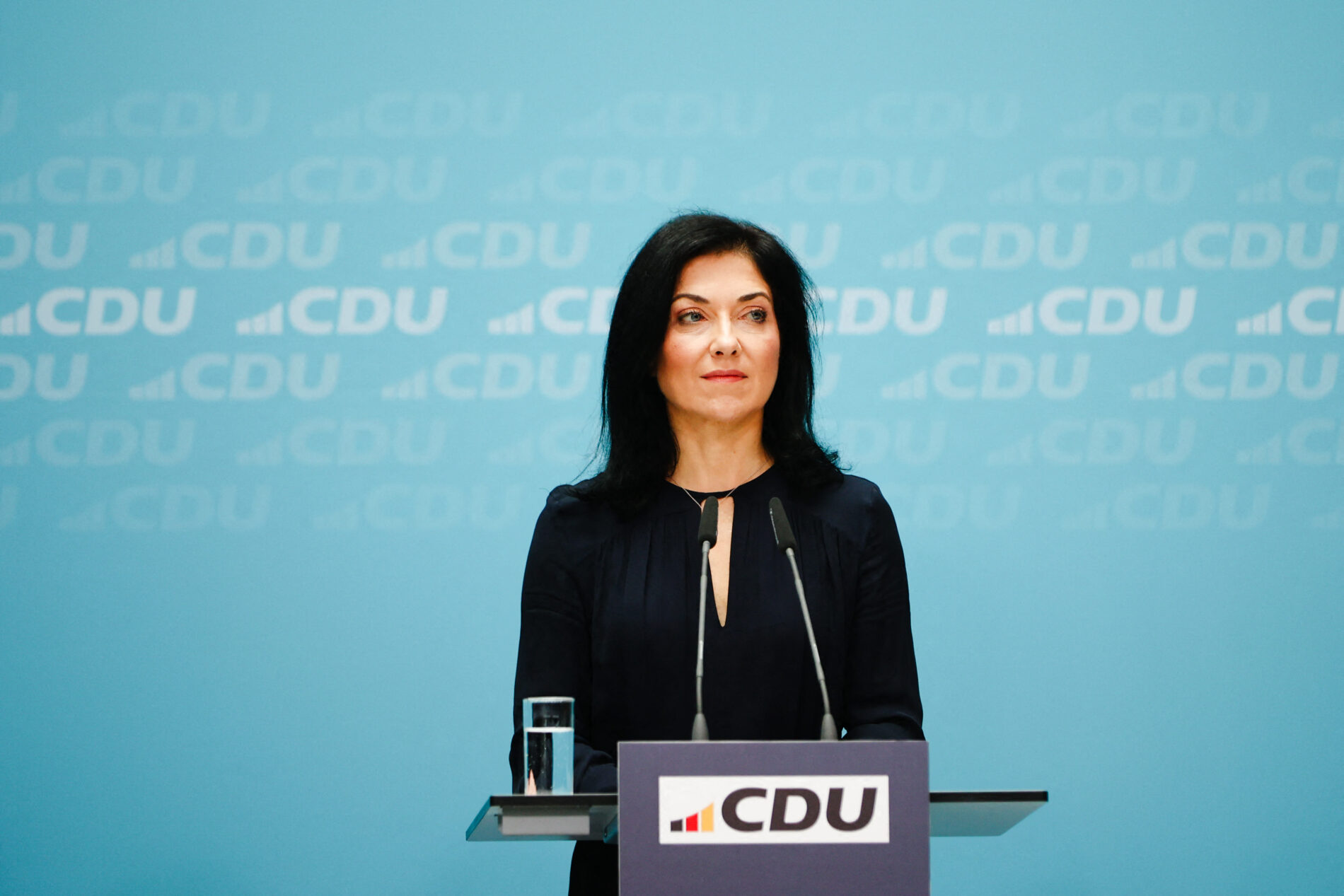
Image: Christian Marquardt / NurPhoto via AFP
However, a different requirement applies to new fossil-fuel heating systems. Starting in 2029, they must use at least ten percent climate-neutral fuels. Subsequently, the required shares rise to 15 percent in 2030, 30 percent in 2035, and 60 percent in 2040. Furthermore, suppliers of gas and heating oil are expected to bring more climate-friendly products to market themselves. In doing so, the reform shifts part of the climate protection effort from the heating appliance itself to the fuel market.
“Bio-step” approach replaces clear mandate
Freshfields therefore considers this scaling back to be unconstitutional. The law firm points to the Federal Constitutional Court’s 2021 ruling on climate change, which mandates that the state must map out the path to climate neutrality in a timely and transparent manner. The core criticism is that too many emission reductions are being deferred to later years. This particularly affects the building sector, given that heating systems operate for decades.
The EU’s Energy Performance of Buildings Directive also plays a significant role. It establishes zero-emission buildings as the standard. New public buildings must meet this standard starting in 2028, while the requirement applies to new private buildings from 2030 onwards. Freshfields therefore questions whether watering down existing German regulations aligns with the European trajectory.
Ministry rejects criticism
The Ministry for Economic Affairs, however, rejects the accusation. A spokeswoman stated: “The Federal Government has verified the legislation’s constitutionality.” The Ministry also points to various instruments designed to achieve climate goals, including district heating, waste heat utilization, geothermal energy, river-source heat pumps, and subsidy programs. Reiche defended the policy’s core principle by stating: “We are replacing mandates regarding heating systems with a technology-neutral approach.”
However, the hearing in the Bundestag revealed that the issues run deeper. Experts criticized the bureaucratic burden, social implications, lack of practical feasibility, and constitutional concerns. Haus und Grund welcomed the elimination of the 65 percent rule, yet the association simultaneously warned of new documentation requirements and legal uncertainty resulting from the “bio-staircase” approach. The heating industry and municipal utilities are also calling for simple rules, given that infrastructure planning entails long-term commitments.
Property owners need reliable rules
An expert opinion will not ultimately determine whether the draft is unconstitutional. Politically, however, the assessment increases the pressure on the coalition. After all, property owners do not make decisions about heating systems with just a single legislative term in mind; they invest for decades and must factor in fuel prices, CO2 costs, and rent regulations.
The reform could also prove costly for tenants. While landlords are expected to share certain additional costs, the future cost and availability of biomethane, bio-oil, or hydrogen remain uncertain. It is precisely this uncertainty that undermines the core of the legislation: intended to simplify planning, it instead creates new grounds for dispute among courts, households, and businesses.
Author: Blackout News
Sources: Frankfurter Rundschau (29.06.26) – t-online (26.06.26) – Tagesschau (22.06.26) – Der Westen (29.06.26)