The German federal government is promising lower electricity prices while simultaneously planning to introduce a new levy to fund gas-fired power plants. On November 3, 2026, the Federal Network Agency in Bonn awarded eleven subsidy contracts for a total of 5,160 megawatts of reliable power generation capacity. Over a period of 15 years, the operators will receive approximately twelve billion euros—a cost ultimately to be covered by electricity consumers through an additional surcharge. RWE and LEAG stand to benefit the most. The facilities are expected to begin supplying electricity by November 2031 at the latest, stepping in when wind and solar installations fail to generate sufficient energy. This will result in additional costs for households and businesses, even though the governing coalition has promised a permanent reduction in electricity prices of at least five cents per kilowatt-hour.
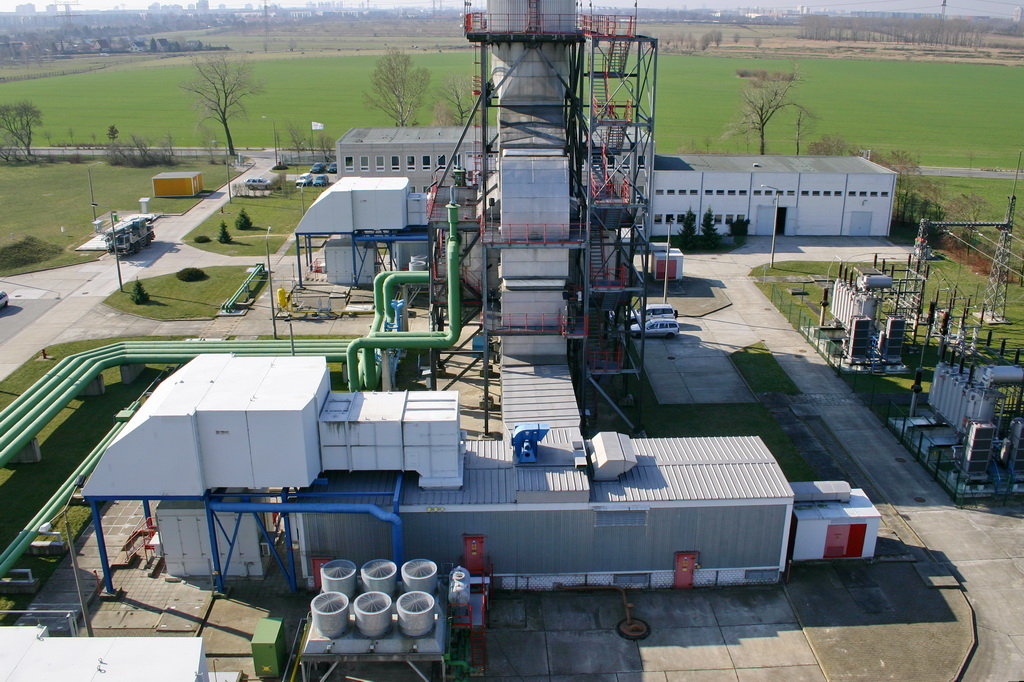
Image: Jochen Burgstaller, CC BY-SA 3.0, via Wikimedia Commons

Government promises lower electricity prices while introducing a new levy
In their coalition agreement, the CDU, CSU, and SPD pledged to provide a permanent reduction in electricity costs for consumers, amounting to at least five cents per kilowatt-hour. The federal government explicitly reaffirmed this objective in February 2026, justifying the package of measures by citing the need to maintain the competitiveness of the German economy and provide financial relief to consumers. Now, however, a new electricity levy—of all things—is set to fund additional power plant capacity.
The initial tender alone is estimated to generate annual subsidy costs of approximately 800 million euros. The Federal Association for New Energy Economy (bne) calculates that this will impose an additional burden of roughly 0.16 cents per kilowatt-hour. For an annual consumption of 4,000 kilowatt-hours, this equates to 6.40 euros. Yet, this figure accounts only for the first round of tenders; further rounds are planned, meaning the future electricity levy could end up being significantly higher.
Gas-fired power plants add to the cost of an already expensive energy transition
In the long term, the energy transition is intended to provide a more affordable electricity supply, as wind and solar installations require no fuel. However, even with a high installed capacity, these systems cannot guarantee a constant supply of electricity. Consequently, Germany requires additional power plants capable of bridging extended periods of low wind and solar output—the so-called “dunkelflaute” (dark doldrums). Providing these facilities entails long-term costs, regardless of the actual amount of electricity generated.
As a result, consumers are not only paying for the expansion of renewable energy and the power grid; they are also financing the conventional backup capacity needed for an electricity system that is increasingly dependent on weather conditions. Furthermore, whenever these reserve plants are called upon to generate electricity, additional costs arise for natural gas, CO₂ allowances, and operational expenses. This new subsidy scheme therefore raises the cost base of the electricity system from the outset, while any potential price-dampening effects will only become apparent during future operation.
RWE and LEAG secure nearly all of the multi-billion euro subsidies
The primary beneficiaries of the tender are two established operators of conventional power plants. The East German energy company LEAG—including its subsidiaries—was awarded seven contracts totaling approximately 3,000 megawatts. RWE secured three additional contracts for roughly 2,120 megawatts. Together, these two companies control more than 99 percent of the awarded capacity. Only one small contract went to the municipal utility Stadtwerke Karlsruhe.
Interest in the subsidies was substantial: for the 4,500 megawatts originally put out to tender, 41 bids were submitted, totaling nearly 12,000 megawatts. Seven of these bids failed to meet the legal requirements. Although storage technologies were also eligible to compete, only gas-based projects were awarded contracts. The German Solar Association (BSW-Solar) has criticized the tender terms, arguing that they place battery storage at a disadvantage compared to fossil-fuel power plants.
Further multi-billion euro costs for electricity consumers already on the horizon
The initial round of contract awards represents only one part of the government’s power plant program. In total, the federal government plans to add between eleven and twelve gigawatts of new capacity. According to Reuters, the subsidies across all planned tenders could reach as much as 35.2 billion euros. The Federal Network Agency (Bundesnetzagentur) intends to announce the date for the next round of tenders on November 10. Additional rounds are scheduled for 2027.
The new facilities are intended to run on natural gas initially, with the capability to transition to climate-neutral hydrogen later. However, it remains unclear when sufficient quantities of hydrogen will be available at competitive prices. Furthermore, during periods of low renewable energy generation—known as “dunkelflaute” (dark doldrums)—gas-fired power plants could continue to drive up electricity prices on the exchange, as they would require the use of expensive natural gas. The German Renewable Energy Federation (Bundesverband Erneuerbare Energie) has explicitly warned about this potential impact on electricity prices.