
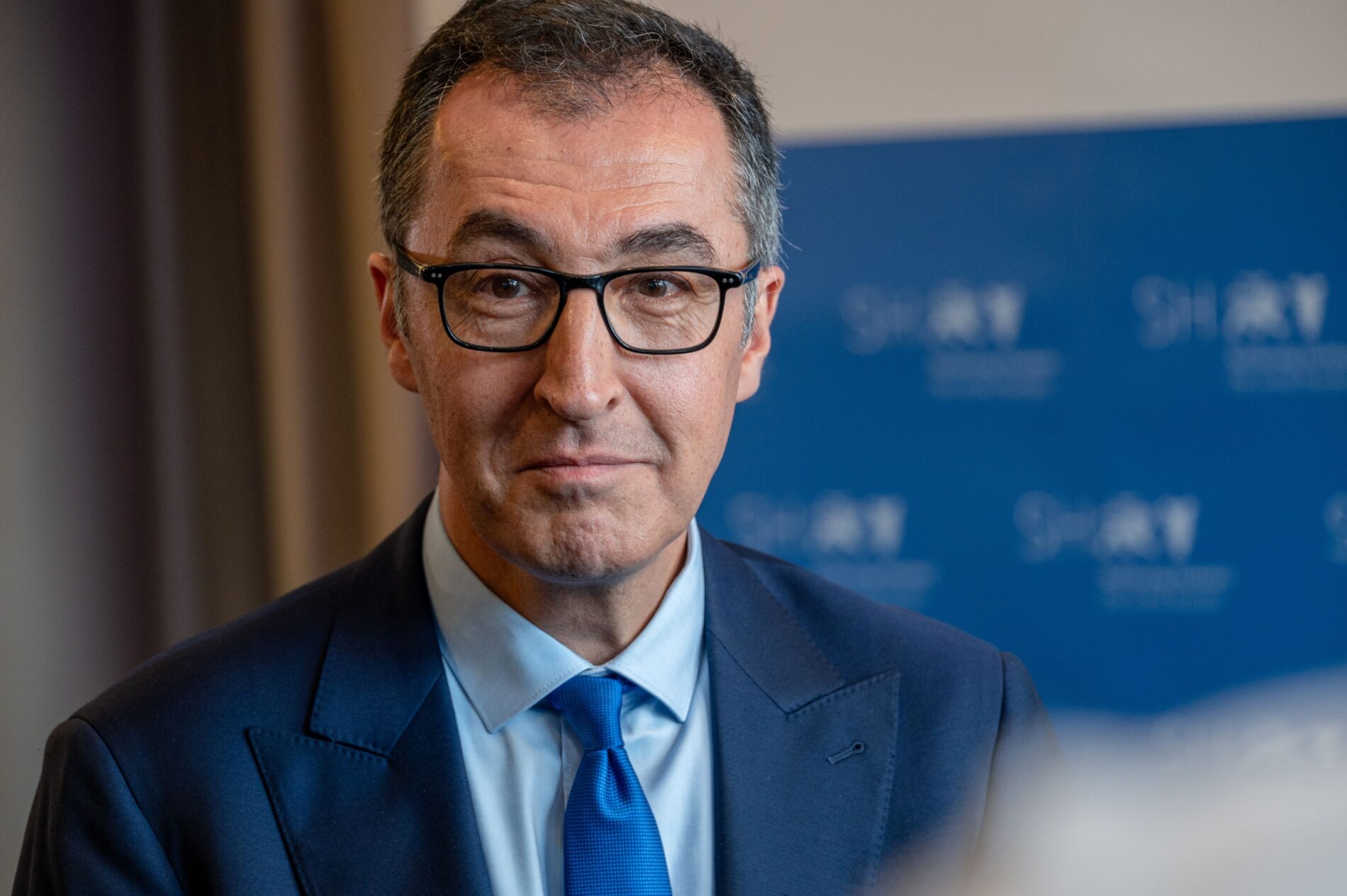
Baden-Württemberg’s Minister-President Cem Özdemir is sticking to his climate agenda despite a weak economy, declining municipal tax revenues, and high debt levels. This stance was prompted by the heatwave in late June, which the Green Party politician interprets as a warning signal calling for greater climate action. As the state once again lags behind the national economy—with industrial firms shedding jobs and municipalities losing billions—a key question moves to the forefront: How long can Baden-Württemberg pursue costly climate goals while its economic foundation crumbles?
Climate course despite crisis: Özdemir sticks to his line
Özdemir points to the consequences of extreme heat and warns of higher costs resulting from inaction. He stated: “Climate action costs money. But a lack of climate action is simply unaffordable.” While this statement sounds consistent, it falls short because it gives only marginal consideration to the current budgetary situation.
After all, any government can spend money only once. If climate protection programs, heat protection measures, and industrial transformation tie up more funds, those resources are unavailable elsewhere. Yet municipalities, in particular, must renovate schools, maintain roads, fund swimming pools, and pay for mandatory social services.
Industry Losing Momentum, Municipalities Losing Revenue
The economic situation in Baden-Württemberg provides a critical backdrop. Real gross domestic product fell by 0.6 percent in 2025, even as Germany as a whole saw slight growth. Moreover, this marked the third consecutive decline in economic output.
Industry in the southwest is also showing clear signs of weakness. In May 2026, incoming orders were 5.1 percent lower than in the same month the previous year. At the same time, companies were employing around 28,700 fewer people than a year earlier, indicating that the region faces more than just a cyclical economic problem.
Climate Policy Meets Record Municipal Deficits
The crisis is hitting the local government level particularly hard. In 2025, Baden-Württemberg’s cities, municipalities, and districts recorded a combined deficit of 4.4 billion euros. Debt levels rose, while many reserves from previous years had already been exhausted.
Tax revenue forecasts are further exacerbating the situation. Municipalities face a shortfall of nearly three billion euros against earlier projections for the 2026–2028 period. The primary reason is weaker trade tax revenue—a source that depends directly on a strong economy.
Climate Goals Force Prioritization
Baden-Württemberg aims to reduce its greenhouse gas emissions by 65 percent by 2030 compared to 1990 levels. The state is to become net-zero in greenhouse gas emissions by 2040. At the same time, the industrial, transport, building, and energy sectors must finance a significant portion of this transformation.
Consequently, Özdemir’s climate agenda is becoming a stress test for the southwestern state. While climate action can limit damage in the long run, the costs are incurred immediately. Anyone committed to this chosen path must therefore openly state which tasks, investments, or relief measures will have to take a back seat.
Author: Blackout News
Sources: Staatsanzeiger (30.06.26) – Die Zeit (30.06.26) – Statistisches Landesamt Baden-Württemberg (03.07.26) – DStGB (22.06.26)