
A commentary by our author Klaus Bastian:
In mid-August 2026, Thuringia’s Minister-President Mario Voigt is fighting against the revocation of his doctoral degree while simultaneously battling to hold onto his office. Chemnitz University of Technology rejected his formal objection, prompting the CDU politician to file suit at the Chemnitz Administrative Court. Nevertheless, Voigt refuses to resign, even as the national leadership of the BSW—the very party that previously helped enable his government alongside the CDU and SPD—is now calling for his departure. Furthermore, on December 12, Voigt will reach a crucial two-year mark regarding his future pension entitlements. This political spectacle primarily undermines the trust of citizens who expect decency and personal accountability from politicians.
In the past, far less was enough to trigger a resignation
The case of Philipp Jenninger illustrates particularly clearly just how much political standards have shifted. In 1988, the CDU politician resigned as President of the Bundestag just one day after delivering a controversial commemorative speech. Yet, in light of subsequent historical assessment, there was little to fault in the speech’s actual content. His undoing, however, was primarily the way it was delivered: the necessary distance from the National Socialist mindsets he described did not come across clearly enough. Later, Ignatz Bubis himself used lengthy passages from the speech without sparking a comparable scandal. Jenninger’s personal integrity was never in question.
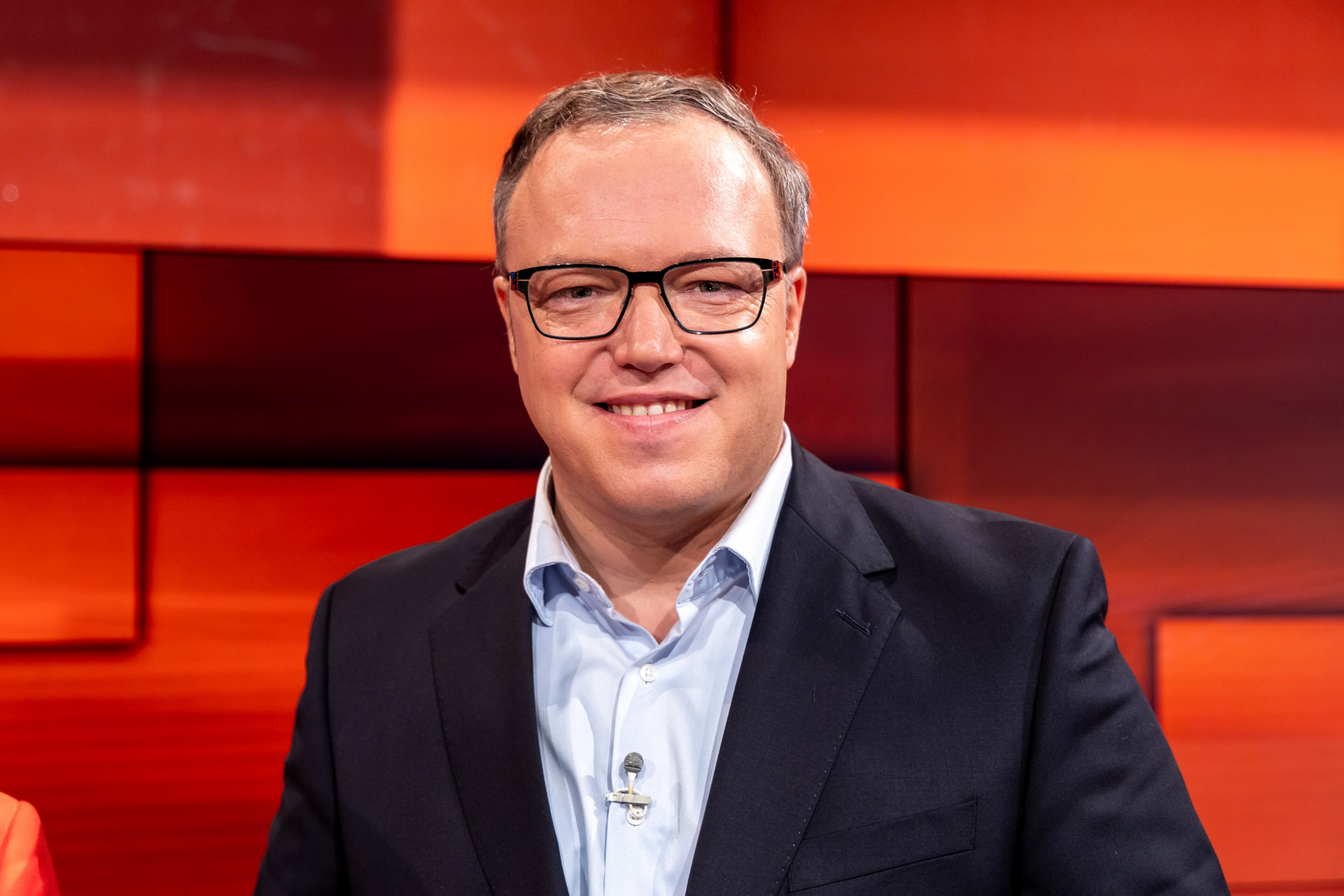
Image: ©Superbass, CC BY-SA 4.0, via Wikimedia Commons

Other prominent politicians also faced consequences much sooner. In 2011, Karl-Theodor zu Guttenberg resigned as Minister of Defence shortly after his doctoral title was revoked; he also gave up his seat in the Bundestag. Annette Schavan likewise resigned as Federal Minister of Education after losing her doctoral title, though she later challenged the decision in court. Even Jürgen Möllemann stepped down as Minister of Economics and Vice-Chancellor in 1993 over a comparatively minor “letterhead affair”—he had used official ministry stationery to promote a product made by a relative by marriage.
Voigt stays – and the BSW tears apart its own government
The role played by the BSW therefore appears particularly bizarre. In 2024, the CDU, BSW, and SPD formed the “Blackberry coalition” (named for their party colors: black, purple, and red), thereby enabling Voigt’s government project. However, the three parties together held only 44 of the 88 seats in the state parliament. Yet Voigt received 51 votes in his election. The Left Party (Die Linke) had announced its support, but due to the secret ballot, the exact source of the votes remains unclear.
Now, the BSW’s national leadership—of all parties—is demanding Voigt’s immediate resignation and even the dissolution of the coalition. The Thuringian state branch of the BSW, however, is sticking with the government for the time being. This makes the political spectacle increasingly absurd: the BSW helped install Voigt in office, only for its own national leadership to subsequently declare him untenable. The national executive committee has explicitly stated that it no longer wishes to act as a source of the majority needed to sustain Voigt.
The CDU simply lets Voigt carry on
Legally, Voigt is entitled to take action against the university; that is, of course, his right. However, political accountability is measured by different standards than administrative legal proceedings. A state premier need not fight out a personal legal battle while holding the highest office in the government. Yet Voigt remains in office, even though the university revoked his doctoral degree and rejected his formal objection. Now, a court is set to review the decision.
But this is precisely where the CDU is failing. It allows its state premier to continue, even though the damage has long since extended far beyond his doctoral thesis. This inevitably creates the impression among citizens that different standards apply to top politicians. In the past, a speech delivered in a misleading manner or a scandal involving official letterhead could cost someone the highest offices of state. Today, a revoked doctorate, a failed objection, and a subsequent lawsuit are apparently no longer enough to trigger such consequences. It is precisely these kinds of events that fuel political disenchantment and mistrust.
Voigt reaches a key pension entitlement milestone in December
There is also a date of financial significance involved. Voigt became state premier on December 12, 2024, and will therefore mark two years in office on December 12, 2026. Under the Thuringian Ministerial Act, serving at least two years in government generally establishes a future entitlement to a retirement pension. For a tenure of less than five years, this amounts to 18⅓ percent of the relevant remuneration. However, this explicitly does not equate to the full salary of a state premier following resignation.
There is no evidence that Voigt intends to stay in office until December specifically because of this threshold. Nevertheless, the political optics could hardly be worse. A head of government loses his doctorate, fails in his objection, and presses ahead with a lawsuit, all while a pension milestone approaches. His CDU lets him carry on, even as the national leadership of a coalition partner calls for his resignation. In the past, top politicians understood that holding office also entails personal consequences. Voigt’s resignation is therefore long overdue. With each passing day, he harms himself, his CDU, and trust in credible politics.
Author: Klaus Bastian – Blackout News
Sources: MDR (14.08.26) – Handelsblatt (14.08.26) – Beck aktuell (11.08.26) – Freistaat Thüringen (29.06.18)