
A commentary by our author Klaus Bastian
A theory attributed to Ferdinand Piëch holds that only about ten percent of employees are true “doers.” Piëch described the rest as followers who essentially live off the ideas of this small group. This pattern also characterizes the German automotive industry today. Manufacturers and suppliers are cutting jobs, reducing investments, and reviewing their German sites. High costs, political mandates, and new competitors are further exacerbating the situation. Yet, at the same time, entrenched hierarchies are blocking the very experts who could improve products and processes.
The people behind the scenes created the technological edge
The past success of German manufacturers stemmed primarily from development, testing, and production. Engineers, master craftsmen, and experienced skilled workers identified weaknesses at an early stage. Consequently, they improved engines, transmissions, chassis, manufacturing systems, and much more—everything essential to producing high-quality vehicles. Their expertise was grounded in years of practical experience; they understood not just individual components, but the vehicle as a whole, including the manufacturing processes.
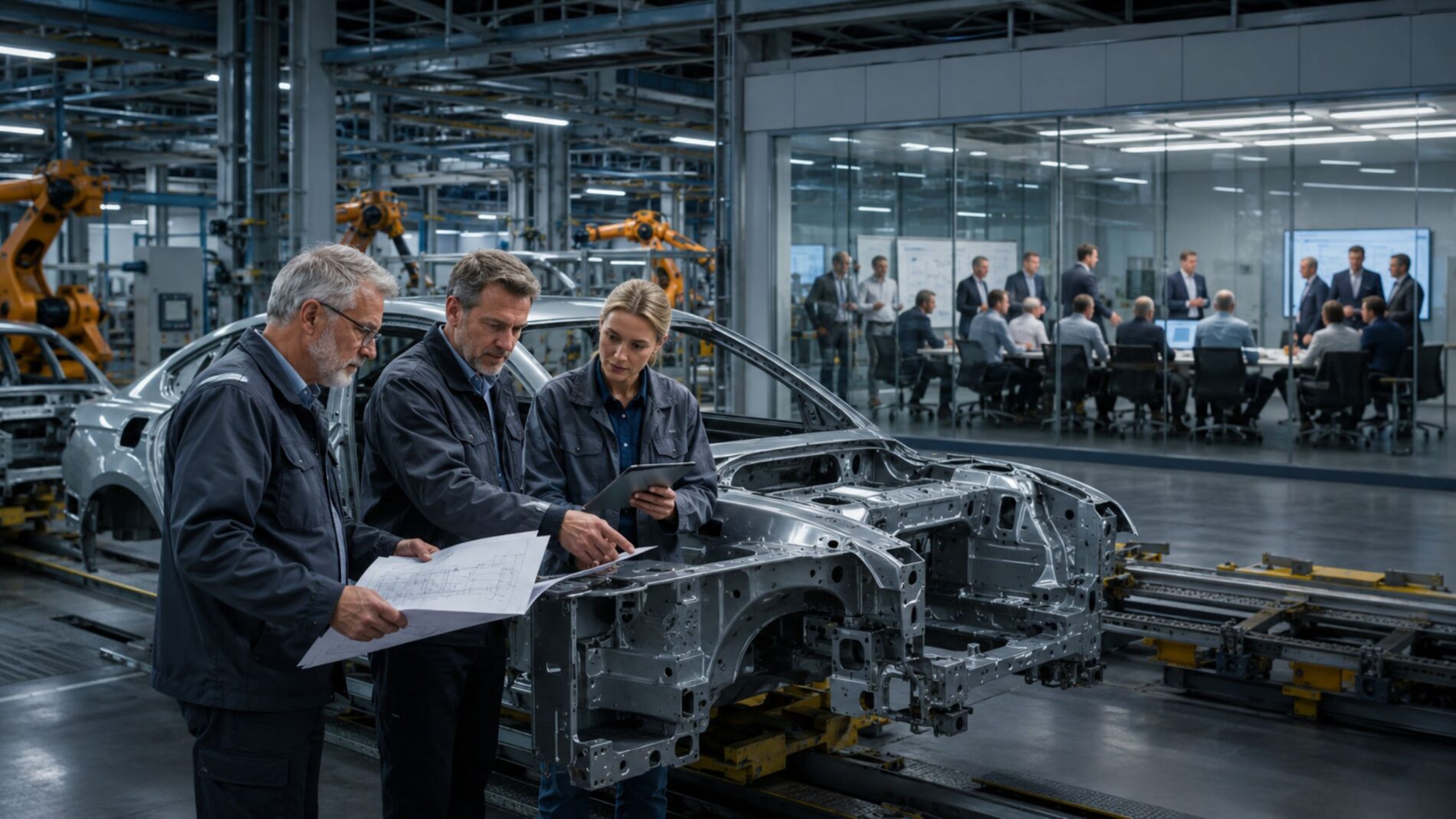
Image: AI-generated
However, these specialists generally remained at the operational level, where companies relied on their expertise daily. As the company grew and succeeded, new departments, management roles, and oversight functions emerged. This often led to the rise of “conformists”—individuals who managed processes—while the “doers” remained focused on the product itself.
The power of the conformists grew alongside the company’s success
Initially, this division of labor worked well. The new managers understood that their success depended on the experienced specialists; consequently, they listened to technical objections and protected the doers’ creative freedom. Later generations of leaders, however, lost this perspective. They increasingly viewed their higher corporate rank as proof that they were the true doers.
This shifted the company’s priorities. Decisions were no longer driven by the best technical solution, but by what was most convenient internally. Objections threatened budgets, deadlines, and career trajectories. As a result, specialists who raised uncomfortable issues were soon viewed as troublemakers. Conformity was rewarded, while dissent could even lead to personal repercussions.
Good ideas become a burden—the doers become disillusioned
A good idea requires evaluation, funding, and potentially a change of course. It can also expose past errors in judgment. Consequently, conformists often reject such proposals as a form of self-preservation. They delay decisions or cite a lack of jurisdiction. Responsibility thus evaporates amidst endless rounds of consultation involving few, if any, participants who possess the necessary technical expertise.
Frustration mounts among the doers when good ideas are viewed as disruptions rather than contributions. Their proposals trigger resistance, even though they could improve products, processes, and costs. Eventually, many stop sharing their knowledge. They fulfill their assigned duties but avoid taking any further initiative, resorting to sarcasm and cynicism as a defense mechanism. I have heard statements like: “The stupidest thing that can happen to you at my company is having a good idea.” Or: “My boss would be more useful to the competition.” Such remarks signal the point at which a company has internally lost its driving forces. With their withdrawal, a vital part of its former innovative strength vanishes as well.
Knowledge Remains, Yet Goes Unused
A select few specialists do change employers, but most stay because they are older; for them, switching jobs no longer seems realistic. Consequently, they wait for early retirement while limiting their efforts to the bare minimum. Although their knowledge remains within the company, it no longer feeds into new products.
Those who merely go with the flow typically respond to declining success by introducing new programs and working groups. They also create additional performance metrics and reporting requirements. This causes the very structures that hinder rapid decision-making to expand further. Cost-cutting programs do little to change this situation when experienced specialists leave while bloated administrative apparatuses remain.
The German automotive industry therefore needs to regain technical authority. Experienced individuals must be able to influence decisions at an early stage. At the same time, the merit of a good idea must not depend on the rank of the person who proposed it. Those who merely go with the flow are capable of managing past success and delegating responsibility, but they are usually unable to generate new success.
About the Author
Klaus Bastian worked as an engineer for nearly 40 years in various research and development roles at a renowned German automotive manufacturer. His assessments are based on extensive technical experience and deep insight into the structures of the automotive industry.
Author: Blackout News – KOB