
A commentary by our author Klaus Bastian:
In 2026, the dismantling of large sections of the Erlasee solar farm—once considered the world’s largest photovoltaic park—is underway in Arnstein, Bavaria. The process affects so-called “movers”—motorized, dual-axis tracking solar units with modules that follow the sun’s position. For several of these systems, the move is prompted by the expiration of their roughly 20-year feed-in tariff periods under the Renewable Energy Sources Act (EEG). At the same time, factors such as age, maintenance requirements, and complex mechanical systems are driving up operating costs. Consequently, some owners state that continued operation is no longer financially viable for them once the subsidy period ends. However, not all systems are being removed simultaneously, as at least some individual movers will remain in operation until the end of 2026. Nevertheless, aerial photographs from May show that the dismantling process is already well advanced.
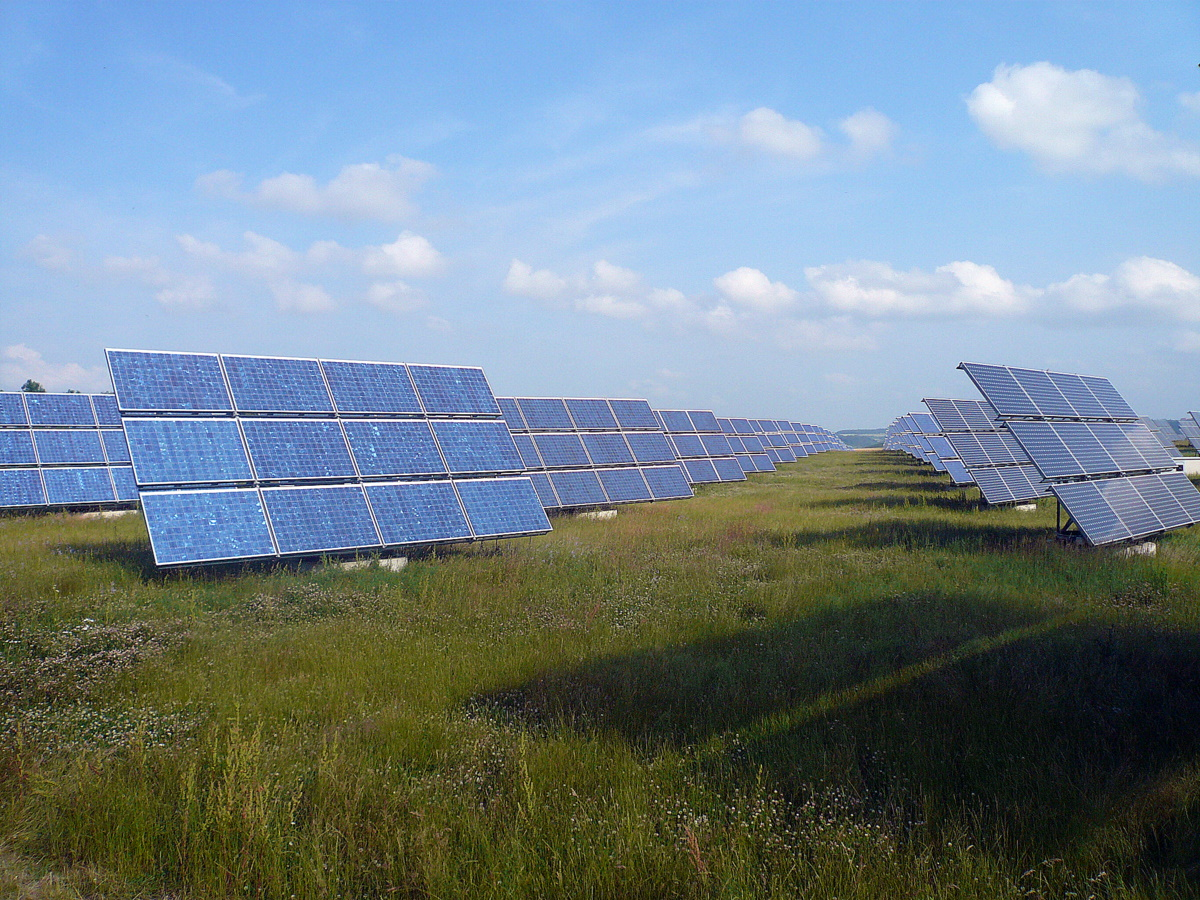
Image: Rainer Lippert, Public domain, via Wikimedia Commons

Erlasee Solar Farm Received More Than 40 Cents per Kilowatt-Hour
The economic conditions at the time of construction were exceptional. Under the Renewable Energy Sources Act (EEG) then in force, ground-mounted solar farms built in 2005 received 43.42 cents per kilowatt-hour. For 2006, the rate dropped to 40.60 cents. Furthermore, the feed-in tariff generally applied for a period of 20 years plus the year of commissioning. This allowed investors to project their revenues over the long term, while market prices played a negligible role in determining income.
The Erlasee solar farm had a capacity of approximately 11.4 megawatts and comprised 1,464 tracking units. According to published data, the facility generated around 14 gigawatt-hours of electricity annually. However, it is impossible to derive a reliable total figure for the actual EEG payments made from this information alone. Complete settlement records for all owners and system components are missing. Consequently, citing a lump-sum figure for alleged “subsidies” would not be factually substantiated.
The high level of revenue protection ends after 20 years
There was a significant gap between the original feed-in tariff and subsequent market values. The actual annual market value of solar power was 3.171 cents per kilowatt-hour in 2015 and 2.879 cents in 2020. Even during the energy crisis of 2022, the value reached 20.806 cents—only about half of the original revenue rate. Consequently, the park’s economic success could not be equated with competitiveness at standard market prices. The Renewable Energy Sources Act (EEG) secured revenue levels that the electricity market came nowhere near matching during those years.
This discrepancy becomes particularly apparent after the 20-year mark. As early as 2025, one operator reported that Bayernwerk had quoted a maximum of ten cents per kilowatt-hour for continued operation; factoring in lease and service costs, this was no longer financially viable for his systems. In March 2026, another owner reported technical defects in the tracking mechanism of his “Mover” unit. At the same time, following a site visit, he described the decommissioning process as already being well underway. While these reports from operators do not necessarily apply to the entire park, they document specific reasons why individual owners chose to exit. Photovoltaikforum
Decommissioning underway – some trackers still generating power
However, the current situation refutes the oversimplified narrative that the entire park vanished all at once after exactly 20 years. Professional aerial photographs from May 3, 2026, show extensive dismantling work and explicitly label Erlasee as “undergoing decommissioning.” At the same time, the Market Master Data Register continued to list individual trackers as active in May. Furthermore, an operator stated in March that one of its units would remain operational until December 31, 2026. The decommissioning process therefore follows varying commissioning and contract timelines.
Yet, the economic crux of the case remains. After two decades, the land, grid connection, and essential infrastructure are already in place. Nevertheless, owners are opting against continued operation once the high feed-in tariffs expire. Meanwhile, the official market value of solar power in August 2026 stood at just 6.359 cents per kilowatt-hour—50 percent below the general spot market price. Additionally, 21 percent of the solar power fed into the grid that month was generated during periods of negative prices. The Erlasee solar park thus clearly illustrates the disparity between profitability under long-term guaranteed tariffs and economic viability under current market conditions.
New solar projects continue to secure guaranteed revenues
Even today, the expansion of large-scale ground-mounted solar farms relies on state-organized support mechanisms. In the July 2026 tender, the average awarded price was 4.79 cents per kilowatt-hour. The Federal Network Agency awarded contracts for approximately 2.135 gigawatts of new capacity. However, modern systems are significantly more cost-effective and powerful than the technology used at Erlasee. Consequently, a direct comparison of the required level of support does not imply identical generation costs.
As for Erlasee itself, there is currently no concrete evidence of a decision to build a new solar park qualifying for new EEG subsidies. Consequently, the claim that “the old plant goes, and a new subsidy follows” remains speculative at this stage. The documented facts are already telling enough: parts of what was once the world’s largest solar park are being dismantled after around 20 years, while individual units will continue to operate until the end of 2026. For several owners, the economic outlook following the expiration of the original EEG terms evidently does not justify continued operation. Particularly after two decades—by which time the original investment has long since passed a significant portion of its economic lifespan—this decommissioning stands out as the project’s most notable development.
Author: Klaus Bastian – Blackout News
Sources: Sciencefiles (25.09.26) – Bundesnetzagentur (18.08.26) – Fly-Foto (03.05.26)