
ZF is pulling the plug on its e-bike business. The company is suspending sales of its drive systems with immediate effect after losing a major customer, Raymon. This drive system was intended to open up a new business area for ZF. The company aimed to become less dependent on the volatile automotive sector and gain a foothold in a growth market. Furthermore, ZF aimed to significantly challenge the dominant systems from Bosch and Shimano. Now, the new 48-volt Centrix system, shortly after its grand launch in 2024, is entering a critical phase. (emtb-news: 06.02.26)
Key customer lost – Centrix e-bike system loses its foundation
The trigger is the withdrawal of manufacturer Raymon. Raymon was considered a launch partner and was supposed to give the Centrix system reach, yet the company is ending the collaboration. Instead, Raymon is returning to Bosch and Yamaha, because these platforms secure sales and service chains.
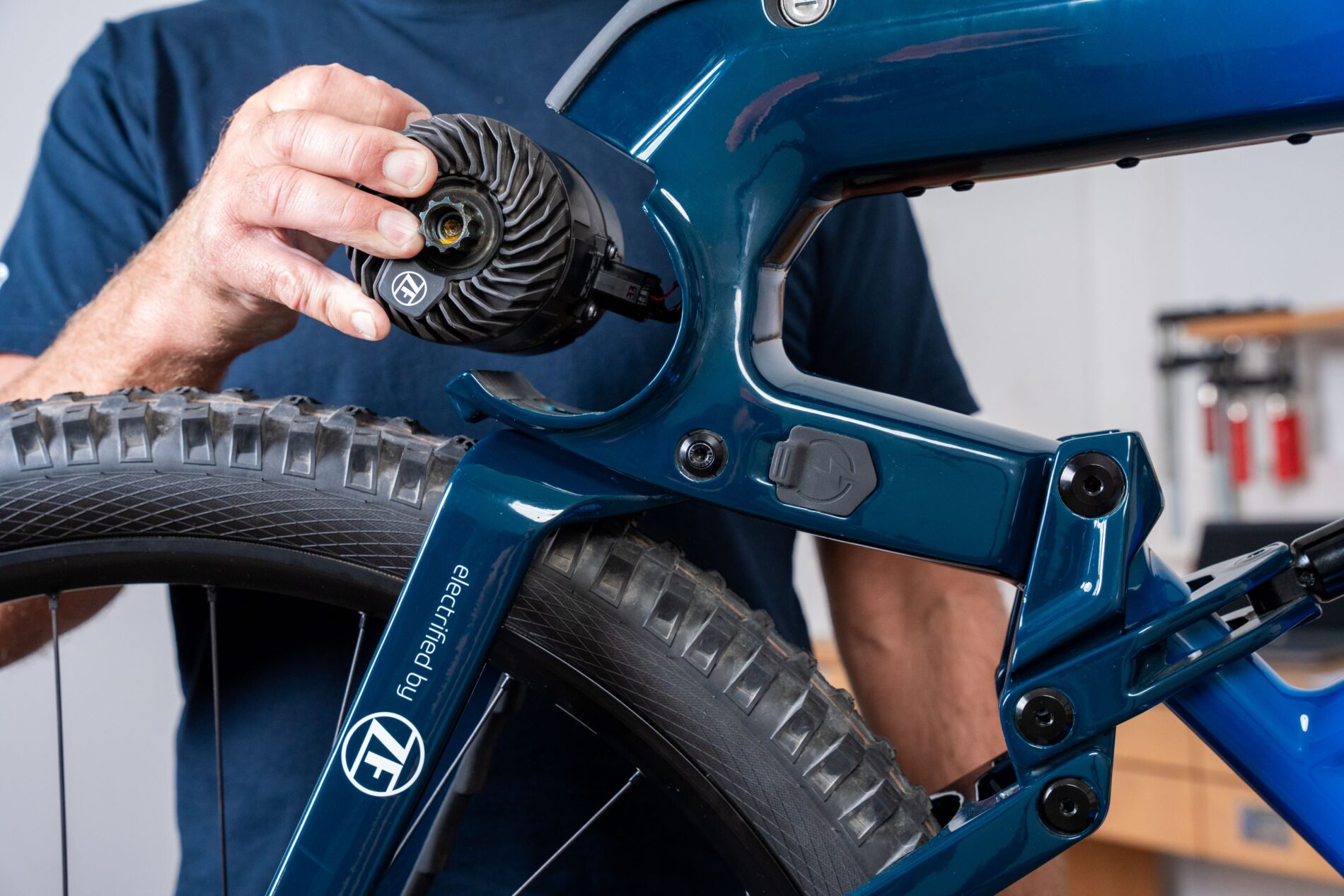
©ZF
ZF cites other brands as references, but this doesn’t replace a high-volume model. This is precisely where much in the market hinges on scalability and support. If this chain breaks, a project can quickly collapse. Therefore, ZF is now halting sales instead of continuing to hope for a breakthrough.
Confirmation from within the company and a break with its own ambitions
According to the trade magazine Bike Europe, a company spokesperson confirmed that ZF is completely suspending sales activities in this area. This brings to a temporary end a strategy that was internally considered a development project for the post-combustion engine business. ZF invested in development, integration, and system architecture because a drive system in the bike market consists of more than just a motor. Software, battery, interfaces, and partner networks are crucial.
The entry into this market began in 2018 with the acquisition of Sachs Micro Mobility. The goal was clear: to win manufacturers as customers and scale production volumes in the long term. To achieve this, Centrix had to quickly become the standard for series production. This very momentum is now missing.
Financial Notes Provide Context – Projects End Earlier Than Planned
As early as January 23, ZF announced the premature termination of several projects in its electrified drive technology division via a financial statement. At the time, the company primarily cited the sluggish ramp-up of e-mobility in the automotive sector. However, this picture also applies to the European bike market, where competition is fierce and new systems have little room to breathe.
In addition, dealers and manufacturers are currently relying heavily on established platforms. This reduces the risk associated with spare parts and warranty claims and saves on training costs. For new providers, this makes access even more expensive. In this environment, technology alone is not enough.
What Buyers Need to Know Now
For owners of e-bikes with ZF drive systems, a period of uncertainty is beginning. New models with ZF drive systems are unlikely to reach the market for the time being, as sales are currently suspended. At the same time, it remains unclear how ZF will ensure long-term support, even though the company has announced an internal review.
Technically, Centrix was considered interesting because of its compact design and 48-volt system. However, in the end, it’s not just the performance that matters, but the system of partners, service, and spare parts. Without this network, even a good motor is useless. That’s precisely why the e-bike project is now facing a crucial test, even though it has only just begun.