
In October, a serious wind turbine collapsed in Havixbeck. The turbine’s nacelle, along with the rotor blades, tore from the tower and crashed to the ground. This resulted in an oil spill, the extent of which has not yet been fully assessed. The soil contamination remains unclear because key components have not yet been recovered. The wind turbine collapse thus not only caused technical damage but also triggered a lengthy recovery operation, the consequences of which for the subsoil remain unknown. (wdr: 17.12.25)
The nacelle is blocking the full investigation
The nacelle, the mechanical center of the wind turbine, weighs approximately 200 tons and is still located at the accident site. As long as this component remains in place, neither the actual soil pressure nor the depth of the oil contamination can be accurately determined. Therefore, it remains unclear whether additional soil will need to be excavated, even though preparatory measures have already been planned.
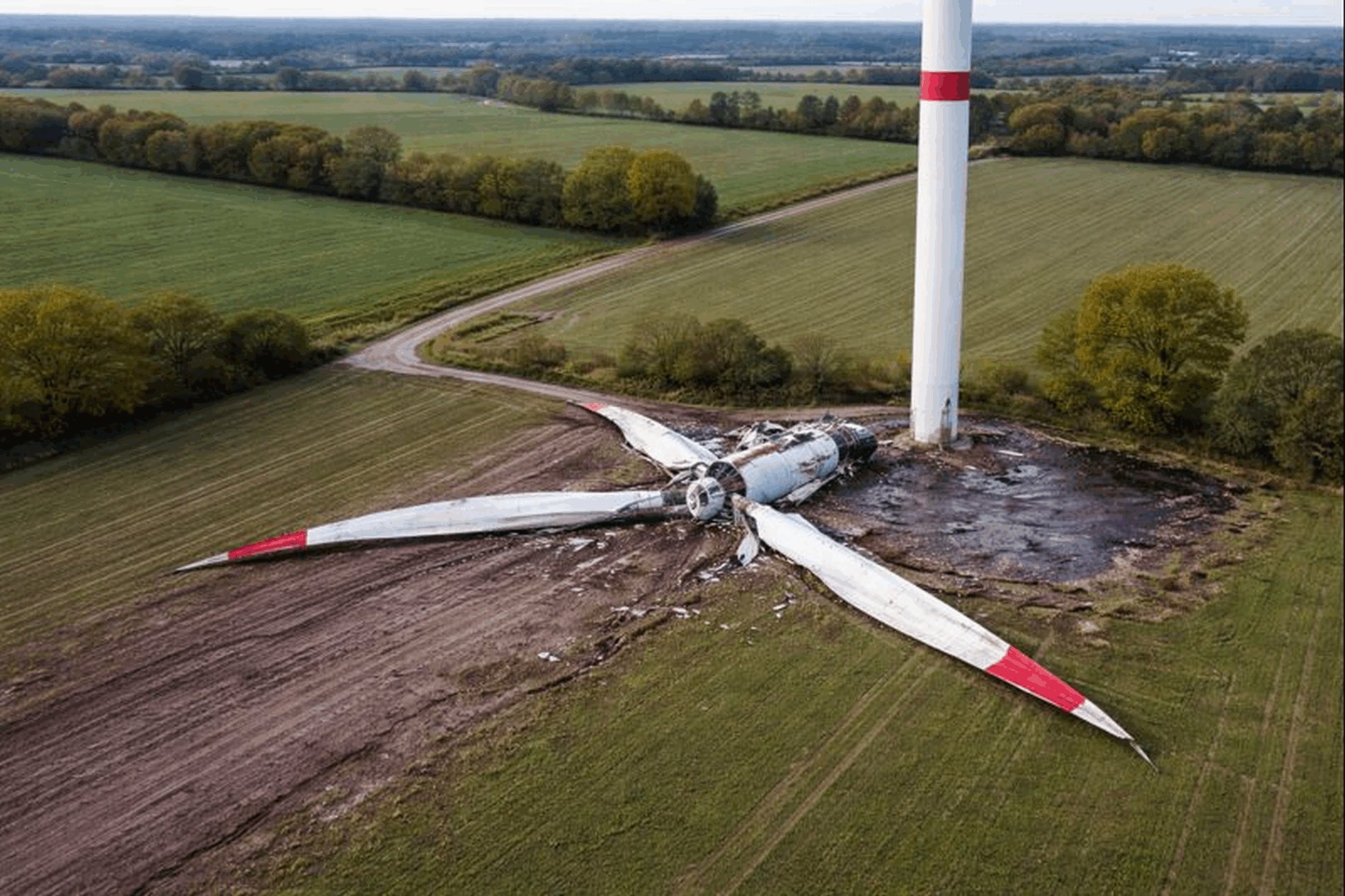
The recovery of the nacelle is proving technically challenging due to the need for heavy equipment. Only after the erection of a large crane can the component be lifted and transported away. Without this step, both the root cause analysis and the environmental assessment remain incomplete, prolonging the uncertainty on site.
Oil Contamination and Regulatory Oversight
The oil contamination remains a focus of the investigations because oil has seeped into the ground. Experts assume that containment measures have already been implemented, but a final assessment is still pending. Only after the complete recovery can independent experts take samples and precisely assess the soil contamination.
The Coesfeld district is closely monitoring the entire process and requires regular reports. This official oversight is intended to ensure that the recovery operation is transparent and that no environmental hazards are overlooked. Transparency is crucial, especially after a wind turbine collapse, because public trust depends heavily on clear information.
Delayed Recovery Affects the Timeline
The recovery of the destroyed turbine is progressing slowly because logistical preparations take time. The necessary crane will not be available for several weeks, further delaying the removal of the turbine hall. This also postpones the comprehensive investigation into soil contamination, although the pressure to resolve the issue remains high.
These delays directly impact the reconstruction. While a new wind turbine is planned, the timeframe extends into the summer of 2026. Demolition, soil remediation, and new construction must be coordinated, making the salvage operation a key component of the entire project.
Partial Operation and Political Repercussions
While the recovery operation at the accident site continues, the remaining turbines of the wind farm are back in operation. The responsible authorities consider their structural integrity to be assured, and therefore operations have been permitted. For the community, this means a partial return to normalcy, even though the wind turbine collapse continues to have repercussions.
At the same time, the event has sparked a public debate. Critical voices have been raised, particularly on social media, with the damage to the turbine hall frequently used as a symbol of the risks associated with wind power. The situation has since calmed down, but the discussion demonstrates how strongly technical defects can trigger political and societal reactions.