
Germany will again face significant problems with its wind power supply in March 2026. Doubts about the success of the energy transition are noticeably increasing. For several days, wind power generation remained significantly below demand, despite approximately 80 gigawatts of installed onshore capacity. At the same time, wind turbines had to be throttled back during strong winds because the grid could not fully absorb the electricity. The root cause lies in the weather-dependent nature of wind power generation, and the key risk factor is its lack of reliability. While fossil fuel power plants have to step in during periods of calm, valuable electricity is wasted during periods of overproduction. This affects households, industry, and grid operators. The consequences range from high electricity prices to a system that, despite enormous investments, fails to guarantee a stable supply.
Large Capacity, Low Utilization
The installed wind power capacity appears impressive at first glance, but it masks the true extent of electricity production. Theoretically, the available capacity could generate significantly more electricity. In practice, however, the yield often falls considerably short. Actual production thus only reaches a fraction of the potential capacity.
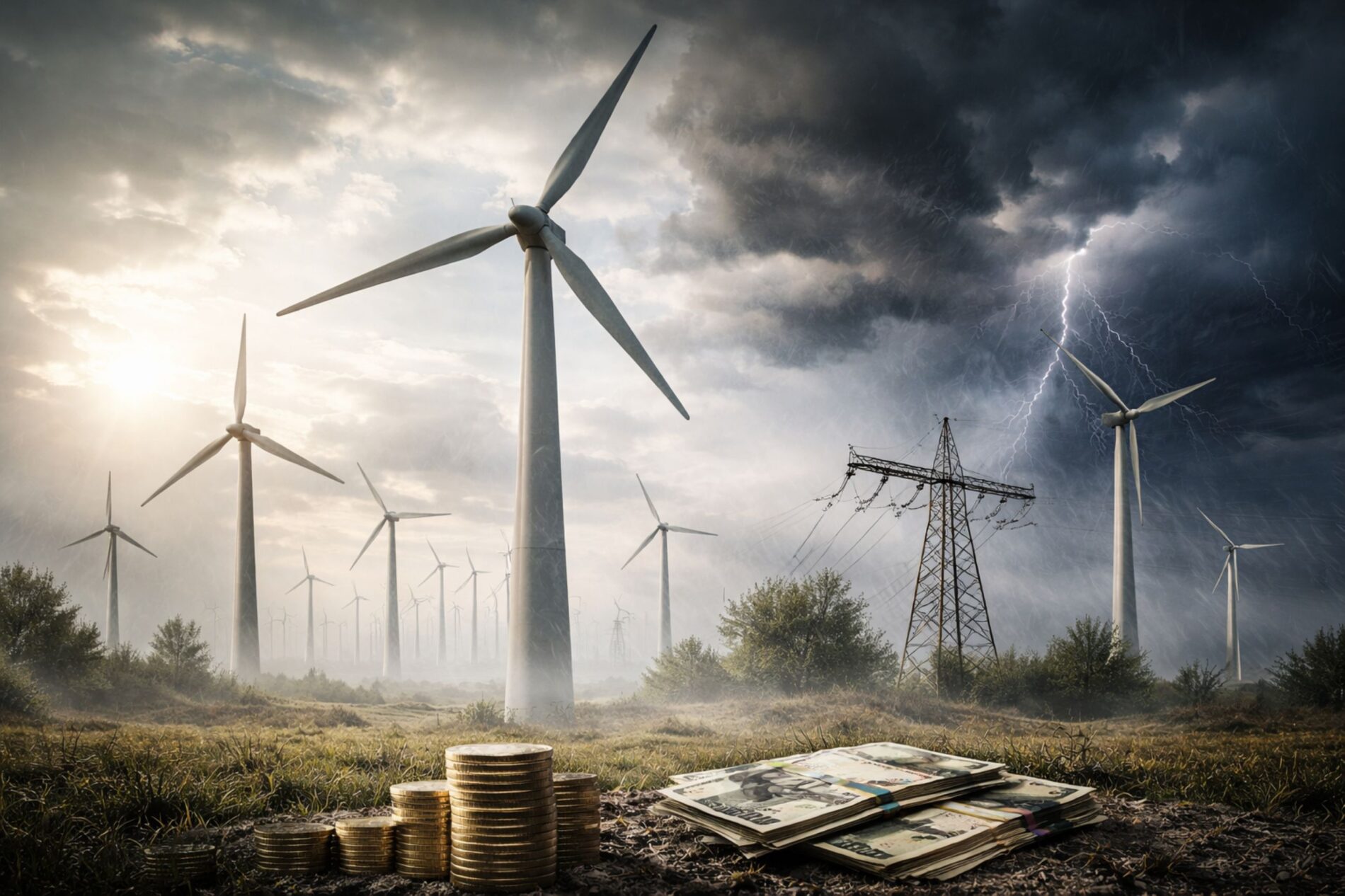
This is precisely where the criticism of political planning begins. A system that relies on high expansion figures but delivers only irregularly does not create a reliable foundation. Furthermore, the discrepancy between nominal capacity and reality demonstrates that political goals cannot override physical limitations.
Doubts about sustainability are growing
Wind power suffers from a twofold problem: in weak winds, many turbines generate hardly any electricity. In very strong winds, they shut down for safety reasons. This creates bottlenecks and outages simultaneously, while the supply must continue to be secured.
In addition, many regions in Germany do not experience consistently high wind speeds. Therefore, average capacity utilization remains limited. Doubts are growing as to whether further expansion under these conditions can even deliver what has been politically promised.
Expensive Dual System Instead of a True Replacement
Even when wind power is generated, it cannot always be used. Grid congestion leads to the curtailment of wind turbines. At the same time, conventional power plants must remain operational at all times to compensate for sudden dips in supply. This does not create a streamlined new system, but rather an additional structure alongside the old one.
This double redundancy drives costs even higher. Consumers finance the expansion of renewable energies, while reserve capacities must be maintained. Furthermore, grid fees increase because electricity has to be transported over long distances. This exacerbates doubts about an energy transition that is both affordable and reliable.
Interventions Increase, Benefits Remain Limited
Grid operators are intervening more and more frequently to keep the electricity grid stable. They selectively control power plants or throttle wind turbines. This reduces market efficiency while generating additional costs. Extreme price fluctuations further aggravate the problem.
Technical solutions such as storage or grid expansion could help, but they require considerable time and money. Therefore, the electricity supply remains dependent on conventional power plants. The energy transition thus appears not as a viable replacement, but as an expensive and uncertain interim model. (KOB)