
The Volkswagen Group is pushing ahead with a company-wide cost-cutting program in Wolfsburg, aiming to reduce costs by around 20 percent by the end of 2028, following internal tightening of targets by CEO Oliver Blume and CFO Arno Antlitz. The program is driven by declining margins, high spending on e-mobility and software, and weaker business in China. It affects all brands, and internally, plant closures are also being considered as a possible scenario. High fixed production costs are seen as a key risk factor, which is why locations and capacities are under scrutiny. This could have consequences for the workforce, as up to 35,000 jobs in Germany are already at risk by 2030, and further cuts remain possible. (manager-magazin: 16.02.26)
Management sets tough cost targets
The board presented the cost-cutting measures at a management retreat, and the group’s break-even point is also to be significantly lowered. Development costs, administration, and procurement are considered key levers. Therefore, budget reviews are underway across all brands. The group aims to achieve stable returns more quickly.
Oliver Blume succinctly but clearly summarized the direction: “We have to lower the break-even point.” This statement refers to the fixed cost base. Meanwhile, teams are analyzing costs down to the plant level. This could ultimately affect employment.
Plants and structures come under scrutiny
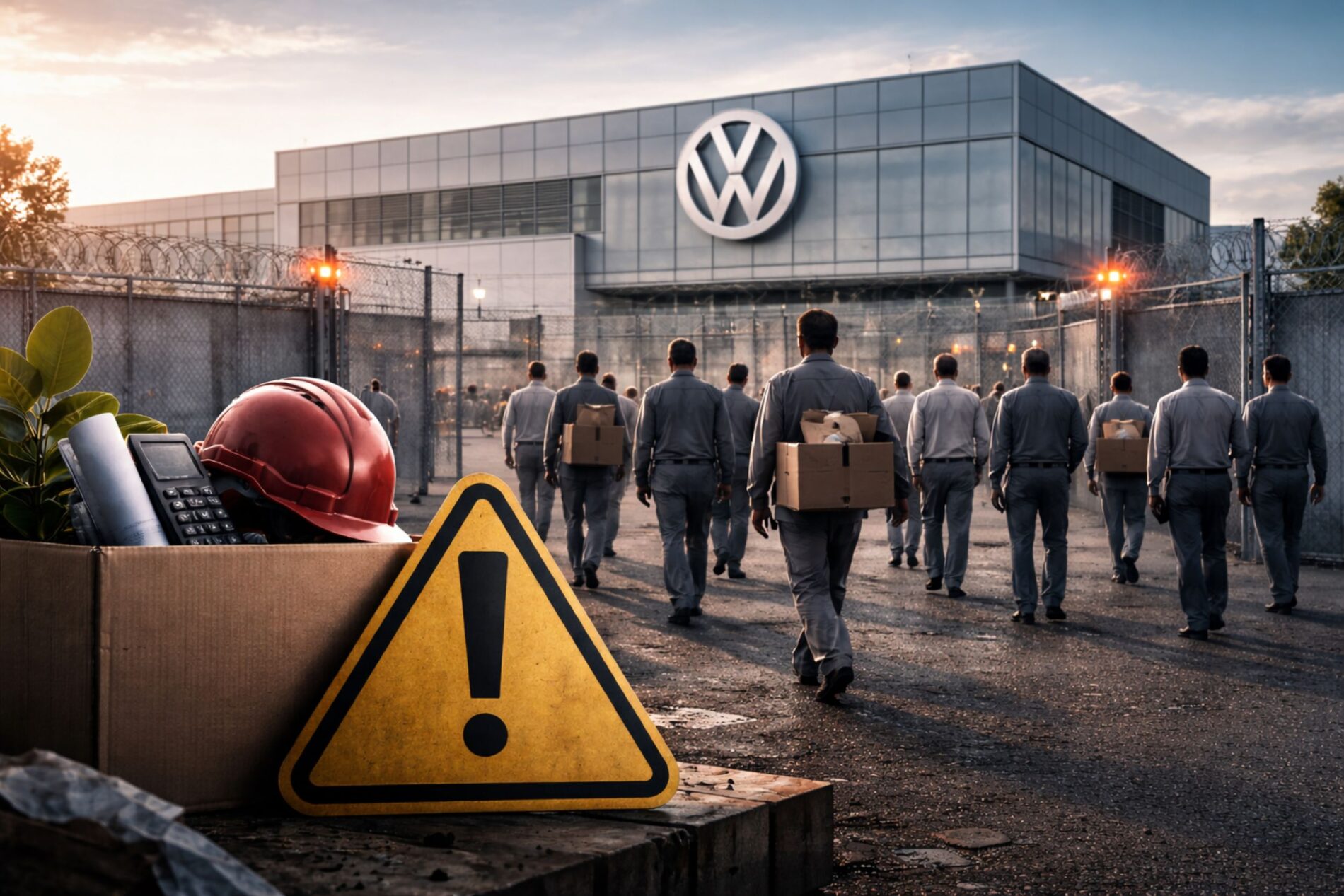
In internal discussions, those involved are not ruling out plant closures, and relocations are also considered a possible option. Volkswagen has not yet officially confirmed such plans. Nevertheless, scenario calculations are underway for individual locations. As a result, nervousness is growing at the plants.
In parallel, a workforce reduction plan already exists in Germany, which could encompass around 35,000 positions by 2030, with the company primarily relying on natural attrition and early retirement. However, this figure marks the scale of potential job losses. At the same time, additional cost targets could trigger new programs. Meanwhile, investors are demanding faster, more visible results.
In parallel, a workforce reduction plan already exists in Germany, which could encompass around 35,000 jobs by 2030.
Works Council Refers to Existing Commitments
The Group Works Council considers plant closures incompatible with existing agreements and also refers to a compromise from 2024. This compromise is intended to rule out redundancies and site closures for a specified period. Therefore, the employee representatives are opposed to further cuts. This is especially true when large numbers of jobs are at stake.
At the same time, it remains unclear how stable such commitments will remain under continued pressure to deliver results. The Works Council has announced its resistance to additional rounds of cost-cutting. Meanwhile, discussions are underway regarding capacity utilization and productivity. This could escalate the conflict.
Financial Situation and Special Measures
Volkswagen recently reported a surprising liquidity boost of around six billion euros, which also improved short-term cash flow. Reports also cite the sale of receivables as a contributing factor. Such steps buy time. However, they do not solve the structural cost problem.
Rating agencies are monitoring the situation, while some assessments have recently become more cautious. If financing costs rise, this will further restrict the company’s financial flexibility. Therefore, the board wants to take early countermeasures. The cost-cutting program also serves as a signal to investors.
Reasons: China, Software, Parallel Technologies
Margin pressure is coming from several directions, and competition from Chinese manufacturers is intensifying. In China, international brands are losing market share, while local suppliers are gaining momentum. At the same time, software development is consuming billions. This burden is impacting profitability.
In parallel, Volkswagen continues to finance combustion engine, hybrid, and electric vehicle platforms, while complexity and unit costs are increasing. Multiple development projects are driving up the cost of the model range. Therefore, the company is focusing on standardization and platform strategies. Without significant cost-cutting measures, management believes that greater job risks are looming in the long term.
Decision Dates Imminent
Volkswagen plans to provide further details at its next earnings presentation, where it will also specify areas of action. Until then, internal reviews are underway. Location decisions are usually made only after cost-benefit analyses. Short-term decisions are therefore considered unlikely.
The situation remains tense for employees and suppliers, while the question of job security is gaining importance. The previously mentioned figure of up to 35,000 jobs in Germany illustrates the potential scale of this issue. Therefore, negotiations between management and employee representatives are likely to be tough. The coming months will determine the true extent of the company’s restructuring.