
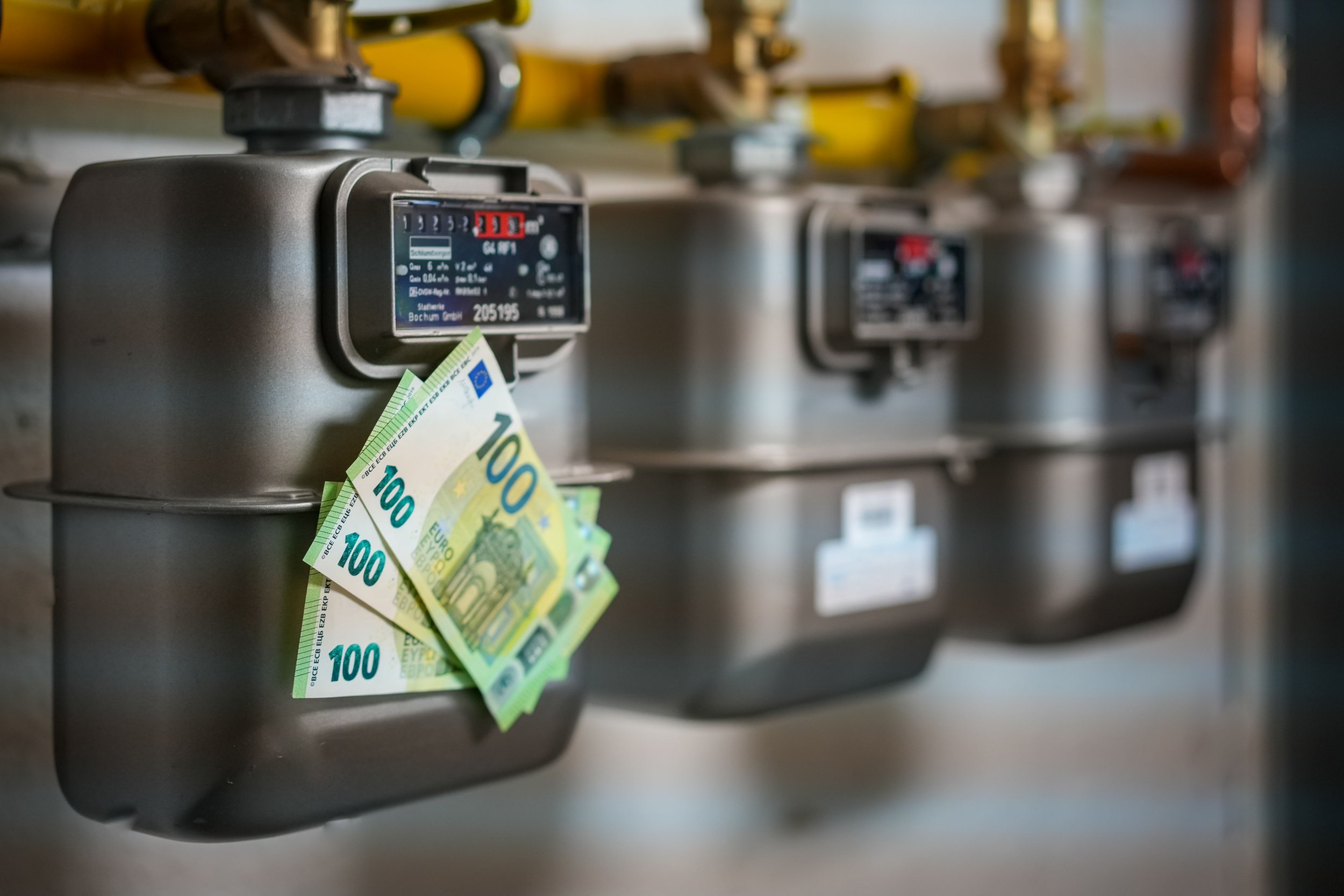
Rising natural gas prices in the US are triggering a chain reaction on international markets. The sharp increase is not only affecting North America – costs for consumers in Germany are also rising noticeably again. An early onset of winter, record-high exports, fluctuating gas prices, increasing taxes and levies, and global energy supply are shaping a development that directly impacts many households. (wj: 13.11.25)
Exports and weather are driving international markets
In the US, futures contracts for December are trading at $4.646 per MMBtu – around 67% higher than last year. An even stronger increase is expected for January. This is due to high LNG exports and early cold snaps. Exports are reaching levels that are tightening the US market and thus also affecting Europe.
In the first week of November, 34 LNG tankers carrying a total of 129 billion cubic feet of liquefied natural gas left American export terminals. These volumes are putting pressure on the balance of the global market and impacting European pricing. Germany is indirectly affected, as its energy supply is increasingly based on LNG.
Costs are also rising in Germany
Although no pipeline gas is imported from the US, global price fluctuations are having a noticeable impact on German households. Around 13% of gas imports are now handled via terminals. Many of these deliveries originate from the US. New facilities like the terminal in Wilhelmshaven are further amplifying this effect. The European TTF index climbed to a two-year high at the beginning of 2025.
According to the Federal Network Agency, average end prices in 2025 will be around 12.13 cents/kWh. This is almost twice as high as before the energy crisis. Costs for private households are rising, even though wholesale prices remain below historical extremes.
Politically Driven Price Increases Exacerbate the Situation
A major price driver remains the national CO₂ price. Since January, it has stood at €55 per ton, increasing the natural gas price by 0.65 cents/kWh. These levies are imposed regardless of the market price. No relief is in sight for network charges either. Verivox anticipates an average increase of 11% for 2026, which could mean approximately €36 in additional costs annually for an average household.
Furthermore, energy suppliers often procure energy on long-term contracts. As a result, price fluctuations only affect the final bill with a delay. While the raw material price in the US wholesale market is around 1.5 cents/kWh, German customers pay over 12 cents/kWh. This difference is primarily due to transportation, distribution, and network costs.
Limited Response to Rising Prices
Households react only minimally to price increases. A 2024 study shows that even a 10% rise in gas prices results in a mere 0.4% decrease in consumption. The calculated price elasticity is -0.04. This hits low-income households particularly hard: According to the German Institute for Economic Research (DIW), they spend an average of 11.7% of their income on gas, while high earners spend 2.4%.
For many, the rising costs are unavoidable. Affordable alternatives to natural gas heating are often lacking or cannot be implemented in the short term. The financial burden increases even though consumption barely decreases.
Persistent Price Risks Due to Global Energy Supply
In 2022 and 2023, Germany was able to significantly reduce its gas consumption due to mild winters, energy conservation, and declining industrial production. However, since 2024, demand has been rising slightly again. The structural reasons for the high costs remain: taxes, network charges, and international gas prices continue to drive prices up.
Developments in the coming months depend significantly on the weather in Europe and North America. If a prolonged cold snap occurs this winter, storage facilities could deplete – and the price spiral could start again. For many German households, this would mean further additional costs.