
The last ID.3 has been built, marking the end of an era at the Transparent Factory, an era that shaped Volkswagen for years. VW Dresden is losing its vehicle production, even though the site has long been considered a symbol of modern industry. Electric car production is ceasing, but at the same time, a new innovation campus is being built, intended to give Dresden a different role within the group. This transformation affects employees, technology policy, and Volkswagen’s strategic direction. (welt: 16.12.25)
Transparent Factory: One Last ID.3 and Many Unanswered Expectations
The farewell is deliberately staged. The last ID.3 remains in the Transparent Factory because it was signed by all employees. Volkswagen Saxony confirmed that this vehicle will be displayed as a memento. Thus, assembly visibly ends, but not without comment.
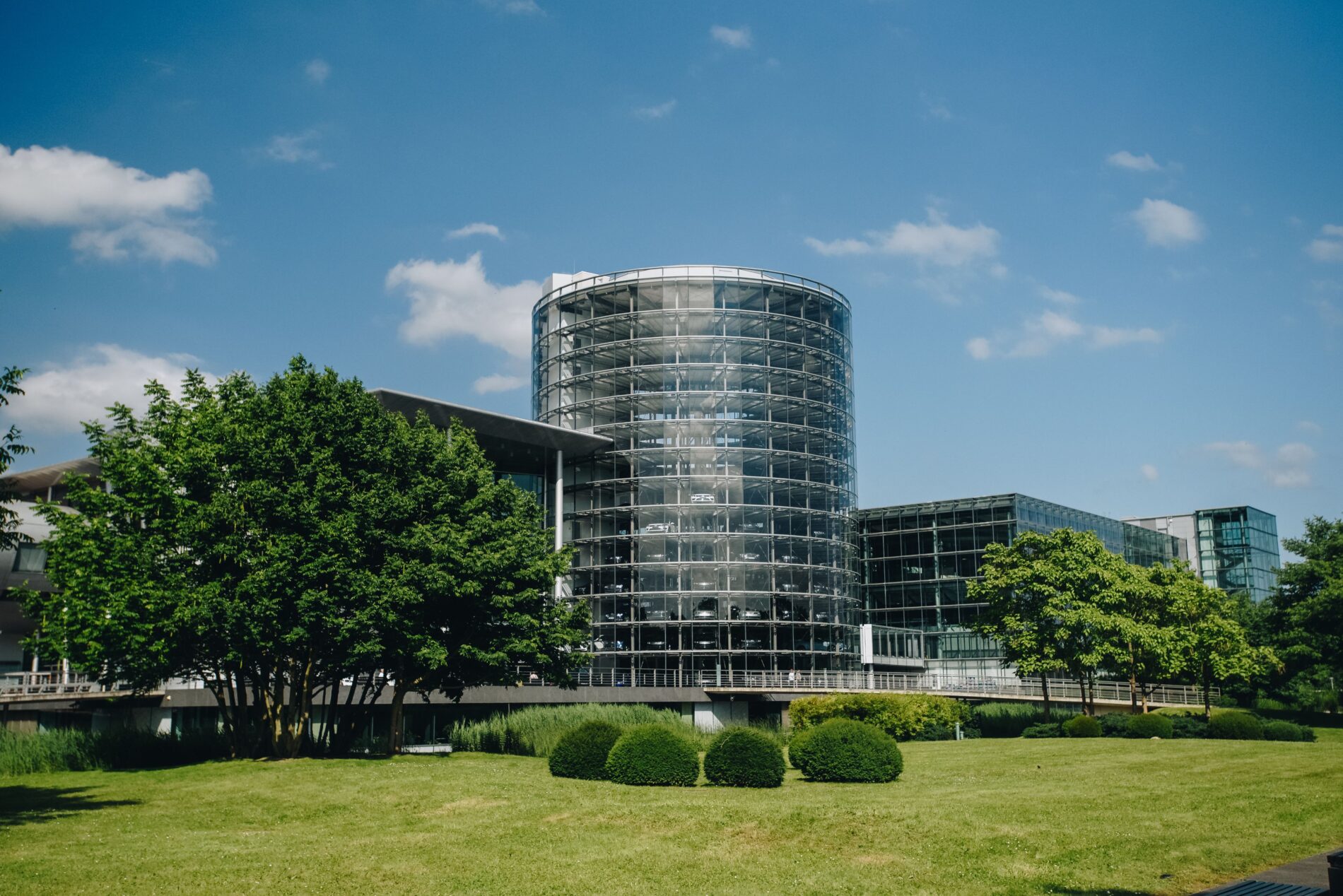
For VW Dresden, this moment is significant, as the site has always stood for proximity, transparency, and symbolic power. Visitors could watch the employees as vehicles were being built. This concept is now disappearing, even though the Dresden VW factory has long garnered attention within the group.
From Prestige Project to Pure Electric Vehicle Assembly
Initially, the transparent factory produced the Phaeton, a luxury model intended to showcase technological sophistication. Later, Volkswagen changed course due to shifts in markets and demand. In 2017, the complete switch to electric vehicle production followed, giving Dresden a pioneering role.
This phase began with the e-Golf, and from 2021 onward, only the ID.3 rolled off the assembly line. The VW electric compact car left its mark on the site, even though production figures remained low compared to Zwickau. VW Dresden thus evolved more into a showcase than a traditional large-scale plant.
Innovation Campus Instead of Production Line
The conversion begins in January 2026, marking the next major change. The production facilities are being dismantled while the innovation campus is being prepared. Volkswagen, together with the Free State of Saxony and the Technical University of Dresden, is investing more than €50 million to create new infrastructure.
The planned technology campus will focus on artificial intelligence, robotics, microelectronics, and chip design. With this move, VW Dresden is shifting its focus from traditional electric vehicle production to development work. The transparent factory will thus become a place where future technologies are created, rather than vehicles.
Science Takes Center Stage
The Technical University of Dresden will take over almost half of the site. Research, teaching, and industry will collaborate more closely, while Volkswagen will utilize the remaining areas. The Transparent Factory will remain as a delivery location, thus preserving the plant’s public character.
The Innovation Campus is scheduled to begin regular operations in 2027, with initial projects starting as early as 2026. For the VW plant in Dresden, this signifies a profound shift in role, one that will prioritize knowledge over production volume in the long term.
Employees Between Security and Change
Around 230 employees will continue to work at VW Dresden, at least during the transition phase. Volkswagen is focusing on training, internal transfers, and socially responsible solutions. These steps are part of a group-wide reorganization that consolidates production capacities and redefines locations.
The Transparent Factory will lose its assembly line but gain strategic importance. The shift from electric vehicle production to the Innovation Campus is changing the plant’s self-image. Dresden will remain part of VW’s future, but in a completely new role.