
TotalEnergies is considering selling its charging infrastructure division in Germany. BayWa has already officially confirmed the sale of its electric vehicle charging station business as part of a multi-year restructuring. TotalEnergies has a portfolio of approximately 190 charging parks up for sale, of which only about a third are currently operational. The package includes subsidies “in the hundreds of millions” for sites yet to be built. The risk is increasing because a buyer would have to assume not only the sites themselves but also obligations to Deutschlandnetz, the German grid operator. These include expansion, commissioning, grid connection, and adherence to schedules. The package ties up capital because the buyer would have to complete the sites that are not yet operational and finance them until they are ready for use. Therefore, the financial risks are growing. (thepioneer: 27.02.26)
TotalEnergies is keeping quiet, but is conducting exploratory talks
TotalEnergies is not commenting on the information in the sales documents. However, sources within the company say: “Exploratory talks are taking place in the market, but no decision has been made yet.” This suggests an options review, as no firm decision to sell has been mentioned. Roland Berger is reportedly approaching potential buyers, which suggests a structured mandate.
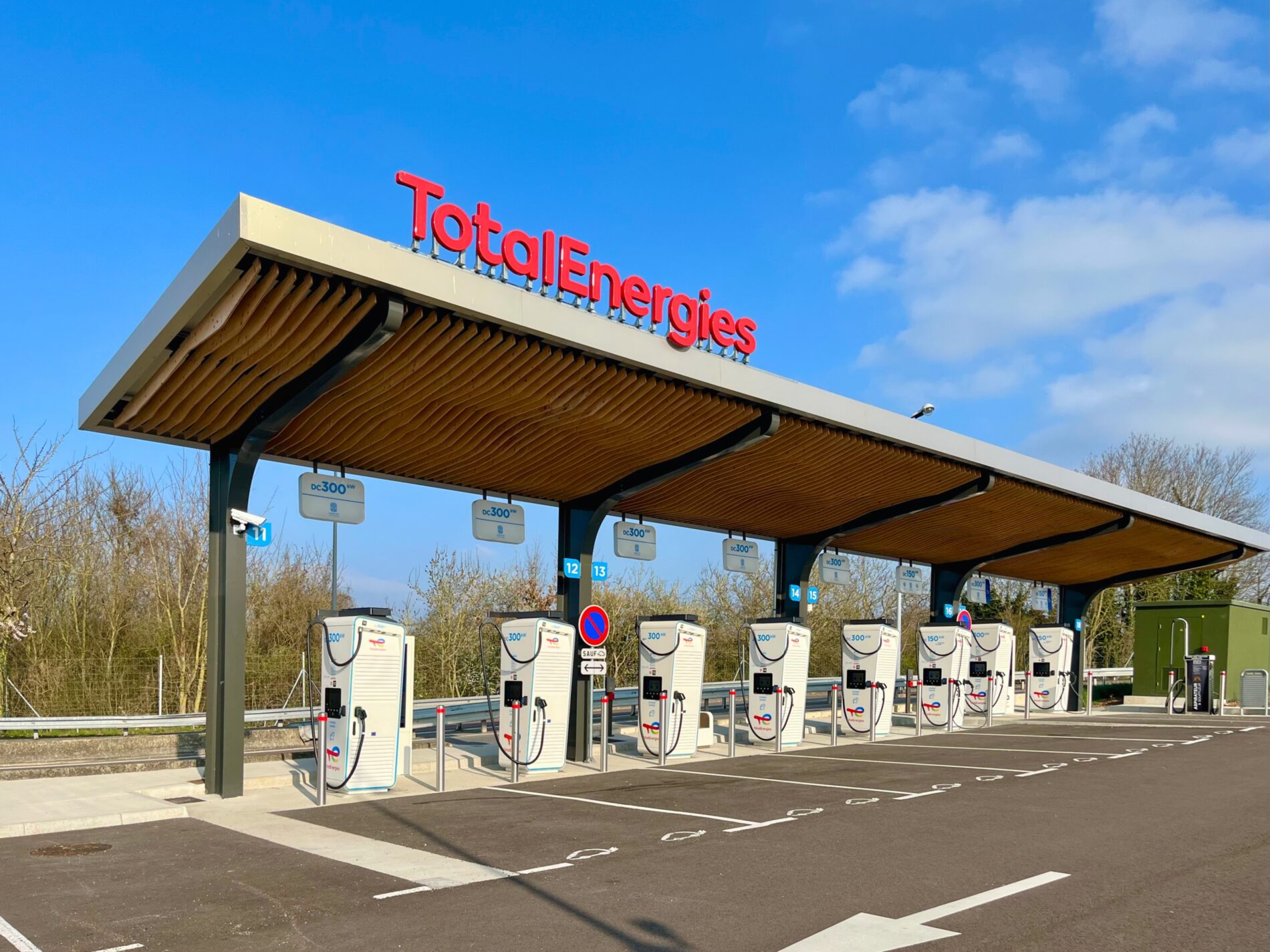
The company already made a strategic shift in Germany earlier. At the beginning of 2023, TotalEnergies sold its German network of service stations, as well as its network in the Netherlands, to Couche-Tard, which operates under the Circle K brand. At the time, TotalEnergies justified the move with a stronger focus on hydrogen and charging in markets without market leadership. Now, this strategy is under renewed pressure because the charging business in Germany has not yet delivered a convincing outlook.
Returns come late – high investments are due early
The charging business has so far generated losses. Expansion remains expensive because construction work, land leases, and technical infrastructure have to be pre-financed. At the same time, the utilization rate at many locations is growing more slowly than the expansion. This increases the pressure to streamline or divest portfolios.
The documents indicate that an operational turnaround is not expected until the medium term. TotalEnergies is targeting positive EBITDA for 2027, which is why the return on investment is significantly behind the largest expenses. This explains the appeal of selling off the entire portfolio, as a buyer would assume the burden of the lean period. While subsidies provide some relief, they tie funding to conditions and deadlines.
Deutschlandnetz makes the deal harder to calculate
TotalEnergies acquired a stake in Deutschlandnetz and won large packages. The company was awarded contracts for approximately 1,100 of the 9,000 planned fast-charging points. In addition, it secured three regional lots with a total of 134 locations in 2023, as well as further contracts for highway lots. A buyer would have to assume these obligations until commissioning, which increases the upfront financial requirements. These obligations directly impact planned charging parks because implementation and subsidies depend on specifications and commitment periods.
Deutschlandnetz is intended to ensure competition. It aims to prevent local concentration, which is why changes in operator can be politically and regulatory sensitive. This reduces the number of realistic potential buyers because additional due diligence processes affect price and speed. Consequently, the transaction risk increases because uncertainty depresses valuations.
BayWa Confirms Sale – Restructuring Sets the Framework
The situation at BayWa is clearer because the intention to sell is now official. The agricultural group ran into financial difficulties after management errors and is working on a comprehensive restructuring. As part of this, BayWa is selling holdings and subsidiaries because the group needs liquidity. BayWa explained: “Yes, BayWa is selling holdings and subsidiaries as part of its multi-year restructuring. This includes, among other things, the electric vehicle charging station business.”
BayWa’s stake in Deutschlandnetz is small. The group only holds one lot with 20 locations, which is why the Deutschlandnetz component is less dominant than at TotalEnergies. BayWa also operates charging stations outside of the network, some at BayWa gas stations in rural areas. This can attract buyers because land is available, but utilization remains a gamble.
Market Phase Shifts from Growth to Risk Assessment
The parallel pressure to sell reflects the mood of the industry. Expansion remains necessary, but capital will only flow if return paths are reliable. TotalEnergies is testing its pace because the financing path is long despite substantial subsidies. BayWa is selling because restructuring requires funds. Therefore, the decisive factor is not the sheer number of units, but rather the distribution of risk within the overall package, encompassing locations and obligations – and ultimately, the few existing, viable charging parks.