
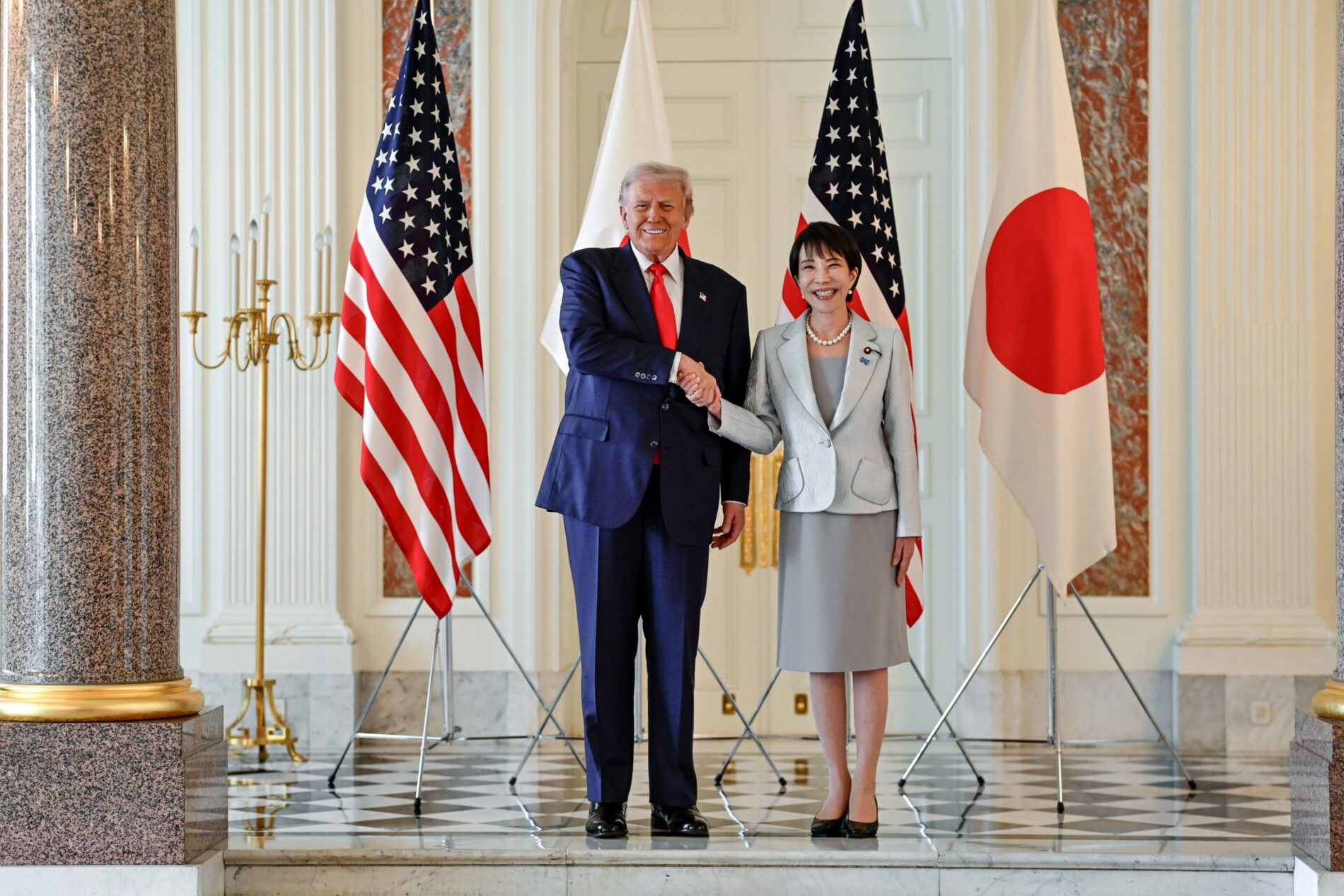
Japan and the US have agreed on a new energy sector cooperation in Washington. During Japanese Prime Minister Sanae Takaichi’s visit to US President Donald Trump, it was decided that a Japanese-American joint venture will build small modular reactors in Tennessee and Alabama. The project is valued at nearly €35 billion. Investments of almost €29 billion (approximately €100 million) in natural gas power plants in Pennsylvania and Texas were also agreed upon. The impetus for this package is the import tariffs introduced by Trump. In return, Japan has pledged substantial investments to achieve lower US tariffs. The key risk factor, therefore, lies in the close link between trade policy and energy projects. The consequences range from new power plants in four states to the planned stabilization of electricity prices and additional energy for data centers. (zeit: 20.03.26)
Cooperation between the US and Japan becomes part of a larger tariff deal
The energy projects, however, are not isolated. They are part of a much larger commitment from Japan to the US. In total, Tokyo has pledged investments of $550 billion, equivalent to approximately €478 billion. This is intended to reduce the tariff pressure imposed by Trump. In this case, Japan is directly linking energy to trade policy.
In the nuclear sector, both sides are focusing on Small Modular Reactors, or SMRs. These smaller reactors are to be built in Tennessee and Alabama. They will be constructed by GE Vernova Hitachi, a joint venture between General Electric and the Japanese corporation Hitachi. The cooperation thus builds upon an existing industry association between the two countries. The project is therefore not only an energy initiative, but also a strategic expansion of industrial cooperation.
New power plants are intended to stabilize prices and supply data centers
In addition to nuclear power, the partners are planning new natural gas power plants in Pennsylvania and Texas. Investments totaling nearly €29 billion have been agreed upon for this purpose. According to official statements, these plants are intended to help keep electricity prices stable for American consumers. They will also supply energy to data centers. This last point is particularly important because the electricity demand for digital infrastructure in the US is growing rapidly.
The agreement therefore demonstrates a clear political and economic strategy. The US will receive new energy projects in several states, while Japan, through its cooperation, is seeking concrete concessions in the trade dispute. Nuclear and gas-fired power are being deliberately combined. Gas can provide power more quickly, while new reactors are intended to create additional capacity in the long term. At the same time, the agreement underscores how closely security of supply, industrial policy, and international trade interests are now intertwined.