
In the spring of 2026, Timmy the humpback whale strayed into the Baltic Sea and became the subject of a costly rescue operation off the coast of Mecklenburg-Western Pomerania—despite experts expressing skepticism regarding his chances of survival. Although the animal was considered weakened, authorities, rescue workers, and private donors nevertheless opted to attempt transporting him toward the North Sea. Later, Danish authorities discovered a dead humpback whale near Anholt and investigated whether it was indeed Timmy. Following his death, another error came to light: according to new information, the whale—which “experts” had identified as a male—was actually a female. Consequently, the case now stands as a symbol of exorbitant costs, invasive interventions, international criticism, and a politically indefensible outcome.
Timmy Illustrates the Pattern of German Politics
The case appears so explosive precisely because it exposes a familiar pattern. Germany identifies a problem, debates jurisdictional responsibilities, and then mobilizes considerable resources. At the same time, it often remains unclear whether the measures actually achieve their intended objective.
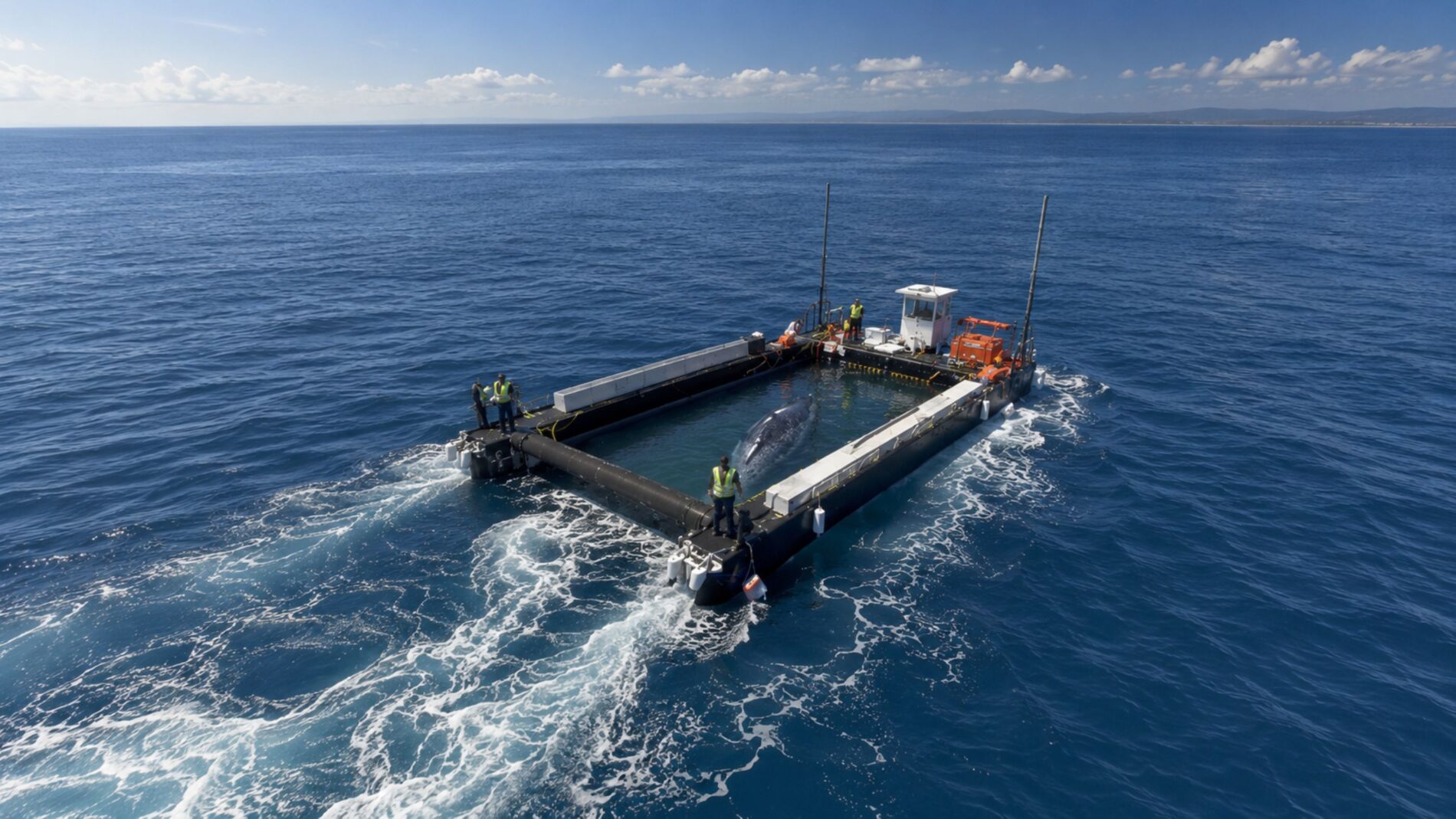
In Timmy’s case, this very conflict was laid bare. A whale entered unsuitable waters and appeared to be showing clear signs of distress. Nevertheless, a rescue dynamic emerged—one seemingly intended to demonstrate a capacity for action. In the end, the animal did not die in the Baltic Sea, but rather later, in Danish waters within the North Sea.
Whale Rescue Becomes a Political Microcosm
The whale rescue therefore serves as a reminder of other areas of crisis in Germany. In sectors such as energy, infrastructure, migration, and bureaucracy, complex and drawn-out processes frequently take shape. Yet, at the same time, many citizens feel a distinct lack of clear priorities, swift decision-making, and measurable results.
Even before the animal’s death, The Guardian reported on significant criticism voiced by experts. Both the International Whaling Commission and marine researchers deemed further rescue attempts inadvisable. Furthermore, they warned against subjecting an already presumably severely weakened animal to additional stress. It is precisely this warning that renders the subsequent outcome so politically sensitive.
Foreign Media Pick Up on the German Drama
Reuters maintained a sober tone, noting the official identification of the carcass. At the same time, however, the agency characterized the operation as controversial. Critics, it noted, had identified a high risk of stress for an animal that was likely ill or disoriented. Consequently, Reuters serves as a reliable source for gauging the international perception of the event.
British tabloid media adopted a far sharper tone. The Sun described the operation as a “failed and expensive rescue mission”, citing a cost of approximately 1.4 million euros. Moreover, the newspaper placed particular focus on the whale’s bloated carcass and the potential hazards it posed to onlookers. This tone illustrates just how quickly a German rescue operation can morph into an object of international ridicule.
The Gender Mix-up Amplifies the Symbolism
Following Timmy’s death, it came to light that the whale was, in fact, female. At first glance, this detail might appear to be merely a biological technicality. Yet, at the same time, it intensifies the political interpretation of the case: for weeks, Germany was abuzz with talk of “Timmy”—yet even such a fundamental piece of information remained incorrect right up until the very end.
This error, therefore, aligns perfectly with the broader underlying criticism. A great deal of attention, high costs, and grand moral gestures could not substitute for a clear grasp of the situation. Moreover, the case demonstrates just how quickly a wild animal can turn into a political project. In the end, what remained was not only a dead whale but also further evidence of an unclear basis for decision-making.
The Carcass Debate Prolongs the Failure
However, the drama did not end with the death. Danish authorities issued warnings regarding the carcass, noting that decomposition gases, pathogens, and potential pressure releases posed significant risks. People magazine reported that experts had even warned of the possibility of a dangerous explosion of the whale’s body. Thus, the focus of the case shifted from rescue efforts to hazard mitigation.
This is precisely where the political parallel lies. First, an emotionally charged exceptional situation arises. This is followed by costly measures, expert disputes, and administrative wrangling. Ultimately, all that remains is a dead whale, while the next debate—concerning salvage, examination, and accountability—begins.
A Symbol of Effort Without Result
Consequently, the story of Timmy is not a rejection of compassion. Rather, the case stands as a critique of a style of politics that often mobilizes moral gestures far more quickly than it makes sober, rational decisions. Furthermore, it illustrates how public pressure can override expert judgment.
Observers abroad are not merely laughing at a dead whale; they are recognizing a fundamental German problem: high costs, convoluted procedures, and an outcome that no one can convincingly explain. Timmy entered the Baltic Sea only to die. Following the rescue operation—and amidst a flurry of hype and mounting costs—the whale ultimately perished in the North Sea, off the coast of Denmark. Even its gender was not correctly identified until after the fact. It is precisely this sequence of events that transforms this case into a symbol of a political culture that mistakes sheer effort for an actual solution. (KOB)