
In Germany, criticism of the energy transition is intensifying. While the latest CO2 balance sheet shows declining emissions, these are primarily due to the reduction of energy-intensive industrial production. At the same time, the further expansion of wind and solar power requires billions of euros in investments in grids, storage facilities, and reserve power plants. The debate is thus triggered by two separate but consequential findings. First, domestic CO2 emissions are also decreasing because companies are producing less or shifting production capacity. Second, with each additional weather-dependent feed-in of electricity, the need for technical safeguards increases, meaning that the promised cheap green electricity fails when faced with a realistic cost analysis. Industry, employees, and private households are all affected, while future policy measures will have a greater impact on housing and transportation. It is precisely at this point that the myth of a cheap and low-impact energy transition loses its credibility. (welt: 19.03.26)
The myth of cheap green electricity falls apart when confronted with real costs
The public debate often revolves around the production costs of wind and solar power. However, this view remains too narrow because it doesn’t fully capture the overall system. Electricity must be available at all times, even during periods of calm, darkness, or grid congestion. Therefore, a system with a high proportion of weather-dependent sources requires additional lines, storage facilities, and reserve capacity. These very factors drive up costs. Economist Manuel Frondel criticizes the political portrayal of the situation. He says: “Renewable energies are persistently being presented in a better light than they deserve, based on inaccurate claims.”
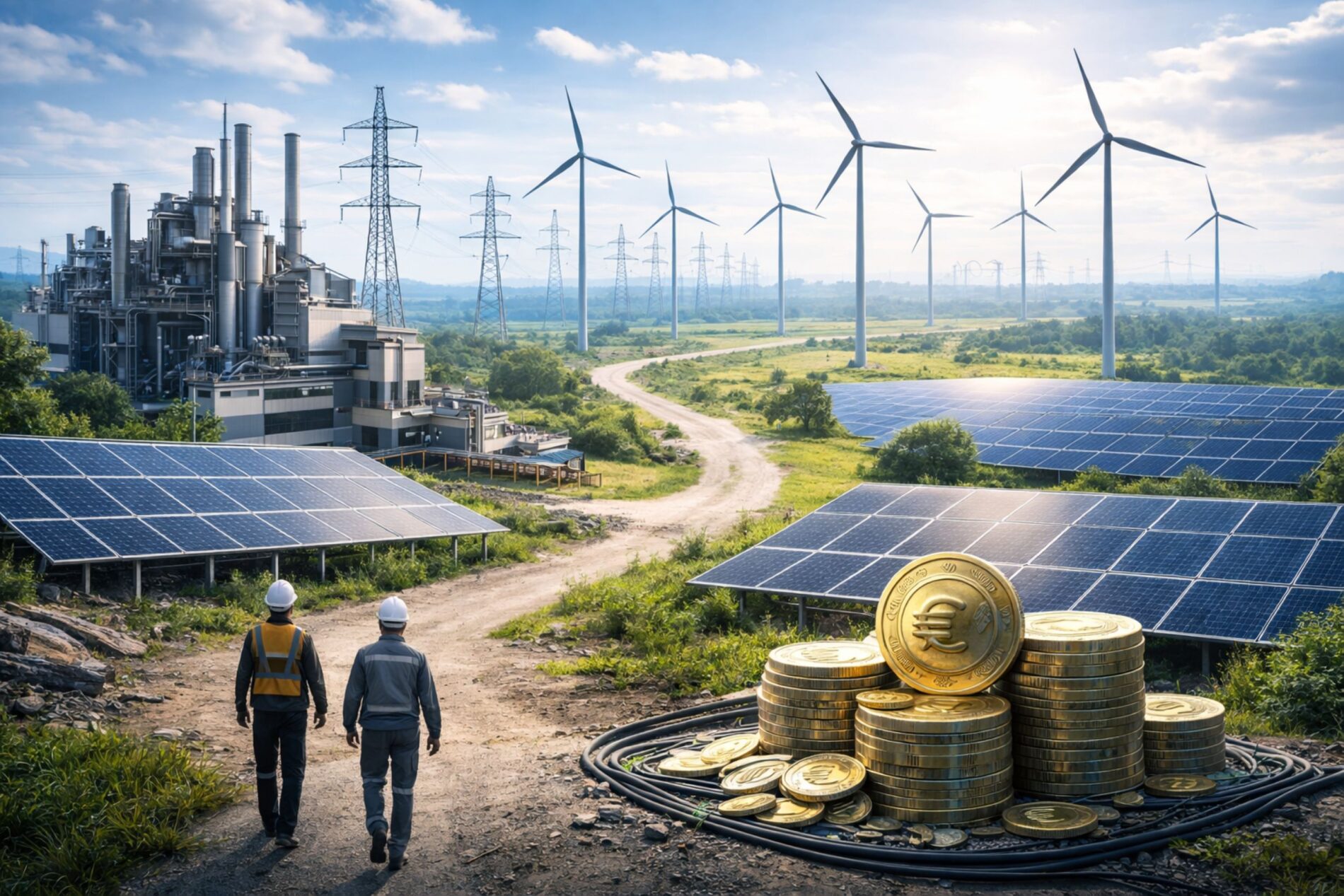
His objection targets the fundamental assumption of the entire transformation. If renewable energies were truly the most cost-effective technology in practice, they would hardly have required subsidies exceeding 500 billion euros. Added to this are the subsequent costs of grid expansion, which will continue to rise in the coming years. The cost of new power lines alone is estimated at around 730 billion euros. Furthermore, volatile energy sources increase the need for interventions to stabilize the grid. Therefore, the declining generation costs of individual renewable energy plants are insufficient proof of a cost-effective electricity system. The myth of cheap green electricity only holds true as long as these system costs are ignored.
National CO2 emissions are improving, while the global balance is tipping
At first glance, the decline in German CO2 emissions appears to be an energy policy success. However, this assessment only holds true if one ignores the production location. If steel mills, chemical plants, or other energy-intensive industries reduce their output in Germany, domestic emissions do indeed decrease. But the global climate does not automatically benefit. At best, emissions remain the same because the same goods are produced elsewhere. An increase is even more likely, because many alternative production sites operate with a more emissions-intensive energy mix.
For Germany, there are also economic consequences. With production, added value, investment, and industrial depth disappear. High electricity prices accelerate this trend because companies expand their capacities where energy is cheaper and more reliably available. At the same time, buildings, heating systems, and mobility are increasingly becoming a focus of policy. As a result, the costs are impacting the lives of millions of citizens more directly than before. The conflict, therefore, no longer revolves solely around new facilities. It revolves around the question of whether an industrialized nation can simultaneously secure climate goals, affordable energy, and economic stability. Without honest figures, sound cost accounting, and greater technological openness, the major transformation risks not becoming a viable model, but rather a structural loss of prosperity, security of supply, and industrial performance.