
The FRM II research reactor at the Technical University of Munich has been shut down for almost six years, even though it is needed as a neutron source. This has resulted in a shortage of medical radioisotopes, and at the same time, the transport of nuclear waste remains on hold. Meanwhile, critics and operators continue to argue about the fuel, because the reactor is currently permitted to operate with highly enriched uranium. (welt: 12.01.26)
The immediate consequences of the research reactor shutdown
The shutdown postpones experiments, delays industrial orders, and complicates the supply of medical radioisotopes. As a result, research groups are switching to other facilities, which costs time and disrupts planning. At the same time, projects are being reprioritized because measurement time at a large neutron source is scarce.
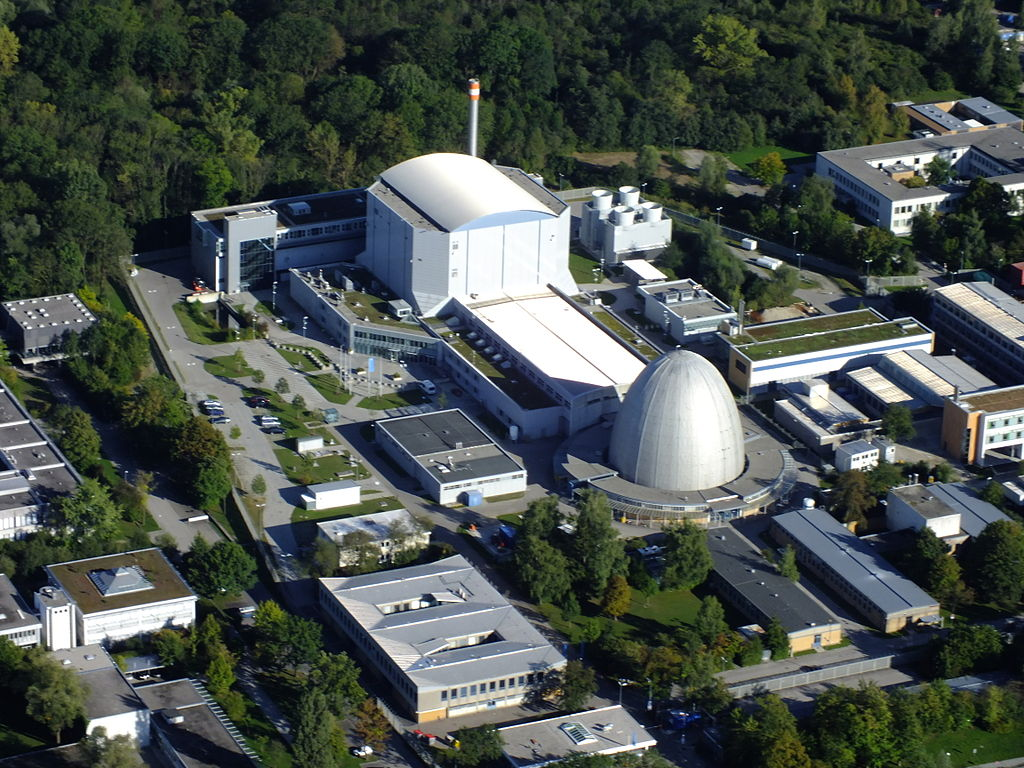
Image: Graf-flugplatz, CC BY-SA 3.0, via Wikimedia Commons

Inquiries are also coming from industry, particularly from materials testing and the healthcare sector. Contracts already signed indicate that companies are anticipating a return. Nevertheless, the situation remains fragile because delivery dates are difficult to meet without a reliable start date.
Nuclear Waste Transport and Spent Fuel Pool: Logistics as a Second Challenge
Furthermore, the spent fuel pool in Garching is nearly full. Therefore, the transport of nuclear waste to Ahaus will become a focus as soon as the research reactor is operational again. The permit for transport and storage is valid until summer 2027, a deadline that is rarely uncontroversial in safety matters.
However, the date remains confidential for security reasons. Nevertheless, it is clear that any further delay reduces the available options, as the storage capacity at the site is not growing with demand. Thus, the next nuclear waste transport becomes a matter of operational practice, not just politics.
Courts Provide Clarity Regarding Highly Enriched Uranium
Meanwhile, a legal hurdle has been cleared. Lawsuits against the operation of the reactor with highly enriched uranium failed, thus making continued operation with this fuel legally permissible. Critics argue that it poses proliferation risks, as highly enriched uranium, in their view, has a security policy dimension.
The operators, on the other hand, point to technical hurdles preventing its misuse. They argue that weapons-grade uranium requires special reprocessing, and such facilities exist in only a few countries.
The central channel as the core problem: manufacturing has been dragging on for years
Ultimately, however, one component determines the restart: the central channel. It carries the fuel element, and without it, the neutron source provides no beam time. What sounds like a routine matter has turned into a technical test of patience, because the replacement was ordered back in 2013 and was originally supposed to arrive in 2014.
FRM-II spokesperson Anke Görg describes the effort without embellishment: “Nobody would have thought that manufacturing the central channel would be so complex.” At the same time, she tempers expectations regarding a specific date: “This currently prevents us from making a precise statement about the restart.” Nevertheless, she clearly states the goal: “For 2026, we want nothing more than to have many neutrons available for science at FRM II.”
New Fuel: Progress, but No Quick Solution
Meanwhile, the operators are working on a fuel with less than 20 percent enrichment. A crucial test was deemed successful shortly before Christmas, and the licensing application was submitted before the end of the year. Nevertheless, the timeframe remains long, as operational fuel rods are not expected until the early 2030s.
Until then, the research reactor will remain in a transitional phase, and the neutron source depends on progress on the central channel. For hospitals, however, every day of downtime counts, because radionuclides as an alternative to radioisotopes are not infinitely scalable. Industry is also recalculating, because material testing and process development lose precision without reliable measurement windows.
Terms and Lines of Conflict: Why the Debate Isn’t Beating Down
Ultimately, technology, law, and issues of public acceptance are encapsulated in just a few terms. Castor transport is synonymous with nuclear waste transport, and it has a different impact on the public than a licensing decision. Therefore, every movement toward transportation remains politically charged, even if the process is legally regulated.
At the same time, the debate surrounding highly enriched uranium persists because safety concerns don’t simply disappear with a court ruling. And while an experimental reactor like the FRM II serves scientific operations, in practice, the availability of infrastructure often dictates the outcome: Without a stable neutron beam capacity, research plans, supply chains, and medical care all falter.