
The failed F126 frigate procurement project could end up costing the federal government significantly more. Following the project’s suspension, the Dutch shipyard Damen is claiming €4.68 billion (net) based on contractual payment and indemnification claims. According to their lawyer, Peter Gauweiler, this figure does not yet include additional compensation for damages. The background to the situation is particularly contentious: although the Ministry of Defence had already documented delays in 2024, the federal government ordered two additional ships at that time. In June 2026, Defence Minister Boris Pistorius finally halted the entire program due to massive schedule and cost overruns. Now, in addition to costs running into the billions, a protracted legal dispute looms.
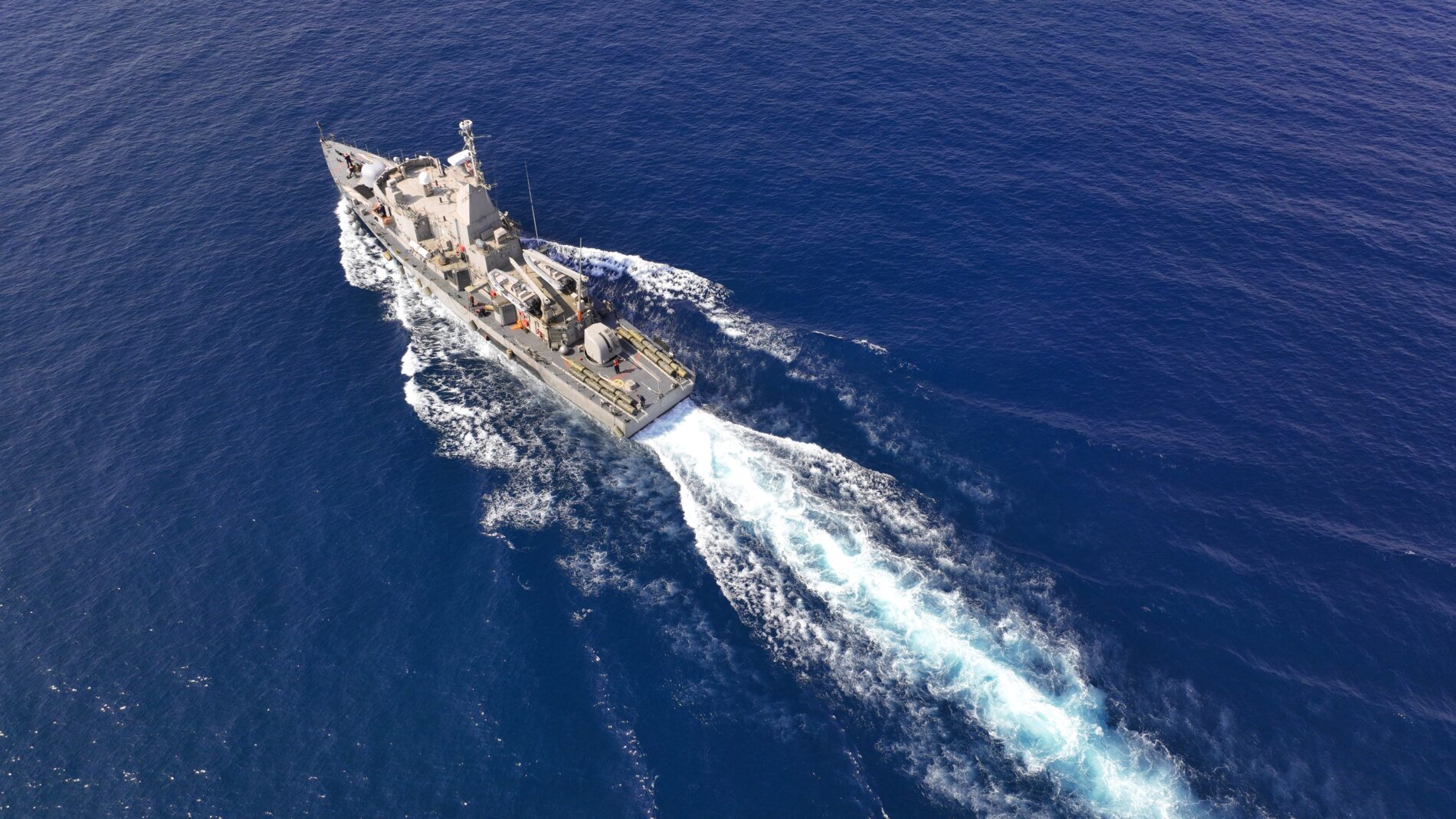
Image: Shutterstock
F126 Frigate: Six Warships Spark a Multi-Billion-Euro Dispute
Damen has put the value of its claim at exactly €4,679,663,394 (net). According to Gauweiler, this amount represents payments due under existing contracts rather than compensation for damages. A significant portion is said to cover obligations to subcontractors. Additionally, Damen is seeking recognition of further damages—both those already incurred and those anticipated in the future—though the final amounts have not yet been determined.
Consequently, the project is not simply ending with the construction halt; instead, it is entering a costly legal phase. The federal government, however, holds Damen responsible. In July, Pistorius cited inadequate performance by the contractor, and the ministry is now examining potential claims of its own against the shipyard. Precisely who will ultimately have to pay these multi-billion-euro sums is unlikely to be settled until extensive legal proceedings have concluded.
Federal government knew of delays—yet ordered two more ships anyway
The decision made in 2024, however, particularly requires explanation. The Ministry of Defence’s armament report from that time had already documented difficulties regarding the IT interfaces between Damen and its subcontractors. Even then, these problems were causing production delays. Nevertheless, the Budget Committee approved the option for ships five and six in June 2024. A few days later, the federal government exercised that option.
As recently as early June 2024, Pistorius had presented the F126 frigate—during its keel-laying ceremony in Wolgast—as a key component of the German Navy. Six ships were intended to ensure operational readiness and endurance. At that time, the Bundeswehr was still sticking to the plan of handing over the first ship in 2028. Two years later, nothing remained of that plan; the Ministry of Defence terminated the entire program on June 24, 2026.
Costs spiraled from around ten billion to as much as 18.8 billion euros
The financial trajectory illustrates the scale of the project’s failure. According to the federal government, the contract value for six F126 frigates had most recently stood at around ten billion euros. However, a planned switch of the prime contractor to NVL would have raised the project cost to 15.2 billion euros. Factoring in the work already performed by Damen, the Ministry ultimately calculated a total cost of up to 18.8 billion euros. That is why Berlin pulled the plug.
Yet the bill does not simply vanish. According to statements made at the government press conference, the value of work already performed amounts to several billion euros. On top of this come Damen’s claim for 4.68 billion euros and potential further claims for damages. At the same time, Germany must finance replacement vessels. The Budget Committee has already approved just under 6.3 billion euros for an initial four MEKO A-200 ships.
The Navy must now bridge the gap with a new type of ship.
Instead of the six F126s, the Navy is now set to receive up to eight MEKO A-200s. The Bundeswehr itself acknowledges a resulting capability gap in anti-submarine warfare. The first replacement ship is scheduled for delivery in late 2029. Consequently, a new procurement program—operating under significant time pressure—must compensate for capabilities that will no longer be achieved through the F126.
The core issue, therefore, remains the sequence of decisions. In 2024, the federal government expanded the program to six ships, despite difficulties that were already on record. In 2025, billions were earmarked for a potential alternative while the original program continued. Finally, in June 2026, the project was completely scrapped. Now, Damen is demanding billions more, even as Germany simultaneously procures new frigates. What began as a naval modernization project has thus turned into a complex dispute over costs, contracts, and lost time.
Author: Blackout News
Sources: Business Insider (01.10.26) – Sueddeutsche (01.10.26) – ntv (01.10.26) – Bundeswehr (08.07.26)