
The canton of Aargau intends to permit new nuclear power plants in the future, following a realignment of its energy strategy by the Grand Council. The decision in Aargau came just two weeks after the Council of States’ proposal in favor of new nuclear power plants and therefore marks a clear shift in energy policy. The trigger was pressure from the center-right parliamentary majority on the government, which had originally focused primarily on strengthening wind, hydropower, and photovoltaics. Now, however, the focus is on “low-CO₂” and “technology-neutral” electricity production, which also includes the construction of a new nuclear power plant. This is a sensitive issue because three of Switzerland’s four active nuclear power plants—Beznau 1, Beznau 2, and Leibstadt—are already located in the canton, and Beznau 1 and 2 are expected to be decommissioned around 2032. For the canton and Switzerland, the issue at stake is therefore replacement capacity, security of supply, and high costs, while the ban on new construction, financing, and the timeframe for implementation remain unresolved. (srf: 25.03.26)
Aargau abandons its focus on expanding renewable energy
The government had initially planned a different course. It aimed to increase electricity production from renewable sources from 3.7 to at least 6 terawatt-hours by 2036. Wind, hydropower, and photovoltaics were intended to be the primary contributors. This strategy clearly focused on expanding renewable energy sources.
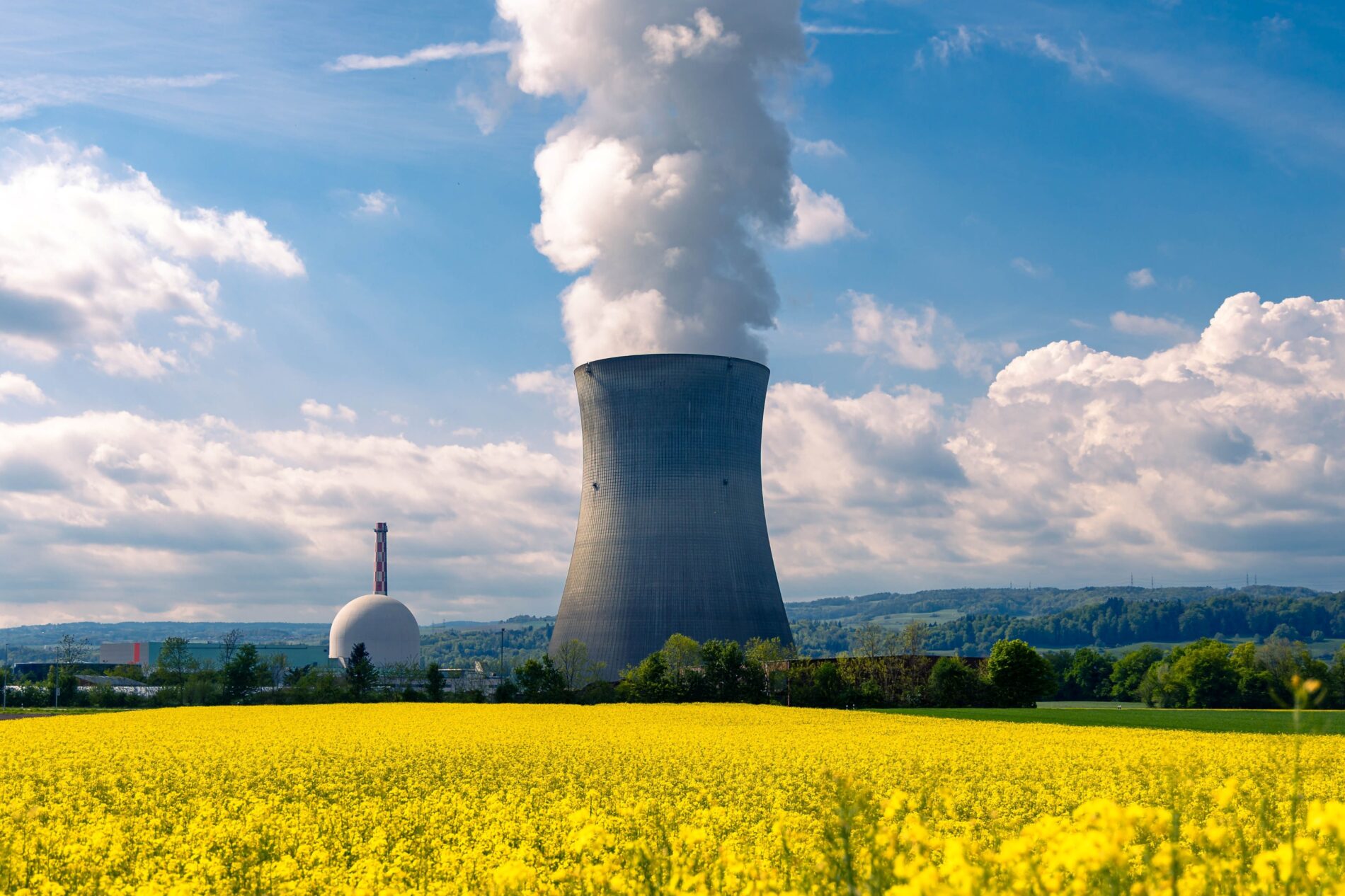
Parliament intervened, however, and shifted the focus. The responsible commission demanded that Aargau continue to generate more electricity than the canton itself consumes. The canton is thus expected not only to meet its own demand but also to supply electricity to the whole of Switzerland. Therefore, the center-right majority enshrined the goal of “technology-neutral production” in the energy strategy, paving the way for new nuclear power plants.
Majority in Parliament Pushes Through New Course
This change also altered the strategy’s target. Instead of merely increasing the share of renewable energies, the canton is now to produce more than twice as much electricity annually from “low-CO₂” sources by 2035. This term is politically crucial because it encompasses not only hydropower and solar power but also makes new nuclear power plants possible.
The reason is obvious: the canton already produces around 15 terawatt-hours of electricity per year, primarily from nuclear power. When the Beznau 1 and 2 nuclear power plants are decommissioned around 2032, a significant gap will emerge. That’s precisely why many see the new strategy as preparation for another nuclear power plant. At the same time, several conservative politicians considered a future of electricity generation based solely on solar and wind power to be too uncertain.
Open questions regarding the ban, construction time, and billions in costs
In the Grand Council, the center-right majority clearly prevailed. The Swiss People’s Party (SVP), the Free Democratic Party (FDP), and the Centre Party voted in favor of the goal of low-CO₂ electricity production, while the left-wing Greens opposed it. The decision was passed with 89 votes to 44, once again clearly demonstrating the balance of power in parliament.
The debate was heated, but with clear messages. Pascal Furrer of the SVP stated: “We need nuclear energy. Of course, the people will ultimately decide, but Aargau is ready.” Others warned against illusions, declaring: “Anyone who believes we can simply launch a nuclear power plant express train is in denial.” Energy Director Stephan Attiger added: “The technologies will be decided in Bern. It could lead to new nuclear energy, or it could lead to gas as a transitional measure.”
Despite the political signal, the construction of new nuclear power plants remains prohibited in Switzerland for the time being. However, the so-called Blackout Initiative and a counter-proposal from the Federal Council aim to lift this ban. Even then, a new power plant wouldn’t be built quickly, as Axpo anticipates that no new nuclear power plant would be operational before 2050. Furthermore, the company estimates construction costs at 7 to 10 billion Swiss francs, while financing remains uncertain. A 2025 report by the Energy Commission of the Swiss Academy of Sciences also concluded that a new plant would likely be impossible without public funding.