
Sweden is slowing down its climate protection efforts, even though the country was long considered a pioneer of the green transition. At times, the expansion of green energy and the pace of political action were significantly ahead of Germany and many other European countries. Now, however, economic thinking dominates, and the government is setting different priorities. Several funding programs have been reduced or even eliminated entirely. The focus of energy policy is once again shifting more strongly towards nuclear power as an anchor of stability. (bloomberg: 14.01.26)
Political Shift Meets Climate Policy and Everyday Life
Six years ago, Greta Thunberg and “Fridays for Future” urged members of parliament to take action with loudspeakers and whistles. Today, sometimes only two people stand there with a cardboard sign as passersby walk past. And this emptiness reflects the changed political climate.
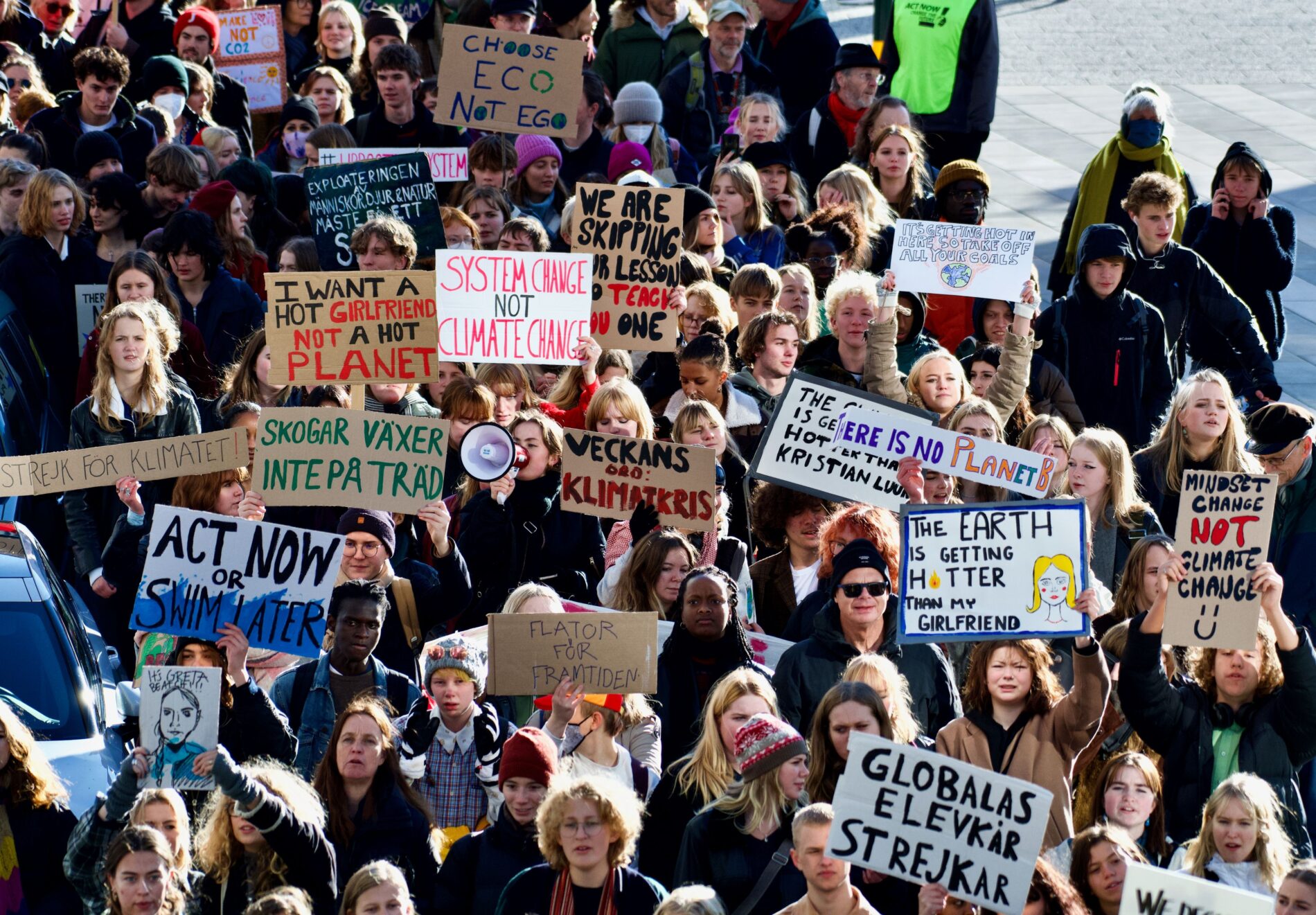
Since 2022, Prime Minister Ulf Kristersson has governed with a coalition supported by the Sweden Democrats. The government abolished the Ministry of the Environment, cut subsidies for electric vehicles, and lowered the diesel tax to provide relief to rural voters. It also froze a system of state loan guarantees intended to secure large industrial projects related to the green transition.
Investors are becoming cautious due to a lack of reliable signals
Sweden’s about-face is particularly jarring because the country has excellent prerequisites. It boasts abundant, virtually emission-free electricity from hydropower, nuclear power, and wind energy, and it is inexpensive by international standards. Nevertheless, trust is eroding because political guidelines are lacking and an economic budgetary logic now dominates.
The economist Johan Rockström describes the loss of reputation this way: “We were one of the first economies in the world to demonstrate that we can decouple economic growth from emissions. Now we are losing our reputation as a country that others respect.” This also shifts the focus of the capital markets, because investments require predictability. Without clear financial commitments, even technically feasible projects become risky decisions.
Bankruptcies and funding gaps put the green industrial narrative under pressure
The most visible example is the collapse of Northvolt, once Europe’s hope for battery production. Cost increases and delays led to insolvency, while the government refused a bailout. This sent a clear signal: The state only shares risks to a limited extent, even in strategically important projects.
Stegra, the company behind the planned green steel plant, is also struggling to secure fresh capital, while Stockholm is distancing itself. Finance Minister Elisabeth Svantesson puts it clearly: “Ultimately, companies must stand on their own two feet. The state shouldn’t always decide which companies receive support.” Stegra most recently received 390 million kroner, only about a quarter of the requested amount, and the start of production has been postponed until 2027.
Regions in the north are paying the price for the delays
The consequences are hitting the north particularly hard, as the projects were intended to bring jobs and growth there. In Skellefteå, apartment blocks built for Northvolt employees stand empty, while local companies are laying off staff. Although the US battery manufacturer Lyten bought the site, a restart has yet to materialize.
Lyten manager Keith Norman warns of locational disadvantages: Building green industries is capital-intensive and faces “strong competition from places like China.” “Consistent government support to get these industries off the ground remains crucial,” he says. And it is precisely this consistency that many decision-makers are missing, even though billions in investment would be possible in principle.
Election campaign, missed targets, and a small protest in the square
In Boden, the site of the planned Stegra steel plant, the municipality has already made significant upfront investments. The town of approximately 28,000 inhabitants is burdened with 1.56 billion kroner of debt following infrastructure and service expansions. This is increasing the pressure, as timelines are slipping while interest payments remain a reality.
Meanwhile, Sweden’s climate targets are slipping away, and international observers also expect the 2030 targets to be missed. At the same time, the next parliamentary election is approaching, and the opposition is announcing more guarantees, more subsidies, and a state-owned green investment bank. Green Party politician Daniel Helldén says: “For key green transformation projects to move forward, the state needs a positive and long-term vision.”