
On March 11, 2026, in Stockholm, the Swedish government further tightened its nuclear policy and commissioned a new study intended to significantly increase the state’s responsibility for the construction of new reactors. This initiative stems from the political plan to accelerate and systematically expand nuclear power, even though no new plants have yet been connected to the grid. The study therefore focuses not only on potential new sites and additional capacity, but also on state support for establishing supply chains, sharing expertise and experience, and examining whether state participation in nuclear power companies should be organized through a dedicated holding company. This is a sensitive energy policy issue for Sweden because the six operating reactors in Forsmark, Ringhals, and Oskarshamn already supply approximately 30 percent of the country’s electricity and thus remain a crucial component of its energy supply. At the same time, the pressure is mounting to better secure investments, planning, and coordination, as the construction of large reactors requires long lead times, substantial sums of money, and reliable framework conditions. (regeringen: 11.03.26)
Nuclear policy aims to transform the state from observer to active participant
The government is foregoing a separate new nuclear power law for the time being. Instead, the Ministry of Climate Action and the Ministry of Economic Affairs have commissioned a study to develop concrete proposals for how the state can effectively support the expansion of new nuclear power plants. This study will focus not only on general funding, but also explicitly on the organization, management, and practical hurdles involved in scaling up new projects.
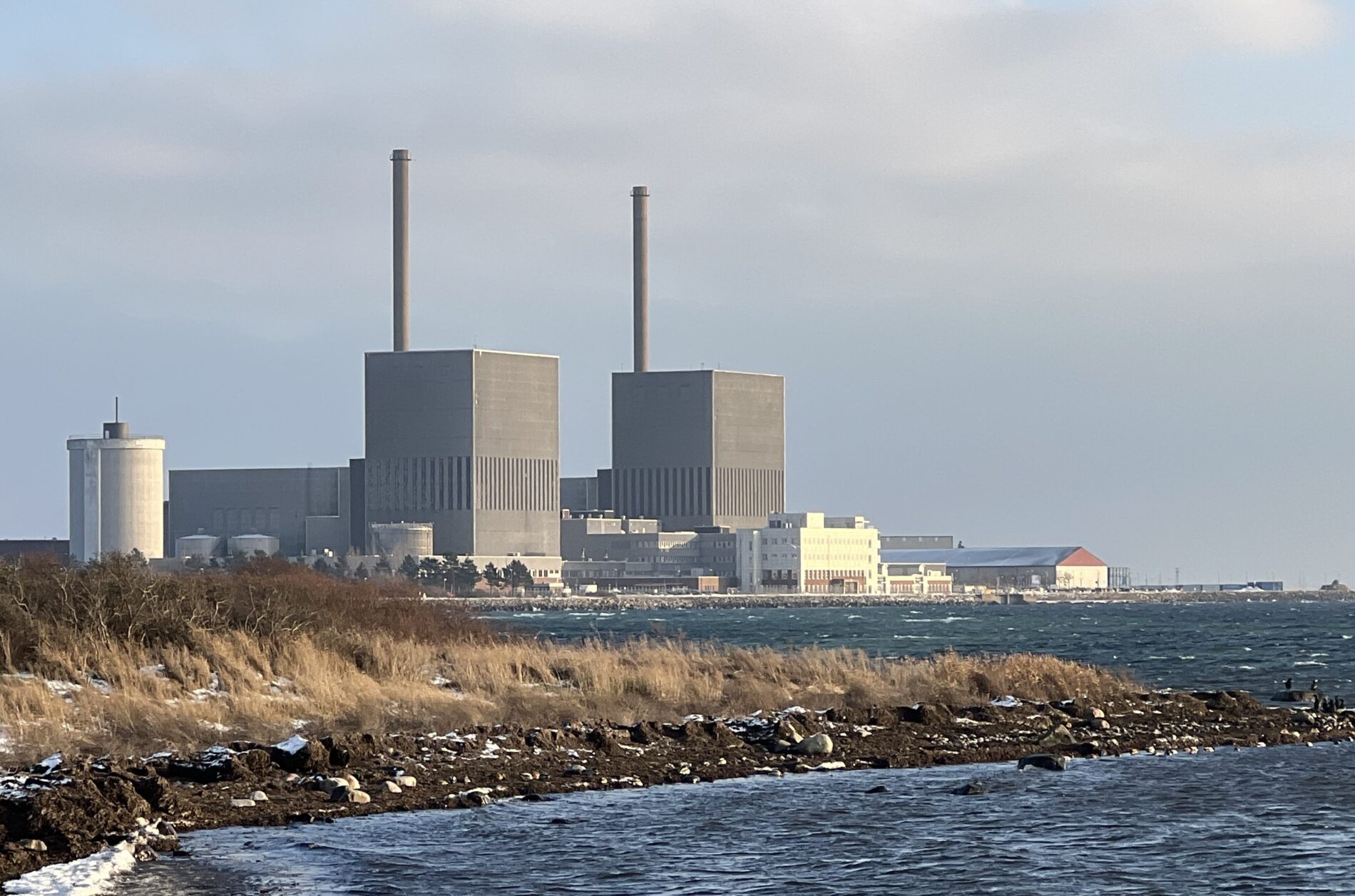
What’s new is primarily the breadth of the government’s ambition. Stockholm no longer wants to simply create favorable regulations, but also to examine how supply chains can be established, expertise secured, and experience pooled within the country. Additionally, the government will investigate whether state-owned stakes in nuclear power companies should be consolidated into a state-owned holding company. Energy Minister Ebba Busch formulated the political objective as follows: “We must once again have the courage to build big.”
Six reactors are operating, but expansion remains contentious
Sweden currently operates six reactors at the Forsmark, Ringhals, and Oskarshamn sites. They cover approximately 30 percent of the country’s electricity needs, which is why nuclear power continues to play a key role in the country’s energy supply. However, new reactors are not yet generating electricity, while the government and energy companies are pushing ahead with additional capacity development, including at Ringhals.
Precisely for this reason, Stockholm apparently sees the risk that without stronger government support, the pace, financing, and industrial preparation will be insufficient. The government’s nuclear policy therefore aims not only at new reactors, but also at improving the conditions for their implementation. This makes it clear that Sweden no longer just wants to secure its nuclear power, but to expand it in a targeted manner.
Majority in the country supports the government’s course
Politically, Prime Minister Ulf Kristersson’s minority government can rely on a pro-nuclear base, as even the Sweden Democrats support the policy. The opposition remains mixed, with the Social Democrats demanding a broader agreement. The Centre Party is only willing to cooperate under strict conditions, while the Left Party and the Green Party continue to reject new nuclear power plants.
At the same time, public sentiment in the country tends to favor the government’s course. According to a Novus poll published in early February 2026, 56 percent support new nuclear power plants if necessary. Another 29 percent want to continue using existing reactors but not build new ones. Only five percent are in favor of phasing out nuclear power. Thus, the government’s nuclear policy enjoys broad support among the population.