
A representative survey conducted by the Allensbach Institute for Public Opinion Research on behalf of the BMW Foundation Herbert Quandt reveals less support for climate protection and the energy transition. Many households are experiencing a decline in their standard of living due to sharp price increases, while at the same time, fears about job security are growing due to the economic downturn. Furthermore, concerns about a secure and affordable energy supply are dampening public sentiment, as security of supply has once again become a higher priority for many. (bmw-foundation: 11.02.26)
Climate protection is slipping down the agenda
The percentage of people who are very worried about the consequences of climate change is currently at 33 percent. Between 2010 and 2019, this figure rose from 29 to 51 percent and remained roughly stable until 2022. Since then, it has declined, first to 36 percent and now even further.
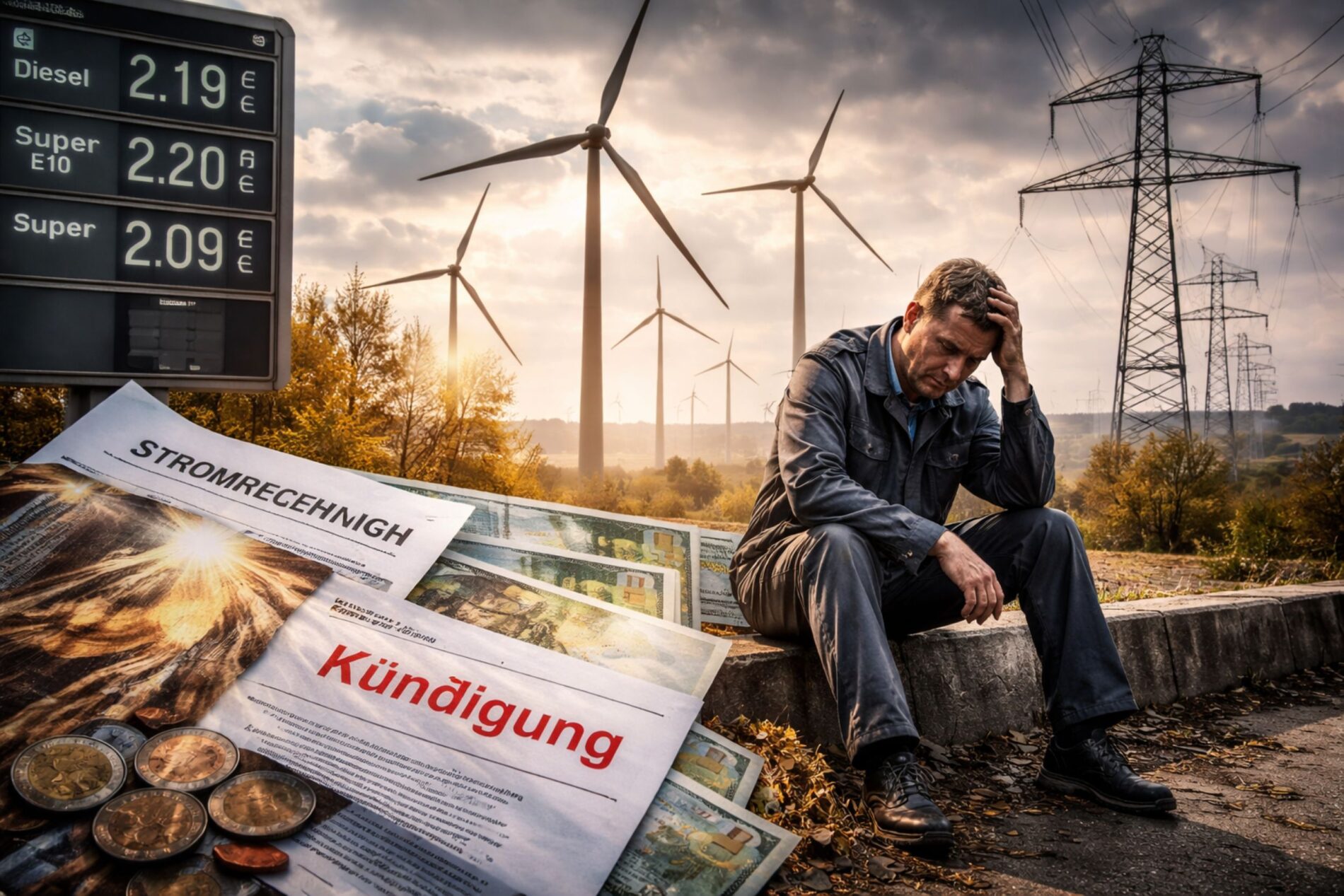
Allensbach sees the causes in the interplay of several crises, and this combination is shifting political priorities. The war in Ukraine is having an impact, as are the economic downturn and the more uncertain outlook for the future. Therefore, the authors’ central observation is: “In the public’s political agenda, issues of external and internal security, economic development, and energy supply currently have a significantly higher priority than climate protection.”
Support for the Course – Distrust of Implementation
The survey does not show unanimous rejection, but rather a divided opinion. 43 percent believe the decision to phase out nuclear power and, above all, to accelerate the expansion of renewable energies is the right path. 37 percent consider the chosen path to be wrong, while the remainder are undecided or have not formulated a clear position.
However, the crucial question is one of implementation, because this is where trust is visibly eroding. Among supporters of the energy transition, the percentage of those who believe Germany is taking the right measures fell from 52 to 33 percent within a year. At the same time, the proportion of those expressing doubts about the measures taken rose to 26 percent, meaning that approval is increasingly turning into a “yes, but.”
Where skepticism is particularly high
The groups in which criticism is especially prevalent are striking. Skepticism is above average in East Germany, and rejection of the chosen path is also stronger in lower social classes. Furthermore, the survey identifies supporters of the AfD and FDP as groups with widespread criticism, while other groups tend to stick to the current course.
These fault lines are closely linked to the question of who can bear the burden. Those who primarily experience higher costs in their daily lives evaluate energy policy measures more critically and demand a clear accounting of the costs. Those who fear for their jobs react more sensitively to changes that appear to pose an additional risk.
The energy transition is increasingly seen as a risk.
In the overall assessment, the aspect of uncertainty predominates for many respondents. For 37 percent, the energy transition is primarily associated with risks, while 28 percent see more opportunities. Only one in four sees opportunities and risks as balanced, and this group can shift majorities in either direction.
In addition, there is a point that can quickly tip the scales of acceptance because it is becoming visible right on our doorstep. Two-thirds of respondents expect that the landscape in Germany will change drastically due to wind turbines and new power lines. Thus, the energy transition is perceived not only as a climate project, but also as an intervention in space, infrastructure, and the living environment.
What policymakers must deliver now
The data describes a situation in which climate policy is competing more fiercely than before with security and prosperity issues. Therefore, targets are hardly sufficient when people primarily expect affordability and predictability. At the same time, the survey shows that the course still has support, but tolerance continues to decline.
Those who want to secure approval must visibly limit the cost impacts and demonstrably stabilize security of supply. Likewise, a credible plan is needed to ensure that industry and employment are not further depressed by the restructuring. Otherwise, the impression will solidify that the risks are growing faster than the benefits.