
Charging station operators are calling for government protection because charging cable theft is increasingly crippling the charging infrastructure and noticeably slowing down electromobility in Germany. Industry representatives warn that organized copper theft is specifically targeting public charging points and undermining the confidence of electric car drivers. They are therefore demanding political action, as private countermeasures are no longer sufficient. (giga: 18.12.25)
Why government protection is now essential
Companies in the charging sector report that the damage situation is worsening despite increasing investments. Perpetrators are cutting charging cables, even though the proceeds are low, while operators face significant repair and downtime costs. This trend is straining the charging infrastructure because outages can last for days and locations become unreliable. Government protection is intended to provide stability and establish clear responsibilities.
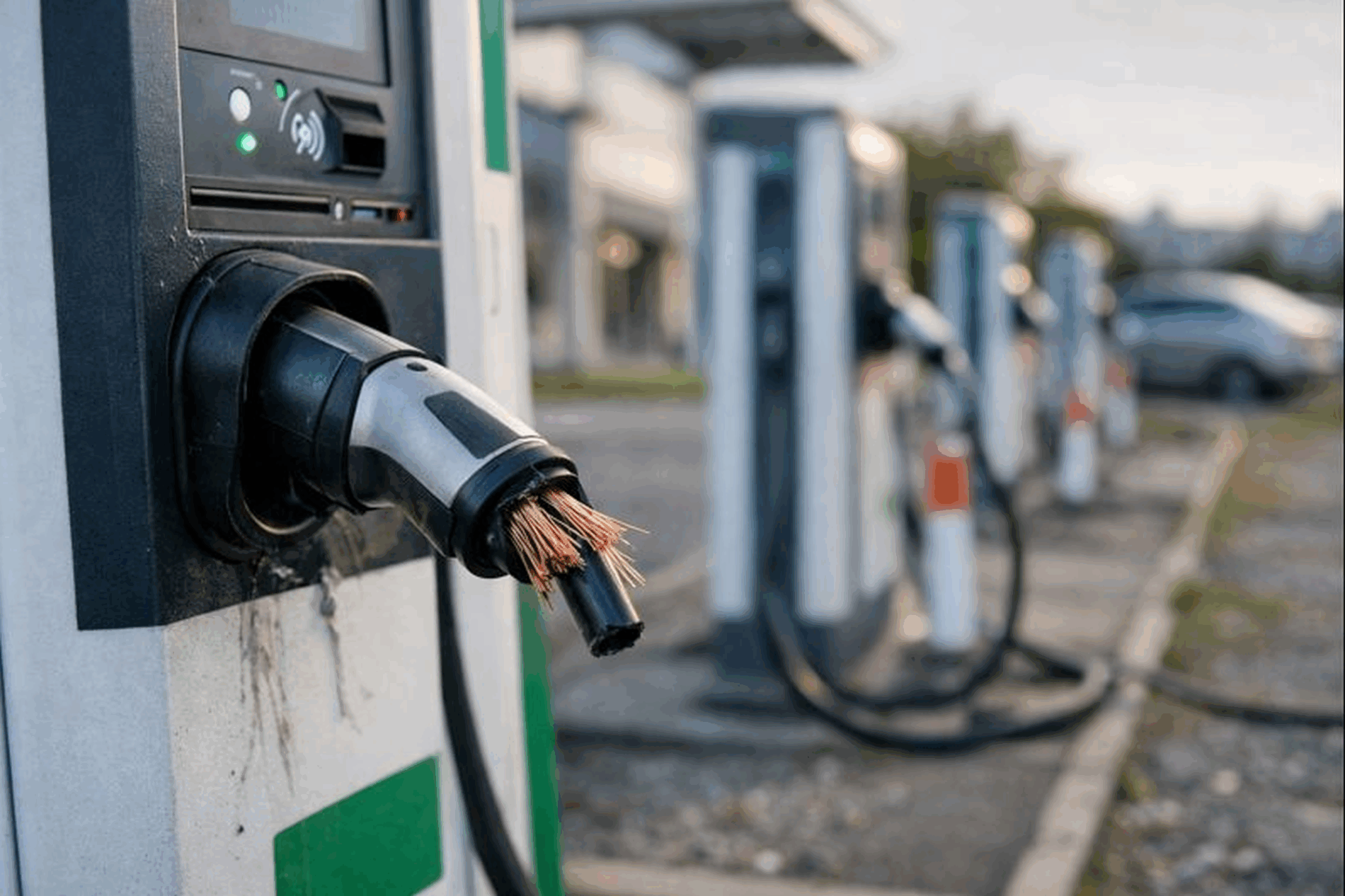
The consequences directly impact everyday life, because electromobility in Germany depends on functioning charging points. Repeatedly encountering defective charging stations wastes time and erodes trust. This hinders acceptance, even though vehicles are available and political goals have been established. Public charging points must therefore remain consistently reliable for electromobility to be truly convincing in everyday life.
Organized structures drive charging cable theft
Industry insiders speak of coordinated groups that clear out entire charging parks within a few hours. This cable theft follows established procedures, which is why spontaneous acts rarely play a role. Copper theft acts as a key incentive because sales channels remain easily accessible and metal theft is rarely prosecuted consistently.
The perpetrators operate on a mobile basis, while investigations often remain regionally limited. Therefore, companies are again calling for state protection so that the police and judiciary can react more quickly and in a more coordinated manner. Only in this way can serial thefts be identified and structures dismantled that deliberately sabotage the expansion of the charging infrastructure.
Technical security measures reach their economic limits
Operators are already investing considerable resources, even though budgets are limited. Camera systems, sensors, and alarms are now standard equipment. In addition, some providers mark charging cables to ensure that theft can be traced and stolen goods identified.
These measures have a limited impact but drive up costs. The expansion of the charging infrastructure is slowing down because security expenditures are increasing. Industry representatives are therefore reiterating the need for government protection, as public charging points have long been part of critical infrastructure and cannot be secured solely through private means.
Scrap Metal Trading as a Key Target in the Fight Against Copper Theft
A crucial appeal is directed at policymakers, as the sale of stolen metals determines the success of the perpetrators. Companies are calling for stricter regulations in the scrap metal trade, including expanded identification requirements and mandatory cashless payments. These measures are intended to end anonymity and make copper theft economically unattractive.
At the same time, such regulations strengthen electromobility in Germany because they promote reliability. When sales channels are blocked, the incentive for criminal networks decreases significantly, while e-mobility gains credibility.
Police and the Judiciary Need Clear Responsibilities
In addition to regulatory requirements, the industry is calling for better cooperation between authorities. Cross-border investigations are considered crucial because perpetrators operate flexibly. The required state protection should therefore also include specialized units and clear responsibilities to enable swift proceedings.
Furthermore, companies are advocating for a new legal assessment. Charging cable theft should be classified as an attack on critical infrastructure. Higher penalties and consistent prosecution could have a deterrent effect, while state guarantees create confidence and stabilize expansion in the long term.