
In Cerro Gordo County, Iowa, the planned River City Energy Project, a 500-megawatt solar park, is facing significant pressure because a new analysis estimates the actual land area required to be much larger than previously thought. This is based on a comparison by analysts Isaac Orr and Mitch Rolling between the solar project and a gas-fired power plant, focusing not on the installed nominal capacity, but on the reliably available capacity during periods of high electricity demand. The central focus is therefore on the security of the power grid, while the decisive risk factor lies in the fluctuating solar production at night, under cloud cover, rain, and snow. The consequences would thus be drastically higher land use, greater encroachment on agricultural land and habitats, and significantly weaker security during periods of high demand. (heartland: 06.03.26)
The new calculation turns the solar comparison on its head
Public debates about solar power usually revolve around annual yields. However, for a power grid, what matters is not the attractively calculated amount of energy, but rather the output during critical hours. This is precisely where Orr and Rolling come in. They write: “As soon as you consider the grid through the lens of guaranteed output instead of annual energy, the land area requirements of the technologies look completely different.” In doing so, they shift the focus from advertising to resilience.
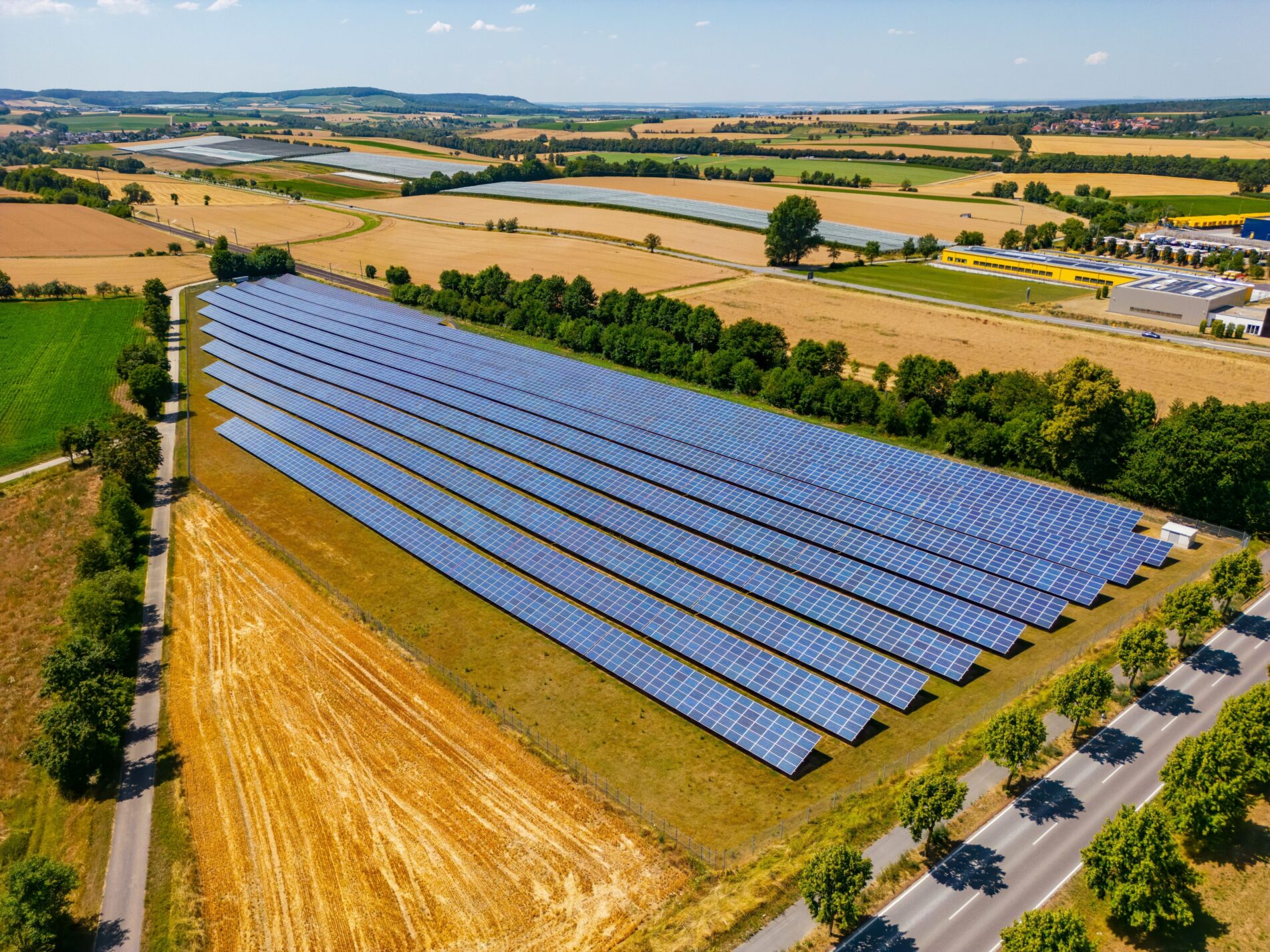
Previous comparisons have already shown that solar power requires more than three times as much land per megawatt generated as coal, natural gas, or nuclear power. The new analysis goes further, however, because it assesses the guaranteed peak output. This massively widens the gap. For Cerro Gordo County, this is immediately apparent. According to current plans, the project is slated to occupy approximately 2,894 acres. Based on reliable output, however, the authors calculate that more than 105,792 acres of solar panels would be needed. This would correspond to roughly 29 percent of the county’s total area, and therefore the debate shifts from the individual project to the question of land use.
Natural gas remains far ahead of solar in terms of supply security
The difference is already stark when considering installed capacity. According to the analysis, the planned solar plant would require approximately 5.8 acres per megawatt. In contrast, the existing Emery gas-fired power plant requires only about 0.096 acres per megawatt. Solar power thus needs roughly 60 times more land, although this comparison doesn’t even fully capture its inherent weakness. Because what matters is not the advertised figures, but rather the hours of high demand.
Therefore, the new rating system of the grid operator MISO, whose service area includes Cerro Gordo County, adds further urgency. MISO now evaluates power plants based on how reliably they feed into the grid during periods of potential undersupply. The results for solar are sobering. In the summer of 2030, solar is projected to supply only around 4 percent of the required guaranteed capacity. By 2043, this figure will drop to approximately 2 percent. The annual average for solar is 2.25 percent, and later it will fall below 1 percent. In contrast, natural gas will reach around 89 percent in the summer of 2030 and still 88 percent in 2043, while the annual figure will fall from 82 to 81 percent. This is not a small difference, but a fundamental systemic disparity.
Heat exacerbates the problem and further fuels land consumption
Under this scale, the required land area explodes. According to Orr and Rolling, 19.29 acres of solar panels would be needed in the planning year 2025/2026 to provide one megawatt of guaranteed power. A modern gas-fired power plant requires only 0.14 acres for the same output. For 2030 and 2033, the figure for solar power rises to 257.24 acres per megawatt, and by 2043 it will reach 578.80 acres. This corresponds to almost 1,838 percent more land. While natural gas remains constant, the land requirement for solar power increases with each new assessment.
Even sunnier regions don’t solve the fundamental problem. States like Arizona and New Mexico receive more sunshine, but at the same time, the load there increases particularly sharply during hot periods. Furthermore, solar modules lose efficiency at high temperatures. According to the figures cited in the text, efficiency drops by 0.30 to 0.50 percent for every degree Celsius above 77 Fahrenheit. Prolonged heat waves therefore further reduce output. Consequently, operators would have to install even more modules and occupy even more land. Anyone discussing security of supply, landscape protection, and agriculture cannot ignore this point. The new analysis gets to the heart of the debate: solar power often appears compact on paper, but in the demanding environment of grid operation, it consumes far more land than has been sold so far.