
In early March 2026, an energy policy conflict intensified in Berlin as Federal Minister for Economic Affairs Katherina Reiche pushed forward a grid package to reorganize electricity grid usage while simultaneously examining SMR reactors as an option for more stable electricity prices. Environment Minister Carsten Schneider immediately objected, however, after BUND Chairman Olaf Brandt criticized the technology as “too expensive, too dangerous,” and a source of “too much radioactive waste.” The dispute impacted a system with high grid fees, growing electricity demand from industry and data centers, and rising system costs, while further delays increasingly hampered investment. Investors faced additional price risks, greater planning uncertainty, and significant disadvantages for companies compared to other European countries. (cicero: 02.03.26)
Europe’s Stance on SMR Reactors Increases Pressure on Germany
Several European countries are pushing ahead with new nuclear energy projects, while Germany is intensifying the fundamental debate. In Poland, the Clean Air Taskforce published a roadmap for building an SMR fleet, and at the same time, Vattenfall CEO Anna Borg announced five new plants in Sweden. Both projects aim for more stable electricity prices and decarbonization, but they focus more on implementation than on protracted conflict. Olaf Brandt described the SMR plans in 14 European countries as a “mystery,” while elsewhere, location and supply chain issues are already taking center stage.
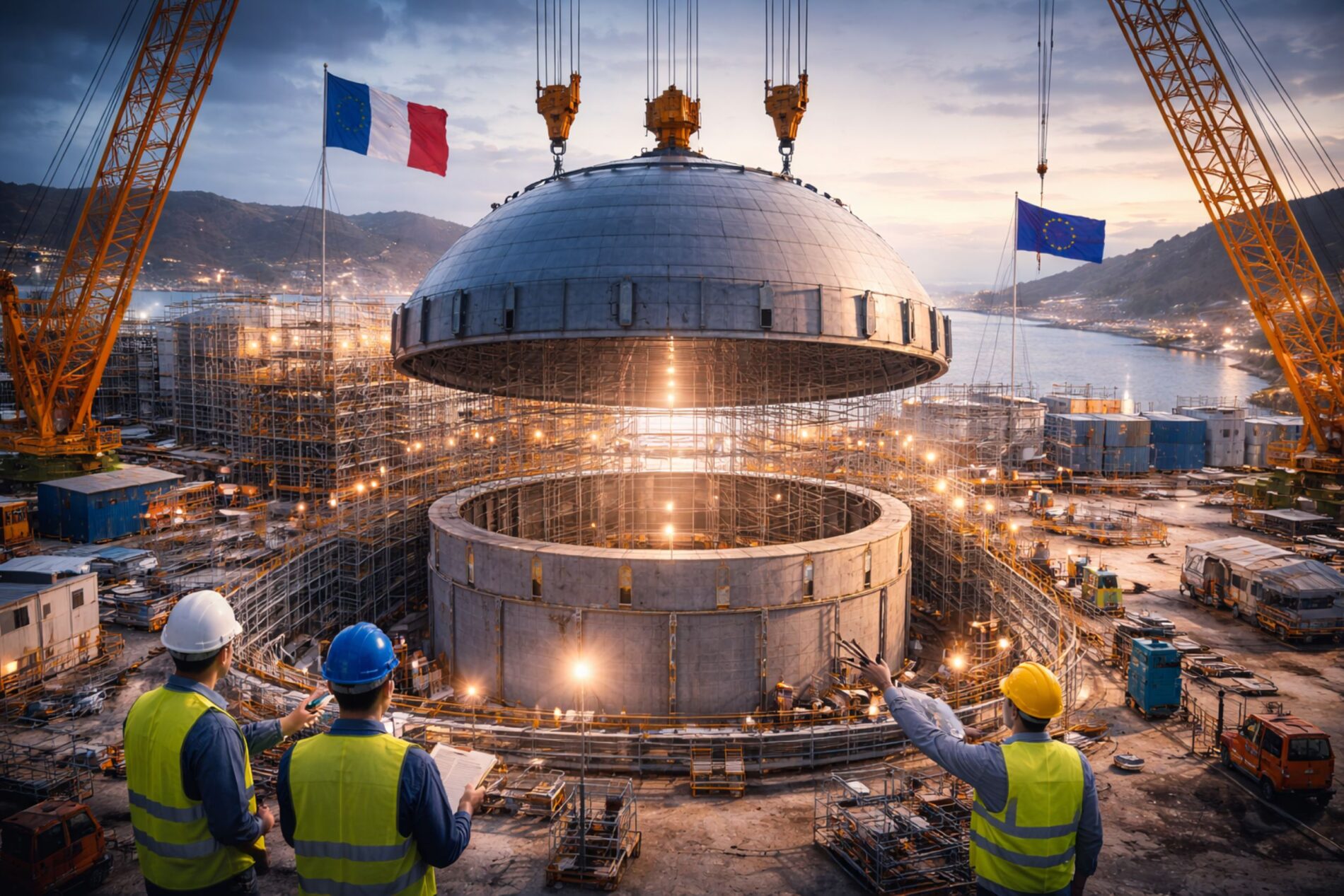
This difference directly impacts competition because electricity prices drive investment. At the same time, it creates a time advantage for countries that link new baseload options to industrial development early on. Germany thus risks a second front besides prices: the loss of projects to neighboring countries. Furthermore, the uncertainty intensifies the pressure on energy-intensive businesses.
Grid expansion costs move into focus
The debate revolves not only around generation but also around the final bill. The Association of Municipal Enterprises emphasizes that it’s not the installed gigawatts that count, but the electricity price at the socket. Critics therefore point to system costs that drive up the final price, while public discussion often prioritizes expansion figures. The 2009 grid expansion plan for integrating numerous decentralized power plants, which is said to have consumed nearly €600 billion to date, is particularly significant.
This cost logic raises a crucial question about causation and financing. If operators of fluctuating generation had borne the full cost of transmission and system costs, many projects would hardly have been economically viable. Therefore, political pressure is mounting to change regulations and redistribute grid fees. At the same time, any delay acts as a price driver for electricity, because investments in the grid and reserve capacities continue.
Utilities criticize subsidies and distributional effects
Ironically, large energy suppliers are now calling for course corrections, even though they have long pragmatically supported the energy transition. RWE CEO Markus Krebber warned of “windfall gains” and considers the continuation of the EEG subsidy unnecessary and socially unjust. He explained his reasoning concretely: “Solar installations trigger grid expansion costs, which are then paid not by the polluter, but by the general public, who cannot afford a solar roof,” said Krebber. He thus highlights distributional effects, because costs are widely borne while ownership structures are unequal.
E.ON CEO Leonard Birnbaum is also calling for the phasing out of subsidies for private solar installations, while simultaneously questioning the systemic impact of some subsidies. He asked: “Why are capacities we don’t need still being subsidized? Why are storage facilities exempt from grid fees across the board, even though many don’t relieve the grid and actually increase costs for customers?” This criticism focuses on efficiency, because not every subsidized facility stabilizes the grid. Furthermore, it shifts the debate away from symbolic politics and towards measurable cost consequences.
Study Sees Huge Market for SMR Reactors for Industry and Data Centers
While Schneider claims that new plants would require expensive subsidies, it is primarily large consumers who are driving projects. Industry and data centers want predictable power because production processes and digital infrastructure incur high downtime costs. A study published in November 2025 by the American-British think tank Lucid Catalyst analyzed the potential of industrial energy supply in North America and Europe. It considered ten industries that together are expected to cover around 80 percent of the electrical and thermal industrial energy demand of both regions in 2050, totaling 17,000 TWh.
Of this, the study assesses 15,000 TWh as a market that could be accessible for SMR reactors, marking a size roughly 30 times Germany’s electricity consumption. The industry list includes data centers, chemicals, iron and steel, district heating, and food and beverages—sectors with high energy intensity. Applications such as replacing coal-fired power plants and producing synthetic fuels are also included. Data centers stand out in particular, as the study identifies a potential installed capacity of around 75 gigawatts there.
Cost Path, Safety Features, and Standardization
Lucid Catalyst outlines a three-stage development path to industrial mass production, which could reduce the levelized cost of electricity (LCOE) from $70 to $40 per megawatt-hour. For gas-fired power plants, gas prices and CO₂ costs drive the cost. This could push the LCOE per megawatt-hour into the range of €110 to €180. For Europe, this presents an industrial policy lever, as stable prices and security of supply support competitiveness.
Key features include “inherent safety” and smaller capacities between 300 and 700 megawatts, while the concept relies on industrial manufacturing based on the principles of the aerospace industry. However, this requires common regulations, as differing approvals increase the cost of mass production. In the EU, this process has been underway since 2023 through the European Industrial Alliance on SMR, which now has over 400 members. Furthermore, some designs are considered suitable for process heat, expanding industrial applications.
Germany’s special approach remains a political risk factor
In Germany, the conflict remains intense, partly because authorities and politicians often apply stricter assessments than many partner countries. This increases the investment risk, while companies simultaneously consider locations in countries with clearer pathways. The debate is also historically charged: 18 nuclear power plants were built between 1969 and 1982 under SPD-led governments, while the SPD currently polls at around 15 percent. This historical divide shapes the approach, while Reiche aims for relief from prices and grid costs.
Whether Germany permits SMR reactors as an industrial policy option will therefore determine not only the technology but also the attractiveness of its locations. At the same time, much depends on the grid package, as it aims to make system costs more transparent and create new incentives. If policymakers block progress on this, system costs will continue to rise, while dependence on volatile prices will persist. The decision will therefore directly influence whether energy-intensive industries invest in Germany in the future or prefer new locations abroad.