
A smart meter in the meter cabinet sounds like a modern electricity market. However, for many customers, this is followed by frustration because usable meter readings are missing. Market communication is often disrupted, and the metering point operator doesn’t forward data promptly. Dynamic electricity tariffs then cannot be billed correctly. Konrad Schade, Chief Commercial Officer of Rabot Energy, says: “Some of our customers wait up to three months for the data to become available.” (heise: 26.01.26)
Problems after installation – when meter readings get stuck
A dynamic tariff requires quarter-hourly readings and at least one daily transmission. This function is called Tariff Application Case 7, or TAF 7 for short. The necessary messages are often routed through the market communication system (Mako) according to the specifications of the Federal Network Agency. If a transmission is delayed, the supplier lacks the data needed for billing, and the customer is left with the problem.
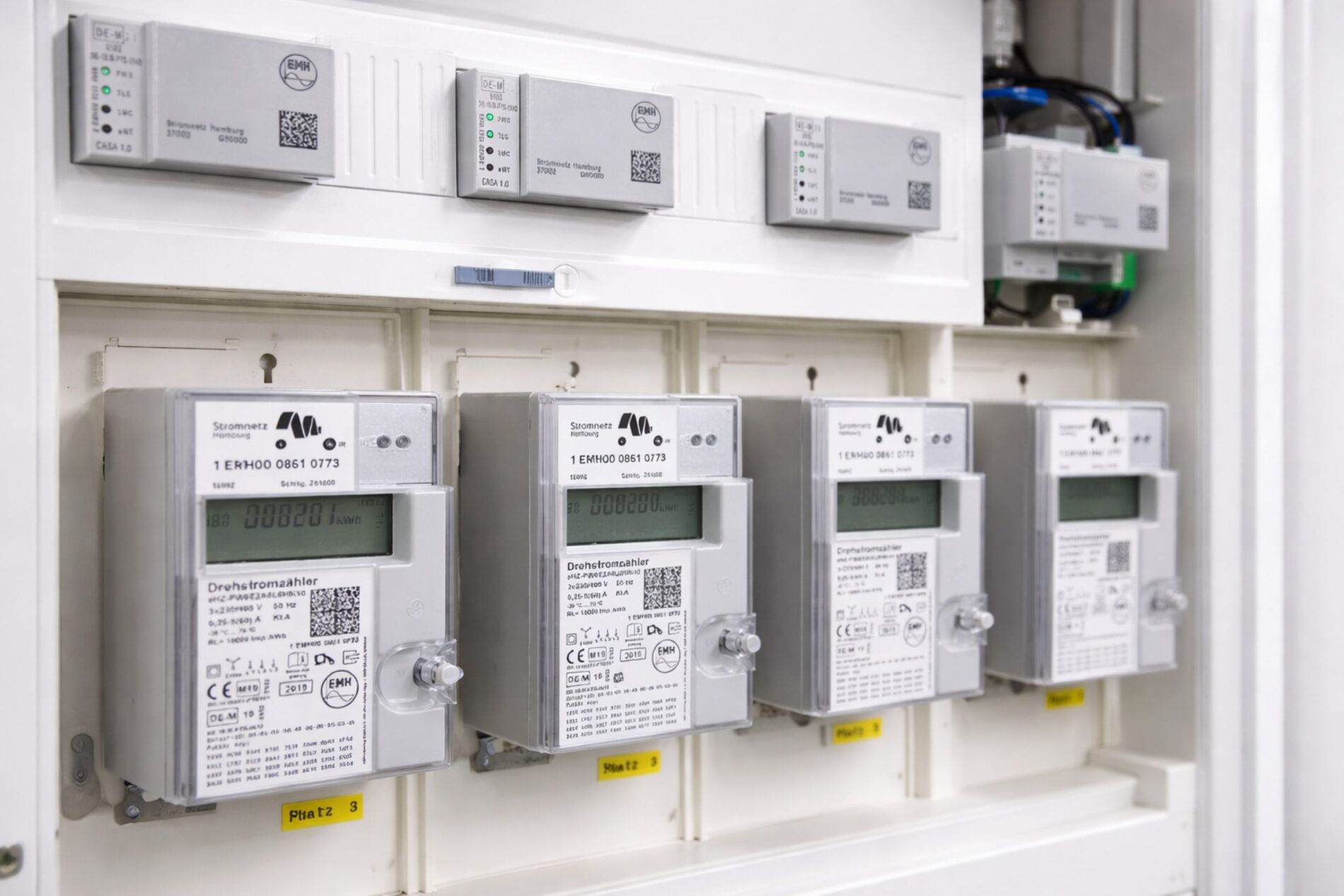
This is also due to the many roles involved in the electricity market. Often, the local grid operator, as the default metering point operator, installs and operates the meter. In addition, there are competitive metering point operators who install and operate systems nationwide. Providers like Octopus or Enpal sometimes take on this role themselves. Nevertheless, the data still travels first to the metering point operator, then to the grid operator, and finally to the electricity supplier.
When formats and rules undermine the automatic process
After installation, the meter change must be reported via market communication. The grid operator’s systems are supposed to handle this automatically. In practice, according to Schade, this fails due to details that don’t appear to be standardized. “For example, some grid operators only accept a meter change if the market communication message states that it took place at midnight.” A change at a different time is then rejected, often without any comprehensible explanation.
Schade describes the resulting workload as manual: You have to call grid operators, find out who is responsible, and clarify special rules that aren’t transparently documented anywhere. In some cases, the grid operator registers the smart meter but fails to forward TAF-7 data. Switching from the default metering point operator to a competitive metering point operator can also be thwarted by a rejection. Electricity providers then have to investigate the reasons, and the frustration spreads throughout the entire chain.
When the operator can’t find its own device
An example from Hanover illustrates just how unpleasant the situation can become. A c’t editor applied for a smart meter from Enercity at the end of October 2024. Enercity installed it in February 2025. A week later, the customer wanted to switch to a dynamic tariff from Naturstrom. Naturstrom reported that no smart meter was registered at the connection point, and the tariff change failed.
Enercity subsequently asked the customer to “send a photo with the serial number of the smart meter gateway.” The grid operator was essentially searching for the device it had installed itself. Enercity later explained the incident as a result of a change in the “gateway administrator” and a “data disruption in our administration and billing system.” The company described it as an isolated case and pointed to ongoing process optimizations.
No quotas, but many sources of error
The Federal Network Agency responded briefly to c’t’s inquiry. A spokesperson stated that smooth processes require all market participants to have correctly implemented and mastered the regulations. Frequent causes or error rates could not be specified because complaints are not statistically analyzed. Technical malfunctions are also possible, such as mobile network problems or failed updates.
The German Association of Energy and Water Industries (BDEW) also declined to provide any figures. The association reported receiving complaints from various sources because market participants were unreachable or unresponsive. Added to this is the restructuring of many IT systems due to new regulations regarding supplier switching within 24 hours. The BDEW anticipates improvements but expects further challenges from new requirements such as control via smart metering systems, which could prolong the frustration caused by malfunctions.
Cloud instead of Mako – the direct route is available
Rabot Energy and other providers from the “Smart Meter Initiative” see a direct solution. Network operators and suppliers could access consumption data via cloud interfaces of the competitive metering point operators. Schade says: “All competitive metering point operators have the data in the cloud. The loop via the Mako (the German Federal Network Agency) wouldn’t even be necessary.” This would reduce waiting times and make errors visible more quickly.
Schade also hopes for further development of market communication by the Federal Network Agency. Greater transparency in rejection cases would reduce the coordination effort. Clearer standards would stabilize processes. Then the smart meter would no longer be a cause of delays, but finally a tool for fair tariffs.