
ZF is prematurely ending several electric vehicle projects. The supplier is reacting to a slower market ramp-up. At the same time, the company wants to free up funds so that future programs can reliably generate returns. (ntv: 23.01.26)
Why ZF terminates projects with customers early
ZF describes the decision as the result of discussions with several customers. These are projects that are not profitable as planned due to lower production volumes. Therefore, ZF “agreed with various customers to terminate several projects early that are not achieving the expected profitability due to the slower ramp-up of e-mobility.”
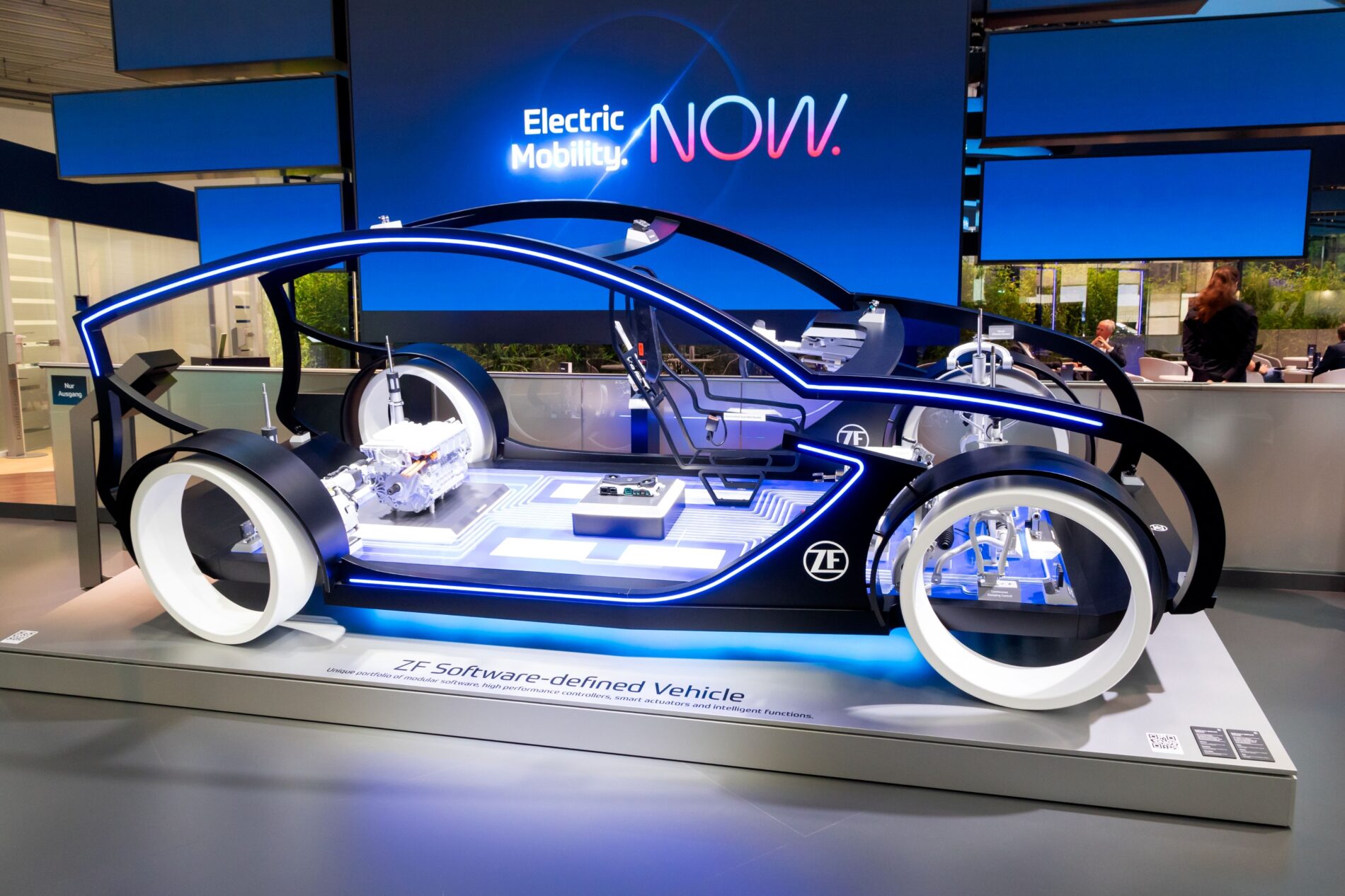
This move demonstrates how fiercely competitive the market has become. Furthermore, many manufacturers are shifting their focus from speed to costs and capacity utilization. This leads to a greater concentration of development budgets, rather than their distribution across multiple platforms.
Balance Sheet Impact in 2025 and the CFO’s Statement
ZF expects a negative one-off effect in 2025. This effect arises because discontinued programs must be revalued for accounting purposes. Nevertheless, the company wants the cutback to be seen as the foundation for improved results in subsequent years.
ZF CFO Michael Frick clearly states the objective. The decision will lead to an accounting loss for 2025, but will form the basis for sustainably improved profitability in the coming years. Consequently, the bar for new projects is being raised, especially for launches with uncertain volumes.
Industry Situation: Demand, Costs, and China as a Persistent Factor
The cutbacks come at a time when German manufacturers and suppliers are facing significant headwinds. On the one hand, international demand remains weaker than expected in some areas. On the other hand, rising costs in development, energy, and materials are rapidly eroding margins.
Added to this is the competition from China, which is rapidly and aggressively pushing into key segments with high speed and aggressive pricing. Furthermore, many Chinese suppliers are increasingly relying on vertically integrated structures, which puts pressure on supply chains. As a result, projects that would only be marginally profitable are more quickly becoming risks.
US tariffs and export pressure tighten calculations
Foreign trade, especially with regard to the USA, is also a burden. Most recently, higher US tariffs on goods from Germany have added another factor. This increases risks for export-oriented products, even if the technology itself is in demand.
For suppliers like ZF, this means tougher negotiations on prices and delivery volumes. In addition, programs are being planned more separately by region to reduce customs costs and logistical risks. Therefore, the importance of standardization is growing because it reduces costs per unit.
Cost-cutting program until 2028: 14,000 fewer jobs as part of realignment
ZF is combining the project halt with a comprehensive cost-cutting program. The company plans to reduce its workforce by a total of 14,000 by 2028. This is intended to lower the cost base so that fluctuating demand does not immediately lead to a drop in profits.
The company is thus sending a clear signal of prioritization. At the same time, the organization is being restructured to handle fewer parallel projects, while resources are being channeled into more profitable areas. E-mobility is therefore not being abandoned altogether, but will be evaluated more rigorously based on return on investment and scalability.
What the change of course means for suppliers in the field of e-mobility
The ZF case illustrates a key reality of the transformation. E-mobility remains a strategic area, but the market is developing more slowly than many projections anticipated. Therefore, projects with guaranteed volume and a clear cost curve are gaining importance.
For manufacturers and suppliers, the selection is becoming smaller, but more targeted. Furthermore, new collaborations are likely to focus more on shared platforms and modular systems. This increases the chance of stable margins, even if 2025 initially brings a noticeable setback for ZF.