
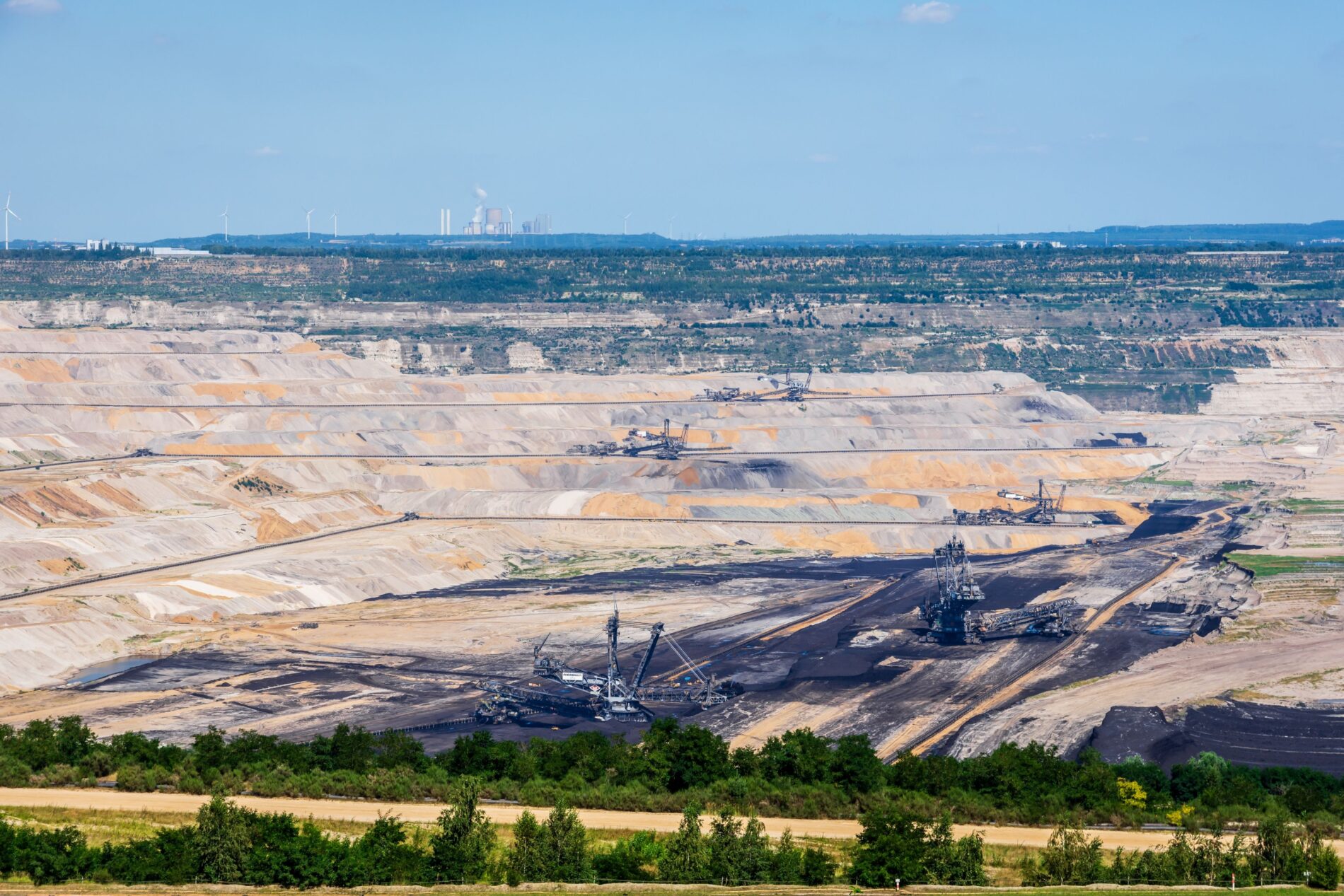
In the Rhenish lignite mining region, RWE has been pushing forward with a project since the end of January 2026 that goes far beyond a typical construction project. Near Dormagen, a pumping station is to be built that will transport up to 18 cubic meters of Rhine water per second via a 45-kilometer pipeline, initially to the Hambach open-cast mine and, from the mid-2030s onward, also to Garzweiler. The background to this is the politically mandated repurposing of the open-cast mines as a lake district, while flooding them would render recoverable lignite reserves inaccessible in the long term. The lignite reserves in the Hambach region would last for at least another 100 years, while modern power plants at the Neurath site could continue to generate electricity for decades to come. The consequences would therefore be considerable: strategic energy reserves would be lost, the costs already amount to around one billion euros, environmental concerns regarding water quality would remain unresolved, and the pressure on North Rhine-Westphalia as an industrial location is likely to increase further. (rwe: 19.03.26)
A Political Decision with Far-Reaching Consequences
The political framework for the project has been in place for several years. As early as 2021, the then-governing center-right coalition of the state government under Hendrik Wüst presented the guiding decision for the Rhenish mining region. This decision explicitly stipulated the future use of the open-cast mines as lakes as a goal.
Since 2022, the black-green coalition has continued this course. At the end of January 2026, the Arnsberg district government granted the necessary permits for the construction and operation of the Rhine water transport pipeline applied for by RWE Power. However, a decision on whether Rhine water may actually be discharged into the Hambach open-cast mine is not expected until autumn.
Energy reserves and power plants are being overlooked
The scale of the project stems primarily from the raw materials involved. According to the initial assessment, the Hambach open-cast mine contains lignite reserves that are still recoverable for at least another 100 years. At the same time, the potential value of these reserves is estimated at around €1 trillion.
In addition, there is the existing power plant infrastructure directly adjacent to the deposit. Modern lignite-fired power plants are located in Neurath. Their proximity to the open-cast mines reduces transportation costs, while the plants could continue generating electricity for up to 75 years.
Flooding raises costly environmental concerns
The project is also already a significant financial undertaking. The project already costs around one billion euros. Potential additional expenses for filtration systems, which would be necessary to treat the Rhine water for the future lakes, are not yet included in this figure.
This is precisely where the open environmental questions begin. Various chemicals can be detected in the Rhine water, including PFAS, so-called perennial chemicals. Despite this, there are currently no clearly defined water quality requirements for the planned discharge into the open-pit mines.
Permitting situation remains unclear at a key point
Despite progress in pipeline construction, the crucial permit for the actual flooding is still lacking. As things stand, RWE does not yet have permission to discharge Rhine water into the Hambach open-cast mine. The corresponding review process is not scheduled to begin until autumn.
This leaves a striking contradiction. On the one hand, a substantial infrastructure project is underway, while on the other hand, the “whether” and “how” of the water discharge remain unresolved. This is precisely why the political commitment to the project appears to be far more advanced than the current permitting status.
Structural change with a permanent character
Proponents are already speaking of the future “Rhine Lake District” and promoting the vast expanses of water. But behind these images lies an intervention that will severely restrict the energy policy options of future generations. Once flooded, an open-cast mine can only be made usable for raw material extraction again with enormous effort.
Therefore, the groundbreaking ceremony is more than just a technical starting signal. It marks a political decision intended to permanently close the chapter on lignite mining in the Rhenish mining region. While high electricity prices impact businesses, the industrial base loses substance, and secure energy once again becomes a core issue, the implications of this step extend far beyond North Rhine-Westphalia.