
After approximately 20 years of planning, Deutsche Bahn has halted the electrification of the freight rail line serving the Altmark industrial and commercial park in Saxony-Anhalt. The decision stems from a funding gap of around 500 million euros in railway infrastructure. Consequently, the railway subsidiary DB InfraGO has put the project on hold indefinitely. The planned start of construction in 2029 and the scheduled commissioning in 2030 are therefore no longer viable. The affected section is a roughly 17-kilometer-long link between Stendal-Borstel and Niedergörne. Although the federal government has announced multi-billion-euro investments in the rail network, the Altmark industrial park—home to a pulp mill and a paper factory—will continue to rely on diesel locomotives.
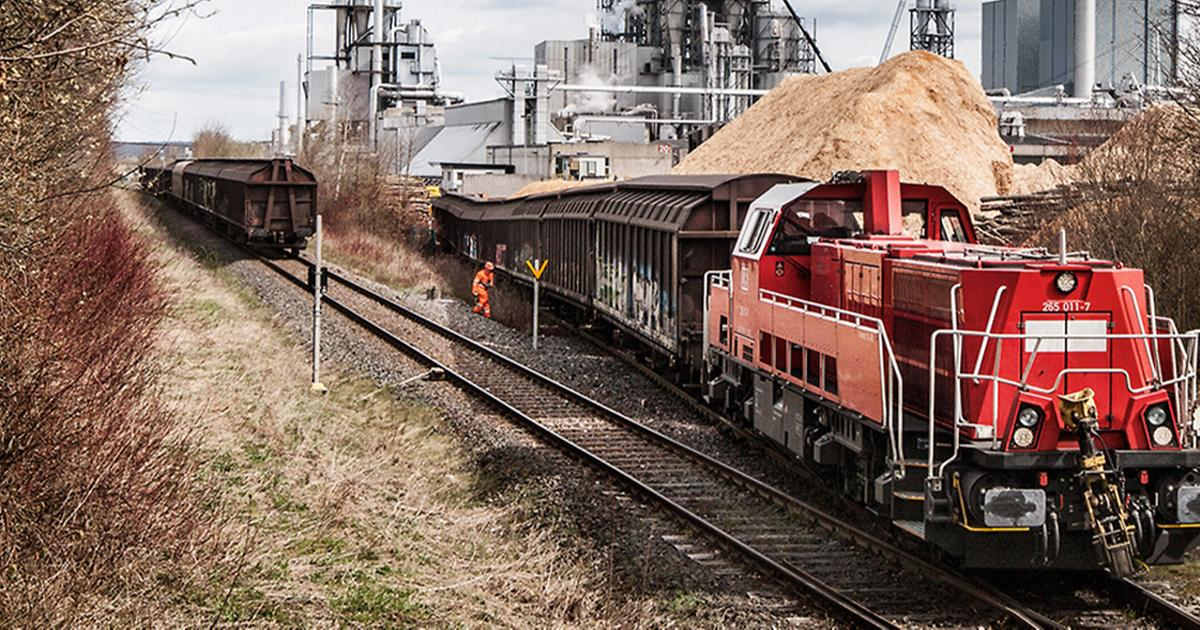
Representative image: AI-generated
Two Decades of Planning – and in the End, the Funding Is Missing
As early as 2006 and 2007, those in charge began looking into the electrification of the line. At the time, the modernization was intended to improve rail access to the Altmark Industrial Park. Yet, nearly two decades later, there is still no overhead contact line. Instead, the railway operator has now shelved the project indefinitely. DB InfraGO has not provided a new timeline.
The halting of the project is particularly significant given the preparatory work already completed. Since 2023, concrete planning had been underway once again, and an internal stress test conducted by the railway had been successfully concluded. Furthermore, contracts had been awarded for soil investigations and surveying work. The planning process had thus progressed well beyond mere statements of intent. Nevertheless, the project has now come to a temporary end—before any actual construction work could even begin.
Altmark Industrial Park Remains Reliant on Diesel Operations
The Altmark Industrial Park is one of the region’s major industrial hubs. According to the operator, the 740-hectare site is home to around 30 companies employing approximately 1,200 people. These include the Mercer Stendal pulp mill and the paper manufacturer Sofidel Germany. Both require a high-capacity transport infrastructure, as pulp production, in particular, demands large quantities of raw materials. Among other things, freight trains deliver pine timber to Niedergörne. Due to a lack of electrification, these shipments continue to be hauled by diesel locomotives.
The issue goes beyond merely swapping one type of propulsion for another. Local stakeholders have previously pointed to the high level of shunting required and the occasional irregularity of rail traffic. A modernized rail connection was intended to improve operational workflows; however, without the necessary investment, these structural disadvantages persist. Companies are forced to continue adapting their logistics to an infrastructure that has been awaiting modernization for two decades.
500-Million-Euro Funding Gap Halts Long-Planned Rail Project
The scale of the costs is particularly revealing. For the overhead line between Hassel and Niedergörne, officials most recently estimated a cost of over 13 million euros—a figure that covers only a portion of the total route. In contrast, the 500-million-euro funding gap recently cited refers to a broader, systemic shortfall in railway financing; it does not specifically represent the cost of the project at the Altmark Industrial Park.
Nevertheless, this financial bottleneck is sufficient to indefinitely suspend the electrification project. This is particularly notable given that the local infrastructure operator has already invested in its own rail facilities—most recently in February 2020, when it spent approximately 63,000 euros on the installation of specialized synthetic timber sleepers. While specific improvements have been implemented on-site, reliable funding for the critical modernization remains elusive. For the companies located at the Altmark Industrial Park, this prolongs a state of uncertainty that has persisted for years.
Federal Government Announces Expansion Plans – Industry Continues to Wait
On October 6, the Federal Ministry of Transport unveiled its new infrastructure plan for the 2026–2030 period. The plan encompasses, among other things, rail line expansions, renovations, and electrification projects. The Federal Government promises that this will provide greater transparency and long-term planning certainty. However, the situation at the Altmark Industrial Park highlights the limitations of such announcements. Without a binding commitment of funds, even highly advanced projects remain vulnerable to short-term financial decisions.
Industry associations are now also criticizing this shortcoming. The Allianz pro Schiene (Alliance for Rail) is calling for a multi-year funded railway infrastructure fund. Similarly, the medium-sized construction sector is demanding binding financing for the planned measures. Interruptions in the planning process do more than just hinder expansion; they can also devalue work already completed and drive up future project costs. It is not yet known whether—or to what extent—such additional costs might arise at the Altmark Industrial Park.
Electrification Stymied by Lack of Funds – A Contradiction in Transport Policy
The situation at the Altmark Industrial Park serves as an example of a broader problem. According to the environmental organization Deutsche Umwelthilfe (Environmental Action Germany), only 62.5 percent of Germany’s federal railway network is electrified. A specific federal program, “Electric Freight Railway,” has been allocated approximately 29 million euros—an amount that, by the organization’s calculations, is sufficient for no more than 20.7 kilometers of track. Meanwhile, thousands of kilometers of overhead lines remain missing across Germany.
The policy contradiction is stark. On one hand, industry is expected to make its transport operations more climate-friendly and shift a greater volume of freight to the railways. On the other, even at an established industrial site, the funding required for the necessary infrastructure is unavailable—despite two decades of planning. Instead of electric freight trains, diesel locomotives remain in use, while any further modernization is postponed indefinitely. For the Altmark Industrial Park, this means that after 20 years of planning, there is still no firm date for an electrified rail connection. Consequently, there is a wide gap between the stated ambitions of modern industrial policy and the reality of actual investment practices.
Author: Blackout News
Sources: Allgemeine Zeitung (22.10.26)