
A new study describes the significant environmental damage caused worldwide by onshore wind farms, focusing on the impact on biodiversity. The study examined onshore wind farms, the expansion of which poses major risks, particularly in biodiverse regions and areas with limited infrastructure. The authors identify collisions, habitat loss, changes in animal behavior, and disruption of entire food webs as key threats. Bats, birds, and insects are especially affected, while populations of individual species could decline or even collapse locally. (tkp: 13.06.26)
Millions of animals die – wind turbines can reduce local biodiversity
Researchers have concluded that wind turbines not only kill animals but can also alter their behavior, physiology, and population trends. The risk is particularly high for bats. According to the study, around one million bats die each year in the countries with the most turbines. Wind turbines kill approximately 500,000 bats annually in the USA. In the UK, the figure is around 30,000, in Canada 50,000, and in Germany 200,000.
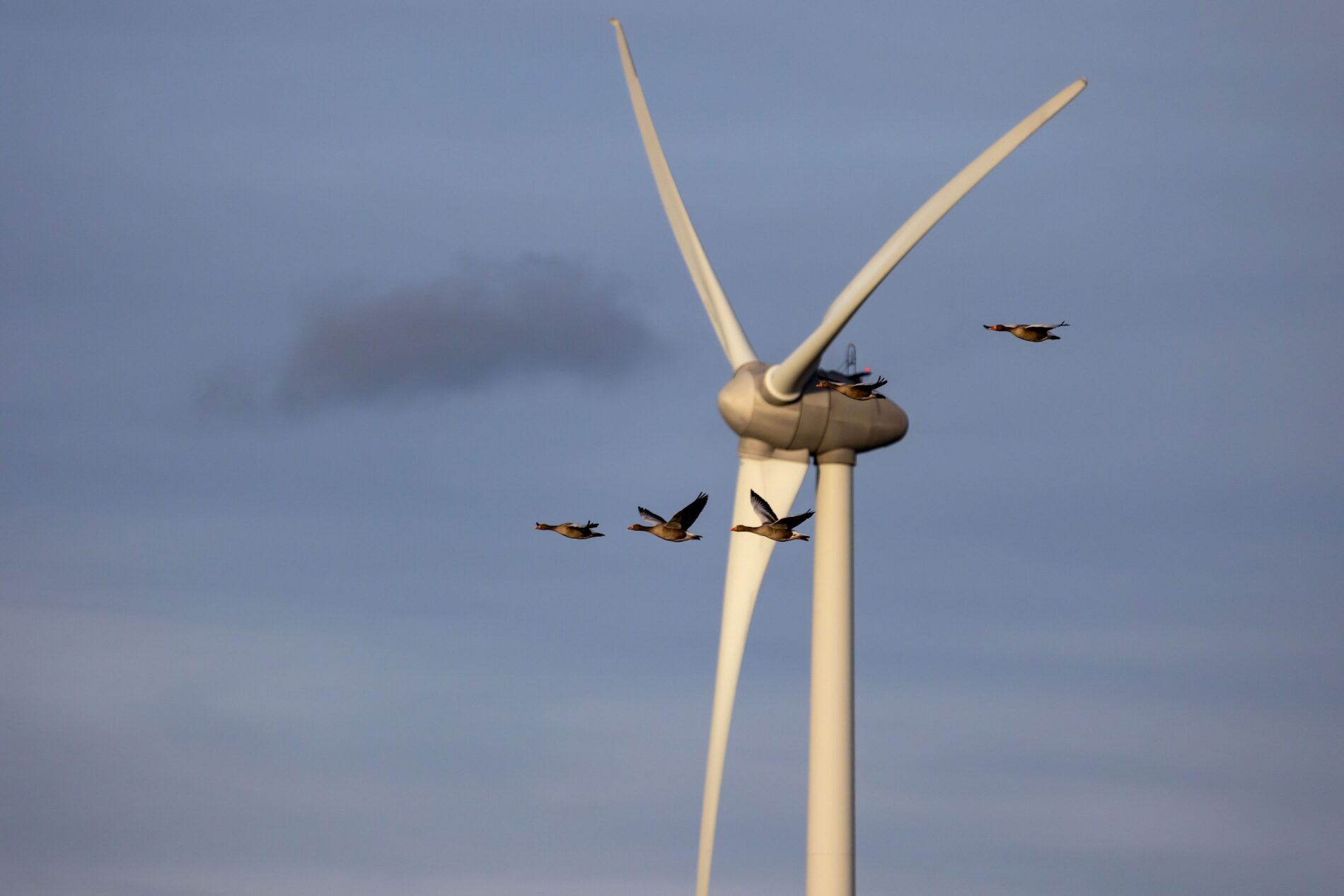
Birds are also highly endangered, but not all species are affected equally. Large birds of prey are considered particularly vulnerable because they are frequently involved in collisions and have low reproduction rates. The authors therefore consider it possible that individual species could disappear regionally. They cite the griffon vulture and the black vulture in Europe, as well as the skylark in Portugal, as examples.
Damage extends far beyond individual collisions
According to the research team, the damage doesn’t begin at the rotor. The construction of wind farms alone degrades habitats, while sensitive areas suffer particularly severely. The authors write that wind turbines are “recognized as a major factor in the loss and degradation of irreplaceable habitats that are important for nature conservation.” Regions with high biodiversity and little existing infrastructure are therefore coming under particular scrutiny.
In addition, there are indirect effects that extend far beyond individual collisions and thus place an additional burden on biodiversity. According to the study, the number of apex predators such as jaguars, jungle cats, and golden jackals can change in tropical forest clearings. This can trigger “potential cascading effects” along similar latitudes. Large rotors kill numerous insects. An analysis of the residue on the rotor blades shows that the losses can be substantial.
Warning Against Further Expansion of Wind Farms
Researchers have already identified clear indications of population declines in several species and cite specific high-risk cases from various regions. These include the grey-headed bat in North America, the lesser kestrel in France, and the black kite in South Africa. Declines in the greater mouse-eared bat have been reported in Central Europe. In California, nearly 50 percent of the bird species studied are said to be experiencing population declines caused by wind power, while the local golden eagle population in Altamont Pass appears to be stable only through immigration.
The globally threatened Egyptian vulture in Spain also shows lower survival rates, reduced population growth, and smaller numbers near wind turbines. The authors emphasize that the impact on biodiversity has so far only been documented for a few smaller animal groups. Nevertheless, these effects are “not to be disregarded.” The outlook for the future is particularly critical. The text states: “Perhaps the greatest unknown in predicting the future impact of wind energy on biodiversity lies in the extent of the potential expansion of this technology and the cumulative consequences of this expansion for species and ecosystems.”
Professor Christian Voigt also pointed to another problem in previous work. It must be examined whether the losses in insect populations contribute to the decline of entire populations “and possibly to the extinction of species.” Proponents of wind energy often point to the greater damage caused by climate change. While the authors consider this assumption “plausible,” they also describe it as “unproven.” A 2021 US report suggested using up to 13 percent of the land area for wind farms. The scientists see this as precisely where the risk of further increasing damage lies.