
By adjusting gas pressure and cyclotron heating, the team at the EAST tokamak reduced wall contact during the start-up phase, thus achieving higher plasma densities above the Greenwald limit without edge instabilities. EAST stands for Experimental Advanced Superconducting Tokamak and refers to a Chinese research facility in Hefei that operates with superconducting magnets. The tokamak is therefore providing new data for nuclear fusion, because achieving stable high density is considered a bottleneck. (scinexx: 14.01.26)
Plasma Above the Density Limit – Why the Greenwald Limit Is So Important
In magnetic fusion devices, the fusion rate increases when both temperature and density are high. However, the Greenwald limit imposes a hard limit on many tokamaks because turbulence and outbursts can begin at the edge. This density limit essentially determines whether stable continuous operation is possible.
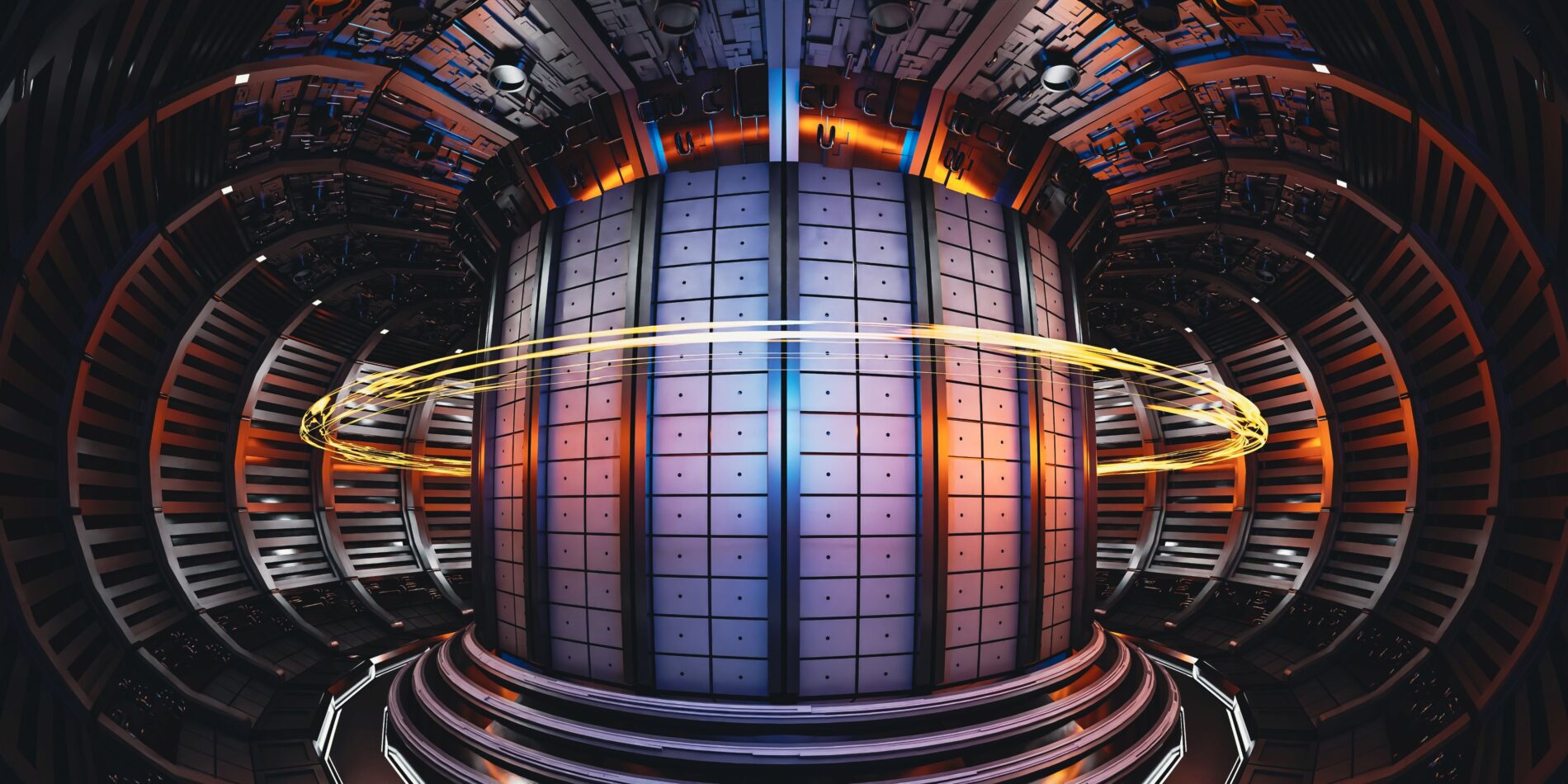
Tokamaks confine the hot medium with a strong magnetic field, and the edge remains the critical zone. If eruptions occur there, the energy confinement decreases, and components are subjected to greater thermal stress. Therefore, operating significantly above the limit is considered technically challenging because stability and material protection are interdependent.
Measurements from Hefei: Density above the limit, edge remains stable
According to the team, EAST achieved an average electron density 1.3 to 1.65 times above the Greenwald limit. At the same time, the plasma remained stable, and the team reported no edge eruptions. This brings the tokamak close to a range that is particularly relevant for future fusion reactors.
Other experiments have briefly exceeded the limit, but often without robust stability at further increasing densities. This is where EAST comes in, because the boundary conditions were adjusted to reduce losses and make operation more stable. This creates a new regime in which the fusion fuel can be compressed more densely.
Cyclotron Heating as a Key Factor: Reduced Losses During the Start-Up Phase
The key lies in the start-up phase, because wall contact and impurities can destabilize operation early on. Therefore, the team adjusted the gas pressure and optimized the cyclotron heating using electron cyclotron resonance heating. This microwave heating introduces energy precisely into the plasma and smooths profiles, thus reducing the frequency of edge disturbances.
When less material from the wall enters the plasma, the temperature remains more stable and the density can be increased in a more controlled manner. Furthermore, a smoother edge reduces energy dissipation, which improves confinement. This increases the likelihood of maintaining the high density level over extended periods.
Nuclear Fusion Assessment: Progress, but Not Yet Proof of Power Plant Viability
Ultimately, nuclear fusion hinges on the interplay of density, temperature, and energy confinement over long pulse durations. EAST had already reported a long-term operation in high-confinement mode of 1,066 seconds in early 2025, while now the density issue is being addressed. This strengthens the prospects for fusion energy, as both parameter areas must be converged.
Nevertheless, Ping Zhu soberly summarizes the core hurdle: “Achieving operation with plasma densities above this so-called Greenwald limit is therefore a challenge for magnetic confinement reactors.” At the same time, he says: “Our results point to a practical and scalable way to overcome the density limits in tokamaks and next-generation fusion devices.” The team’s next step is to test the method in high-confinement operation, as this is where the demands on stability and performance are highest.