
The North Sea Summit in Hamburg touted offshore wind as a recipe for affordable electricity. But the narrative crumbled shortly afterward. Costs are rising, the necessary grids are lacking, and the industry is demanding further government subsidies. As always, the political rhetoric sounds grander than what the system can deliver.
North Sea Summit: Big Promises – Same Weather
On January 26, the German government hosted the third international North Sea Summit. Five North Sea littoral states, Luxembourg, and NATO were present. Chancellor Merz promised affordable offshore energy for consumers and simultaneously promoted investment. Minister of Economic Affairs and Energy Katherina Reiche also linked the project to security, resilience, and reduced dependencies.
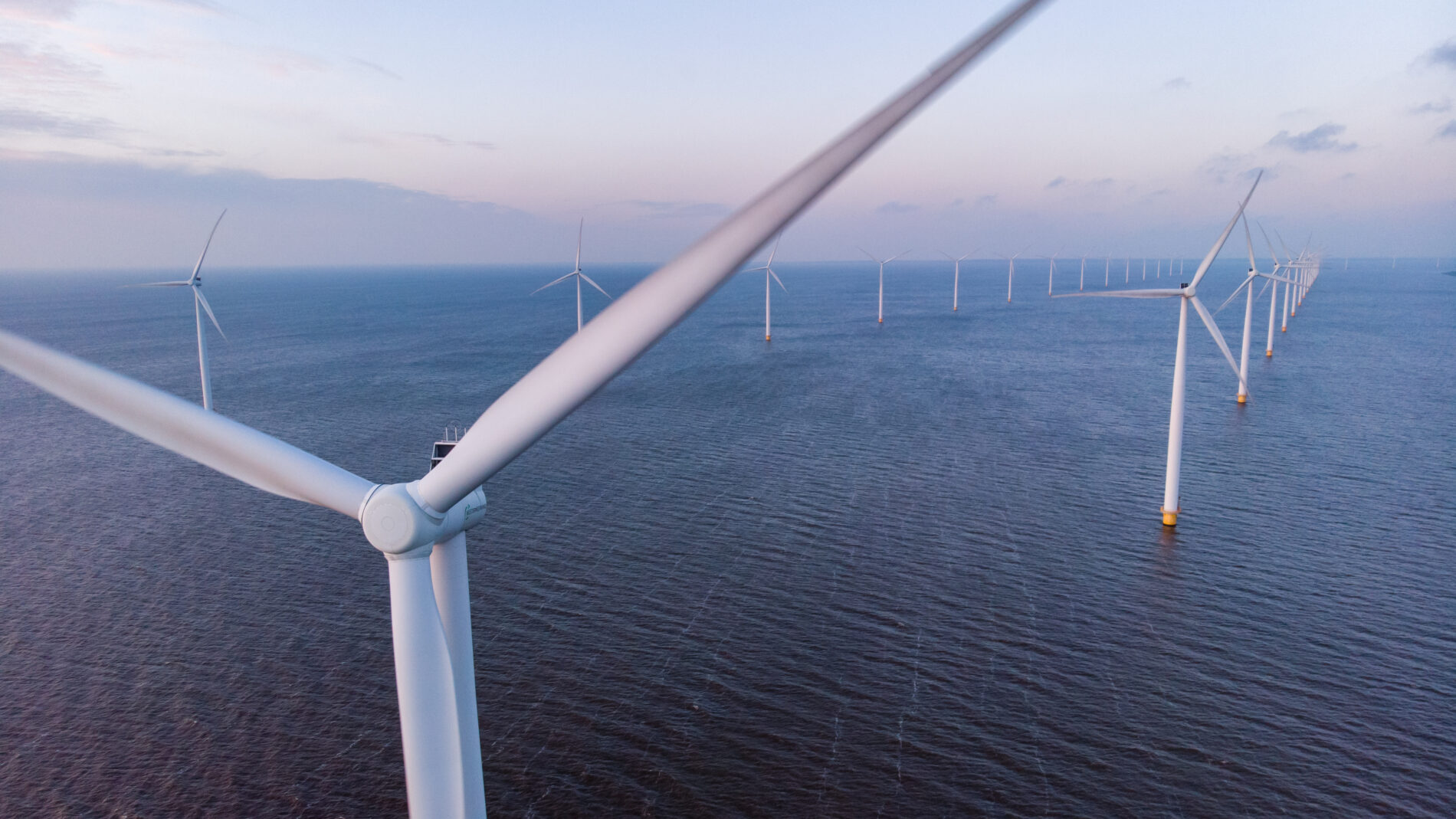
The joint declaration sets a target of up to 100 gigawatts of interconnected generation capacity. But this is precisely where the problem begins, because offshore wind power in the North Sea depends on similar weather conditions. When there is a lull, wind is often absent over large areas. This diminishes the benefits of mutual support, even though politicians tout it as a key argument. Nevertheless, the expansion plan remains politically fixed.
Two book titles immediately spring to mind in connection with the summit: “Gone with the Wind” and “Rebel Without a Cause.” This juxtaposition doesn’t seem accidental; it’s fitting for the situation. The announcements rely on blind faith in technology, even though bottlenecks are already clearly visible. At the same time, the debate ignores the fact that it’s not the installed capacity that counts, but the reliably delivered energy.
Industry warns of missed target and appeals to the government
Just one day after the summit, the German offshore wind industry sounded the alarm. It sees the target of 30 gigawatts by 2030 as clearly at risk, for two reasons. First, the sluggish grid connection is slowing down projects. Secondly, an auction in August 2025 sent a disastrous signal, as not a single bid was received.
In response, industry associations demanded a reform of the allocation process. They want to allocate land not based on the highest cost, but according to other criteria. This sounds like a relief, but it costs the state billions in revenue. Furthermore, funds that could be used for grid expansion would then be unavailable. Thus, the industry is gradually shifting the risk more and more towards taxpayers, while the profits remain with the operators.
Fixed electricity prices based on the British model
The call for fixed electricity prices, similar to the British model, goes even further. If the market price is lower, the state would pay the difference. If the market price is higher, the state would receive any surpluses, but the underlying risk remains with the public budget. This guarantees returns for the state while simultaneously requiring it to shoulder the system costs. And in the end, electricity costs still rise because the safeguard mechanism ties up a significant amount of public money.
This approach renders the summit promise of “affordable” electricity practically meaningless. Those demanding additional subsidies aren’t expecting costs to fall. Rather, the debate demonstrates that offshore wind power without subsidies doesn’t fit the political agenda. At the same time, the pressure is mounting to invent ever new instruments instead of correcting existing perverse incentives.
VKU Warns of Planning Errors and Costly System Effects
On January 28, the VKU (Association of Local Public Utilities) followed up with a scathing attack on the expansion strategy. The association is not criticizing climate protection, but rather the logic of “more gigawatts equals cheaper electricity.” Under current conditions, more offshore capacity can actually increase system costs. Therefore, what matters is not the number of turbines, but the amount of electricity that reliably reaches households and businesses at reasonable costs.
A key focus of the VKU’s criticism concerns the densification of offshore wind farms. The closer the wind farms are located, the stronger the wake and shading effects become, because the turbines at the front of the wind absorb energy from the wind. Studies, such as those from the Technical University of Dresden, report significantly lower yields in unfavorable scenarios, sometimes by around 30 percent. This increases the price per megawatt-hour, even though the installed capacity is growing on paper. Furthermore, offshore wind loses one of its advantages: high full-load hours.
The cost situation also becomes unfavorable. In a cost report for 2024, IRENA points out that offshore wind has recently become slightly more expensive again, due in part to financing, supply chains, and grid requirements. Added to this is the bottleneck onshore: without transmission and distribution networks, offshore electricity is worthless. According to the German Association of Local Public Utilities (VKU), grid expansion has lagged behind for years, by around 6,000 kilometers compared to the expansion plans. Thus, policymakers first produce turbines and then try to find ways to somehow push the electricity through the system.
Three days are enough for disillusionment
The North Sea Summit thus demonstrated one thing above all: the government talks about goals, but associations and operators point out the obstacles. Within just a few days, the industry and the VKU contradicted the message from Hamburg. This is particularly disheartening because there was apparently no clear alignment with economic reality. Or perhaps the warnings were deliberately ignored.
So, in the end, “Gone with the Wind” remains a fitting metaphor. And the phrase “For they know not what they do” also comes to mind when considering the gap between summit rhetoric and system technology. Without grids, realistic yield assumptions, and clear cost transparency, offshore wind power doesn’t act as a price brake; rather, it has the opposite effect. Instead, a new round of redistribution threatens – away from the market, towards the state, and thus towards consumers. (KOB)