
Germany plans to build twelve gigawatts of new gas-fired power plants, but a crucial point remains unresolved: there is no binding plan for the geographical distribution of these black-start capable power plants, which can restart the grid after a widespread power outage. While the federal government wants to attract investors primarily to Bavaria and Baden-Württemberg with a southern incentive, grid operators warn of dangerous gaps in the north and east. Without strategically located plants, long delays in restoring power supply are likely in a crisis, because the grid cannot restart independently everywhere. The question of location thus becomes a security-relevant problem for the stability of Germany’s electricity supply. (welt: 25.02.26)
Black-Start Capable Power Plants – Foundation for Grid Reconstruction After a Blackout
The EU Commission has approved state aid for new gas-fired power plants, so the industry is awaiting the political go-ahead. By 2031, approximately 24 large-scale power plants in the 500-megawatt class would theoretically need to be built to ensure the already initiated coal phase-out remains technically feasible. Despite this time pressure, however, a concept that strategically links the construction of these new gas-fired power plants with the requirements of grid reconstruction is lacking.
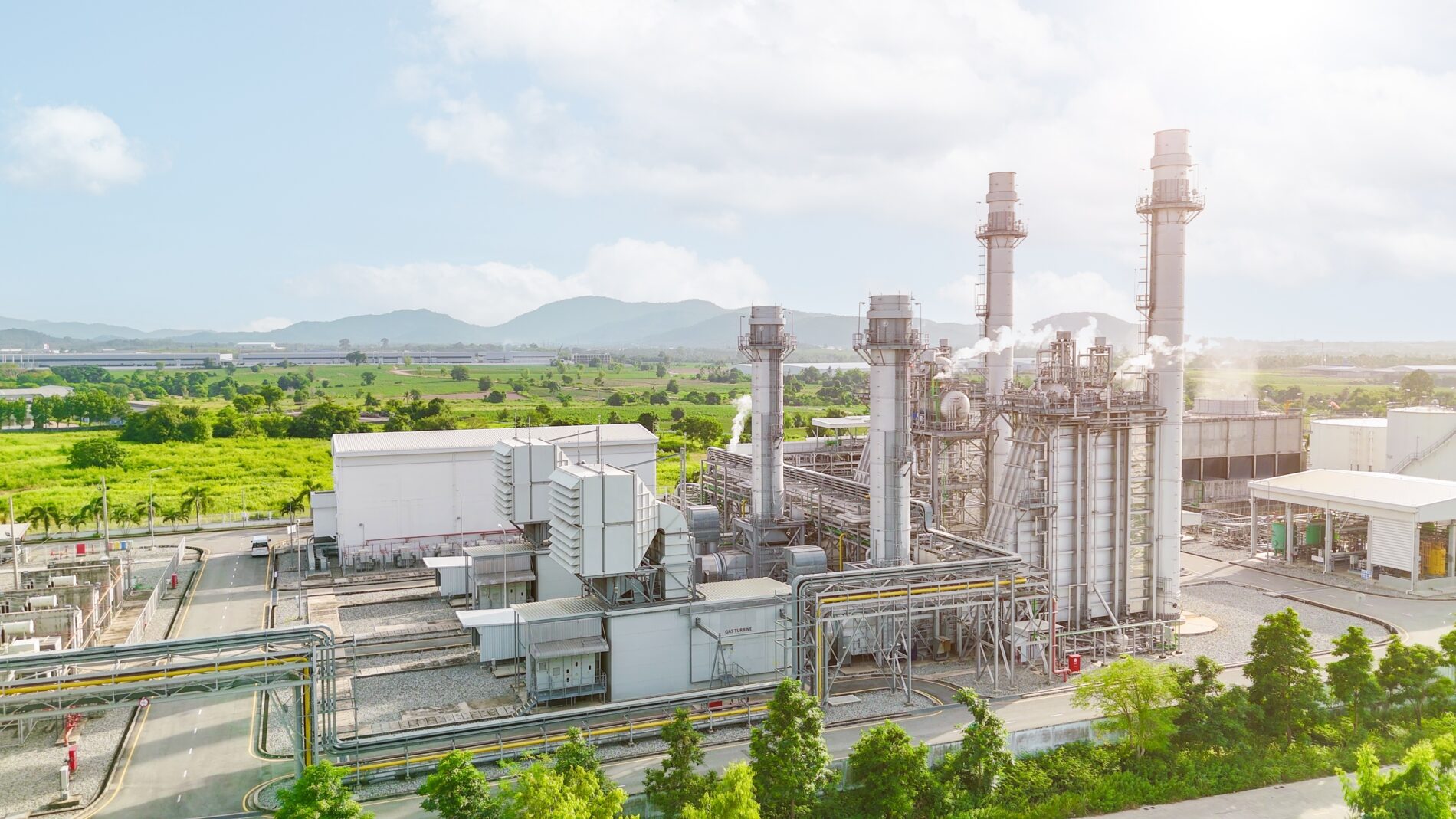
Black start capability means that a power plant can start up independently without an external power supply. It first generates voltage locally and gradually stabilizes frequency and grid parameters so that other plants can be connected. Wind and solar power plants lack precisely this capability, as they are not black start capable. After a power outage, they can only feed power back into the grid once the voltage and frequency are already within a narrow, stable range. Therefore, every energy system needs conventional or specially designed plants to handle the initial restart.
Southern Bonus Shifts Investments and Increases Risks
The planned southern bonus is intended to bring new power plants to regions that have lacked reliable power since the nuclear phase-out. At the same time, large amounts of wind power flow from northern Germany to the south, which is why the north-south transmission lines regularly reach their limits. Grid operators then have to curtail wind farms, while the costs for redispatch measures reach billions.
More power plants in the south can stabilize normal operation, but this creates a regional imbalance. If new power plants are built almost exclusively in the north, the north will lack the necessary technical starting points for reconstruction after a blackout. Yet it is precisely there that power plants designed for black start and capable of operating independently of the rest of the grid are needed.
Tenders reveal the supply gap
The transmission system operator 50Hertz specifically tendered for capacities that must be black start capable, but not a single bid was received. Dirk Biermann, Managing Director of Operations at 50Hertz, warns: “Without these power plants, there is a risk of a delayed restoration of power supply to eastern Germany as a result of a disruption in the electricity system, with potentially serious consequences for the people, the economy, and confidence in a functioning infrastructure in the region.”
In a policy letter, the company also refers to the widespread power outage in Spain in April 2025, as well as local outages in Berlin in September 2025 and January 2026. These events demonstrate how crucial a rapid grid restoration is. Nevertheless, a national plan specifying where black start capable power plants should be located in the future is still lacking.
Technical Capabilities Are Being Lost
As renewable energy expands, more and more conventional power plants are disappearing, even though they provide essential grid services. Large power plants supply instantaneous reserves for frequency stabilization and reactive power for voltage regulation. However, between 2028 and 2030, another 3,000 megawatts of lignite-fired power are slated to be decommissioned in eastern Germany, resulting in the loss of these technical capabilities.
The power plant operator Leag is therefore calling for a balanced distribution of new capacities. A study by the consulting firm Consentec shows that locations in the south could receive a financial advantage of around 50 percent due to the “southern bonus.” Without countermeasures, a concentration of power generation in the south is likely, while in the north, the conditions for a stable grid restoration will disappear.
Periods of Low Wind and the Limits of Storage Solutions
The discussion about new gas-fired power plants is often framed with reference to battery storage. However, grid operators consider this solution insufficient because extended periods of low wind and solar power occur regularly. 50Hertz recorded a total of 211 periods in 2024 in which wind and solar energy reached less than 15 percent of their installed capacity, with each period lasting longer than ten hours.
Battery storage systems are discharged after just a few hours, which is why they cannot compensate for long periods of low wind and solar power. During such phases, lignite and hard coal power plants temporarily covered more than half of the current electricity consumption. Without strategically located, black-start capable gas-fired power plants, security of supply will therefore remain incomplete in the future.
Location Policy Without a Crisis Strategy
Current planning focuses solely on relieving the grid during normal operation, but a clear strategy for emergencies is lacking. Grid operators are therefore calling for at least one-third of the new capacity to be built in the north to ensure the system’s recovery after a widespread power outage. As long as there is no binding plan for the location of black-start capable power plants, there is a risk that new plants will be built, but in the event of a crisis, they will be in the wrong place.
The weakness, therefore, lies not in the volume of expansion, but in the lack of spatial planning. Germany is creating additional power plant capacity, but it remains unclear whether the grid can be quickly and reliably restarted after a widespread power outage.