
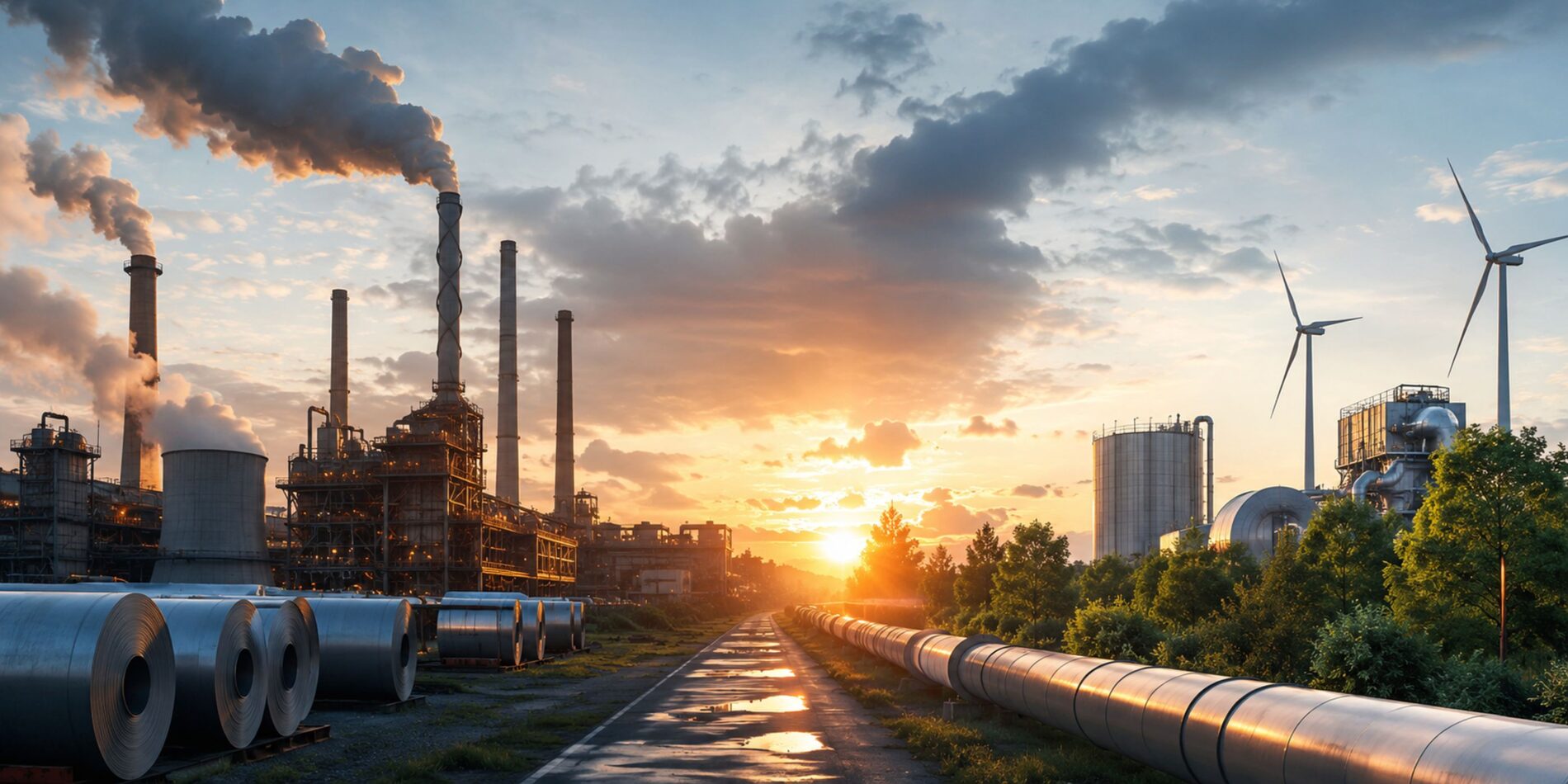
In 2026, the Federal Government will provide up to five billion euros to enable energy-intensive industries to reduce their CO2 emissions. The Ministry of Economic Affairs announced the funding program in Berlin. The initiative targets heavy industry—primarily steel, chemical, and cement plants. The backdrop to this move consists of high energy costs, stricter climate regulations, and the risk that companies might relocate their production abroad. At the same time, the government is relaxing key conditions of the program; companies will be granted more time to reduce emissions, while new technologies—such as carbon capture—will receive funding for the first time. (reuters: 05.05.26)
Relaxed Climate Regulations Aim to Ease Burden on Industry
The funding is based on climate protection contracts with a term of 15 years. Under this arrangement, the state covers a portion of the additional costs associated with climate-friendly production processes. Consequently, companies are intended to remain competitive despite high investment requirements. Furthermore, the government aims to safeguard industrial sites within Germany.
Following the first funding round in 2024, the Ministry of Economic Affairs adjusted several requirements. Companies are now required to reduce their emissions by 50 percent only after four years. Previously, a three-year deadline applied, requiring a 60 percent reduction. Furthermore, the target for the final program phase was lowered from 90 to 85 percent.
New Funding for CO2 Storage and Industrial Heat
For the first time, projects involving CO2 capture and storage are also eligible to receive government subsidies. The cement industry and specific sectors of the chemical industry are expected to benefit particularly from this measure. These sectors are considered difficult to electrify; consequently, the government is seeking additional avenues for reducing emissions.
Projects focused on climate-friendly industrial heat will also be eligible for funding going forward. With this move, the government is responding to demands from the business community. Many companies had criticized the previous climate requirements as being economically unfeasible to implement. At the same time, Berlin is seeking to safeguard its industrial base against competition from China and the USA.
Greater Planning Certainty Despite New Conditions
The Ministry of Economic Affairs has also placed limits on potential repayment obligations for companies. This rule applies in cases where market conditions improve or where climate-friendly production becomes more cost-effective. Additionally, the government has clarified the regulations regarding project delays and cancellations. This provides companies with greater planning certainty for investments running into the billions.
Applications are open exclusively to companies that fall under the European Union Emissions Trading System (EU ETS). This includes large-scale industrial facilities characterized by particularly high CO2 emissions. The deadline for submitting bids is September 7, 2026. In taking these steps, Berlin is more closely aligning its climate objectives with the protection of industrial production.
Industrial Policy Moves Further into the Spotlight
The Federal Government is increasingly linking climate policy with industrial policy. High electricity prices and weak economic data are weighing heavily on large segments of German industry. At the same time, pressure is mounting across Europe to retain production capacities within the domestic economic sphere. Consequently, Berlin is now placing greater emphasis on state support rather than on imposing additional burdens.
A shift in direction is also becoming apparent at the EU level. The European Commission is currently examining further relief measures for energy-intensive industries within the context of carbon emissions trading. This could allow companies to receive additional free emissions allowances. As a result, the debate surrounding competitiveness and climate protection continues to gain significance.