
Shortly before the planned meeting between US President Donald Trump and Chinese President Xi Jinping on May 14 and 15, opposition is mounting in the United States against opening the market to Chinese automobiles. The automotive industry, labor unions, steel manufacturers, and lawmakers from both parties are warning against imports, the establishment of manufacturing plants, and connected vehicle technology from China. This backlash was triggered by Trump’s earlier remarks in Detroit suggesting that Chinese manufacturers could build factories in the U.S. At the same time, critics fear the influx of low-cost models, unauthorized data access, state-subsidized competition, and downward pressure on wages. Those primarily affected would be U.S. automakers, suppliers, steel companies, and industrial jobs. (berliner-zeitung: 11.05.26)
Congress Seeks to Halt Market Opening for Chinese Vehicles
Consequently, political opposition is coming from both parties. Senator Elissa Slotkin of Michigan is urging Trump not to conclude an agreement regarding Chinese automotive investments. Together with Republican Senator Bernie Moreno of Ohio, she is advancing a bill concerning the security of connected vehicles.
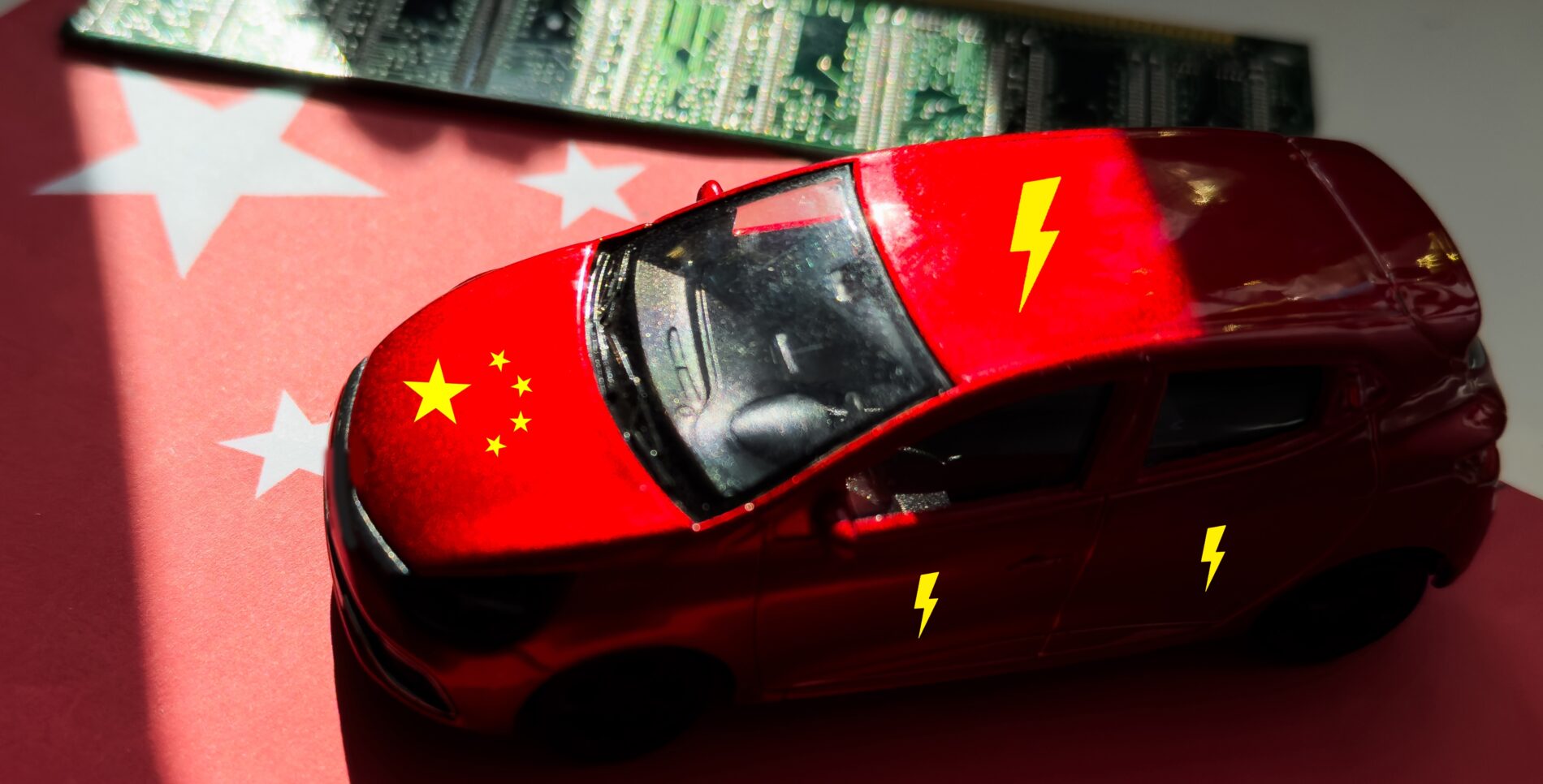
The proposed legislation aims to ban the import, sale, and operation of certain vehicles from China. Furthermore, it targets the software and data systems embedded in connected cars. At the same time, a similar initiative—one that goes even further—is currently before the House of Representatives.
China’s Exports Intensify the Pressure
However, concerns are mounting for reasons extending beyond the political climate in Washington. China’s automotive market has been sluggish for months. In April, passenger car sales there fell for the seventh consecutive month, dropping by 21.6 percent to 1.4 million vehicles.
Concurrently, export volumes are surging. China’s passenger car exports jumped by 80.2 percent year-on-year in April. For electric vehicles and plug-in hybrids, the increase was even more pronounced, reaching 111.8 percent. Consequently, the U.S. industry fears that Chinese manufacturers are offloading their excess production capacity onto foreign markets.
Market Liberalization Could Deal a Massive Blow to U.S. Factories
A look at Europe and Mexico serves to underscore these warnings. In the EU, the market share held by Chinese brands doubled last year, reaching approximately six percent. In Mexico, moreover, 34 Chinese brands are currently active, collectively capturing a market share of around 15 percent.
The price gap is therefore regarded as a critical risk factor. A Geely EX2, for instance, sells for around $22,700 in Mexico. In contrast, the most affordable Tesla Model 3 in the U.S. is priced at $38,630. Any opening of the market could channel this pricing pressure directly into the U.S. domestic market.
Government Denies Auto Deal with China
The US government, however, is attempting to quell the debate. Trade Representative Jamieson Greer stated in April that automobiles were not on the agenda for the Beijing summit. Secretary of Commerce Howard Lutnick likewise ruled out Chinese investment in the US automotive sector.
Nevertheless, skepticism remains high. The summit also covers trade, Taiwan, the war in Iran, nuclear weapons, artificial intelligence, rare earth elements, as well as potential purchases of Boeing aircraft and agricultural goods. Consequently, industry representatives fear that opening the market to automobiles could become part of a larger package deal.