
As of April 1st, Lower Saxony has granted Vermilion Energy Germany three permits for the commercial exploration of hydrocarbons. These include the “Unterweser I” field in the districts of Osterholz, Rotenburg (Wümme), and Verden, east of Bremen. This does not yet mean that production or drilling will commence. However, the company has been granted the fundamental right to explore for potential natural gas deposits in these areas. According to the State Office for Mining, Energy and Geology, the impetus for this is the geopolitical situation and the goal of making greater use of domestic raw materials. (lbeg.niedersachsen: 31.03.26) At the same time, local resistance is growing because critics see dangers to nature, water and agriculture. (weser-kurier: 31.03.26) The move is also politically sensitive because the search for domestic gas is being expanded precisely at a time when fracking in Germany was considered a red line for years, while at the same time more imported LNG was entering the country.
Search rights granted, no funding approved
The LBEG’s decision concerns three fields totaling nearly 2,895 square kilometers. Celle I and Uelzen II will operate until March 31, 2029, while Unterweser I is limited to March 31, 2028. This latter field, however, is attracting particular attention in the Osterholz, Worpswede, and Grasberg area, as a conflict is already arising there regarding potential future projects.
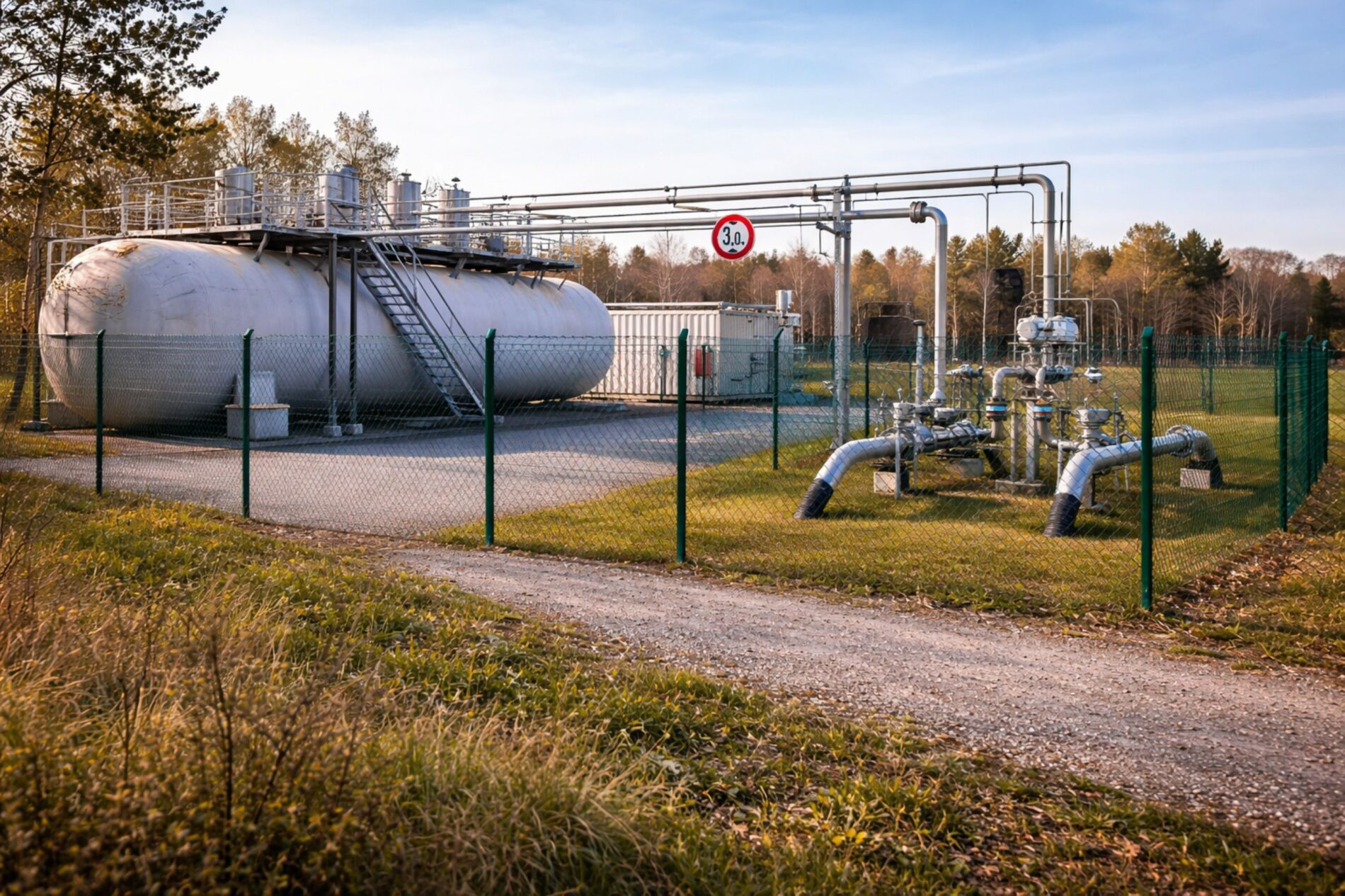
The distinction under mining law is therefore crucial. The permits now granted only give Vermilion the right to prepare and, in principle, conduct exploration. Actual exploration activities, however, may only begin once mining-related operating plans have been approved. This requires a separate procedure involving further public participation.
The political implications run deeper
The LBEG (Lower Saxony State Authority for Mining, Energy and Geology) openly justifies the move with concerns about security of supply and geopolitical uncertainty. Agency President Carsten Mühlenmeier explained that, given the current situation, it makes sense to intensify the search for new natural gas deposits. The agency also points out that conventionally extracted natural gas from Lower Saxony still covers about five percent of Germany’s demand and that around half of all households continue to heat with natural gas.
However, this is precisely where the political contradiction lies. For years, the debate about domestic gas production in Germany has been particularly heated whenever it has been linked to fracking. While federal policy has repeatedly limited new domestic production and effectively ruled out fracking, the importance of LNG imports has simultaneously increased. The decision in Lower Saxony therefore brings an old question back into focus. Why is domestic exploration considered politically sensitive, while imported gas is treated as unavoidable? This tension makes the case significant beyond the region. The LBEG (Lower Saxony State Authority for Mining, Energy and Geology) statement itself explicitly refers to exclusively conventional natural gas production in Lower Saxony. It presents this as a contribution to reducing import dependency.
Resistance Grows Early in Grasberg
In the Osterholz and Grasberg area, the search for potential gas deposits is already encountering resistance. The conflict thus begins long before any conceivable extraction, because many residents view the granting of permits as the first step toward future industrial use. This is precisely why every further approval stage is likely to remain politically contested.
The real news, therefore, is not that Lower Saxony is opening new gas fields. The news is that the state is once again expanding its search for potential deposits. This reignites an energy policy dispute that was never truly resolved. Formally, it is initially only about exploration, but politically it is about much more. It is about the credibility of German energy policy, about the management of domestic resources, and about the question of which risks should be accepted locally in the future.