
The war in Iran is now hitting Europe’s gas supply hard, as several LNG tankers originally destined for Europe have changed course and are now sailing to Asia. The triggers are the de facto closure of the Strait of Hormuz, the temporary disruption of LNG shipments from Qatar, and the sharp rise in prices on world markets. This is particularly evident in the case of the LNG tanker “BW Brussels,” which was carrying liquefied natural gas from Nigeria and was initially supposed to call at France, but then turned around and continued on to Asia via the Cape of Good Hope. This is not an isolated incident; according to ship data, at least three LNG shipments relevant to Europe have been diverted. For Europe, this means higher procurement costs, fiercer competition for available volumes, and increasing pressure on storage facilities, industry, and consumers.(reuters: 06.03.26)
Europe is losing access to the open sea
The case of the “BW Brussels” was just the beginning, while the LNG tankers “Simsimah” and “Clean Mistral” have also changed their routes to Asia. Two of these cargoes came from the USA, one from Nigeria. All three were previously considered relevant to the European market before Asian buyers seized the cargoes.
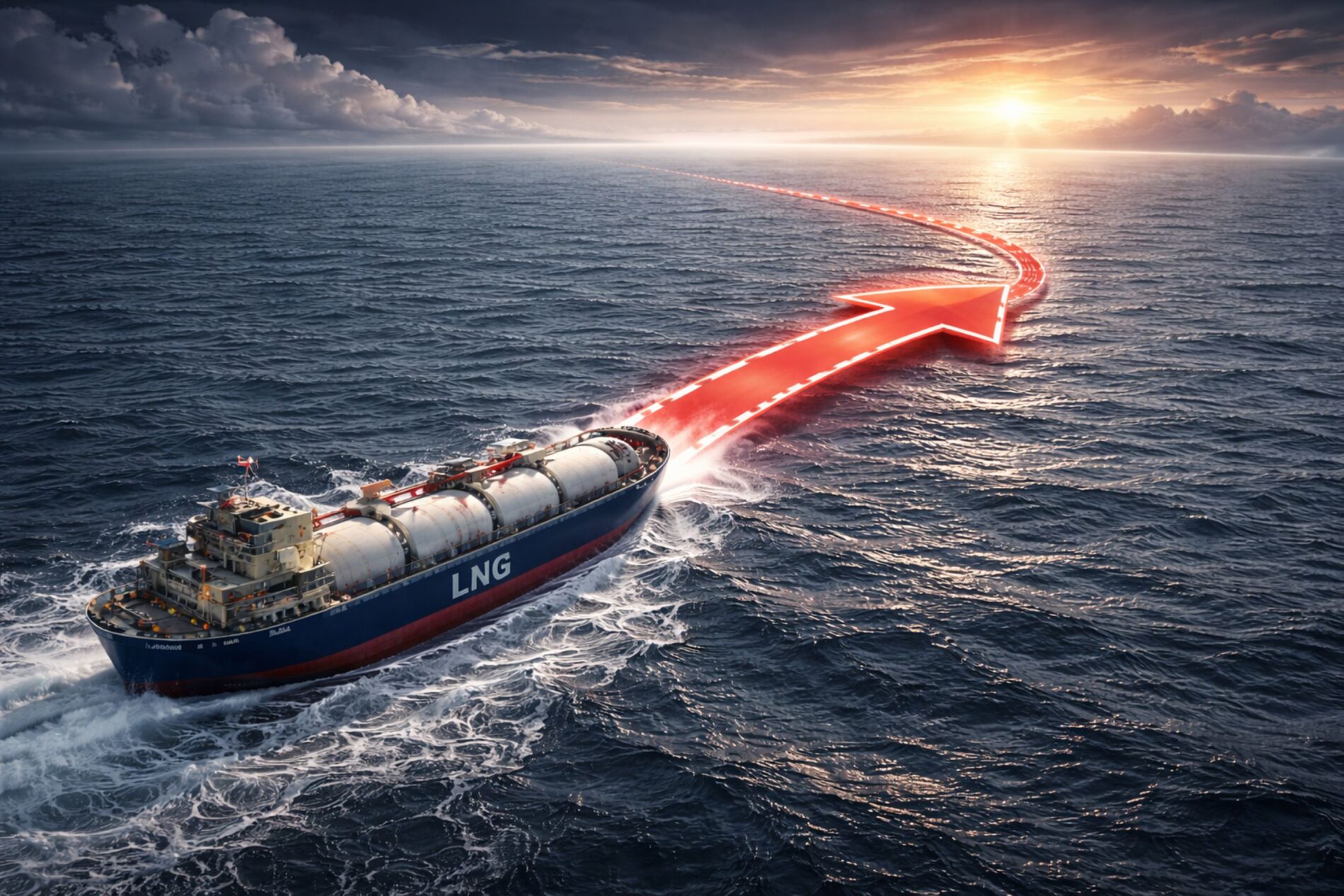
This is critical for Europe because LNG is not tied to a single continent. The cargo travels to wherever the highest price is paid. This is precisely why European buyers are still losing deliveries even when the tankers are already en route to the Atlantic. The market decides in real time, and Asia is currently often offering more.
Asia is driving up prices and diverting LNG tankers from the Atlantic region
Price pressure in Asia is particularly high because many countries there are more dependent on LNG deliveries by ship. If, at the same time, supplies from Qatar dry up and the Persian Gulf remains unstable, Asian importers are aggressively seeking alternatives. Therefore, they are even diverting cargoes from the Atlantic region, even though Europe also urgently needs these quantities.
This has direct consequences for Europe, as the gas price reacts immediately. Reuters reported that Europe’s market is under additional pressure because the EU needs around 700 LNG shipments for storage this summer. That would be about 180 more shipments than last year. Every diversion, therefore, intensifies the competition for available quantities.
The damage extends far beyond individual ships
Three diverted LNG tankers may seem manageable at first glance. However, the symbolic impact is far greater because they demonstrate how quickly Europe is falling behind in the LNG market. As soon as Asian buyers pay higher prices, the EU itself loses already planned shipments. This makes supplies not only more expensive but also more uncertain.
Added to this is the tense situation around Strait of Hormuz. Argus Media reported at the end of February that at least nine LNG tankers had changed course in the vicinity of the strait. While this wasn’t a direct diversion to Asia in every case, it illustrates the massive pressure already placed on security and transport routes. While Europe needs more LNG, the risk to supply chains, prices, and availability is simultaneously increasing.
Europe’s New Dependence Becomes a Problem
Europe has broken away from Russian gas, but this has not made it independent. Instead, the continent is now more reliant on LNG from the US, Qatar, and other exporting countries. This very structure is now becoming a weak point, because global crises, price differences, and geopolitical disruptions immediately impact the European market.
The diverted tankers are therefore more than just a logistical detail. They mark a dangerous turning point, because Europe is no longer automatically the preferred destination in the competition for LNG. If Asia pays more, the gas will flow east. For the EU, this means less security, higher costs, and an energy market that reacts even more brutally in a crisis than before.