
Europe’s gas supply is coming under acute pressure ahead of next winter because gas storage facilities are currently at a historic low and the Iran crisis is simultaneously threatening key LNG supply routes. The triggers are Iran’s closure of the Strait of Hormuz and the cessation of production at Qatar’s largest LNG export complex. Europe will have to purchase significantly more gas this summer to fill its storage facilities than last year. The main risk factor lies in the heavy reliance on liquefied natural gas (LNG), as Europe is increasingly dependent on the global market following the withdrawal of Russian gas imports. The consequences are already measurable: approximately 180 additional LNG shipments will be needed, prices are rising sharply, and filling storage facilities will cost billions more. (berliner-zeitung: 10.03.26)
Europe’s gas storage facilities are starting the winter with dangerously low reserves
The situation is tense because storage levels in Europe are far below those of previous years. On average, reserves at this time of year over the past five years were around 45 percent. Currently, however, the figure across Europe is only about 29 percent, which is why suppliers have to procure significantly more gas for the winter.
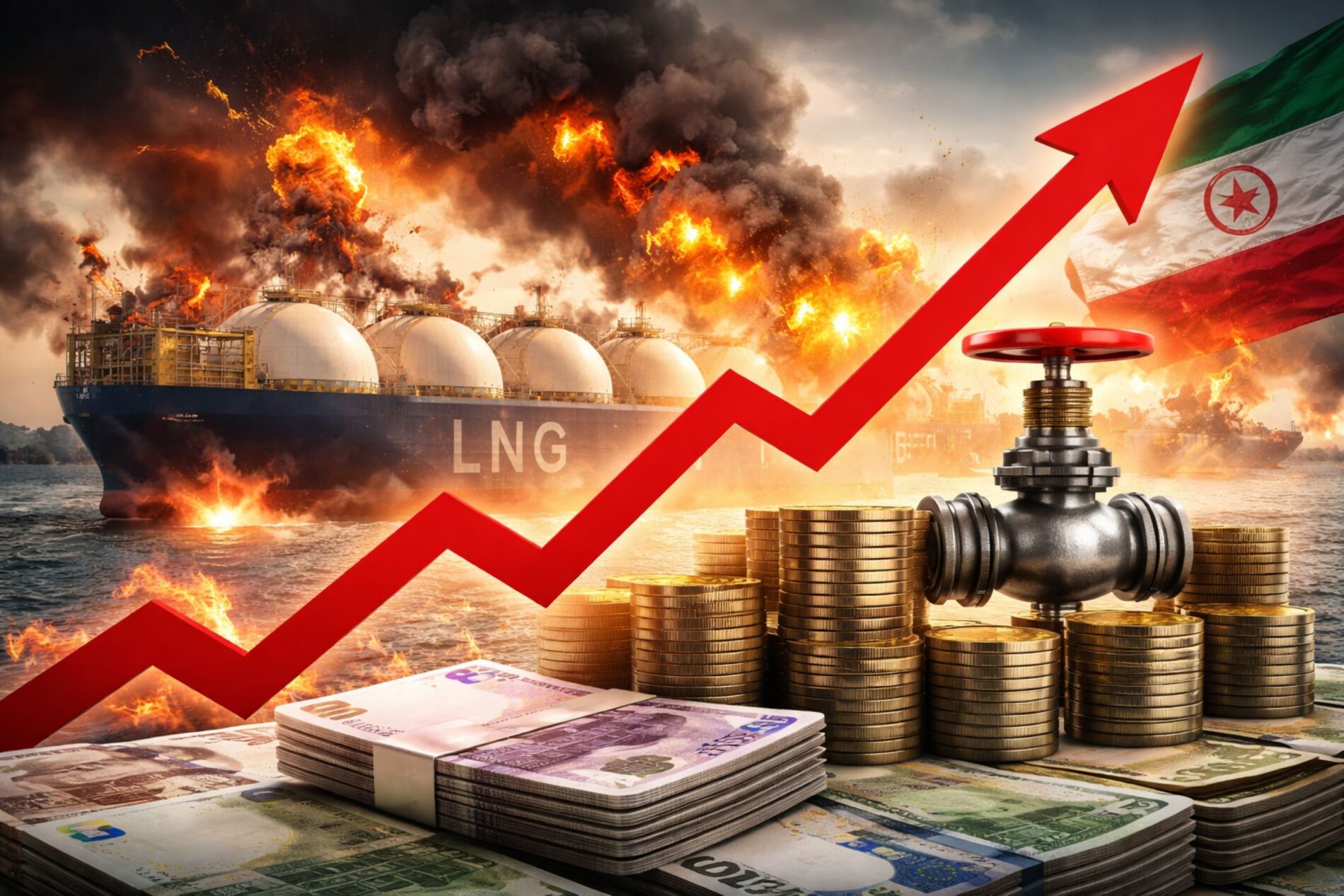
According to analysts’ calculations, Europe will need around 67 billion cubic meters of gas for its storage facilities this summer. This corresponds to approximately 700 LNG truckloads, 180 more than last year. While some of this volume will come via pipelines from Norway, Algeria, and to a lesser extent from Russia, the majority is expected to be supplied by LNG once again.
LNG is becoming increasingly important for filling Europe’s storage facilities
The shift in gas supply is significant, as LNG has gained considerable importance for Europe. In 2021, the share of liquefied natural gas in European gas supplies was around 19 percent. Last year, however, this figure rose to more than 43 percent, which is why disruptions in global LNG trade are now hitting Europe much harder.
This is precisely why developments in the Middle East are so serious. When important export routes are blocked and major production facilities simultaneously shut down, procurement, prices, and security of supply are all put under pressure. Europe must therefore not only buy more gas, but also secure this gas for filling its storage facilities in a significantly more challenging market environment.
Iran crisis drives up prices and risks simultaneously
Since the beginning of the conflict, prices for pipeline gas and LNG have risen sharply. The European reference gas price (TTF) climbed at times to around €59 per megawatt-hour. This was the highest level since the 2022 energy crisis, while the market is reacting with increasing nervousness to new disruptions.
Should the problems in the Strait of Hormuz persist for more than a month, the situation could worsen. Analysts warn that Europe’s storage capacity could then fall to a historic low by the end of winter. Those who start filling their storage facilities too late also risk a bottleneck in transport capacity, because available LNG tankers and supply flows would no longer be sufficient for Europe. This would also result in lower storage levels until the end of October, thus shrinking the safety reserve before the heating season.
Shortages of LNG drastically increase storage costs
In the event of a prolonged disruption, analysts estimate that around seven million tons of LNG could disappear from the global market. Due to competition from Asia, Europe would effectively be short about 5.5 million tons. Prices are then likely to rise well above 60 euros per megawatt-hour, while high prices simultaneously make storing gas less attractive.
The financial consequences are already enormous. The costs for the additional 180 LNG truckloads that Europe needs to fill its storage facilities rose within just a few days from the equivalent of around 5.8 billion euros to approximately 8.7 billion euros. For the complete summer filling of 67 billion cubic meters, the costs even increased by around 11.7 billion euros to 34.5 billion euros.
Global competition for LNG is intensifying
Europe could obtain additional quantities primarily from the USA, which is already the region’s most important LNG supplier. At the same time, Russia could also benefit from the crisis if deliveries from Qatar are disrupted for an extended period. While Europe has reduced its previous dependence, it has been replaced by a new vulnerability due to the global LNG market.
The already tense situation is also demonstrated by several tankers destined for Europe that have changed their routes to Asia on the open sea. LNG is sold globally to wherever the highest price can be obtained, meaning Europe is competing directly with Asian buyers for available supplies. Therefore, supply depends not only on domestic demand but also on the prices offered by other regions of the world.