
Heat, drought, and a jellyfish swarm have crippled around one-fifth of France’s nuclear power generation. On Wednesday, 20.4 percent of the country’s reactor capacity was offline, according to AFP calculations based on data from the nuclear utility EDF. In addition to a lack of cooling water caused by the prolonged drought, the primary cause is a massive influx of jellyfish in the English Channel, which is interfering with the seawater pumps at a local nuclear power plant.
As a result, three of the six reactors at the Gravelines nuclear power plant in northern France had to be shut down. Another reactor was powered down to half capacity, EDF announced on Tuesday. In addition, another reactor is currently offline for maintenance work anyway. Located in Normandy between Calais and Dunkirk, Gravelines is Western Europe’s largest nuclear power plant.
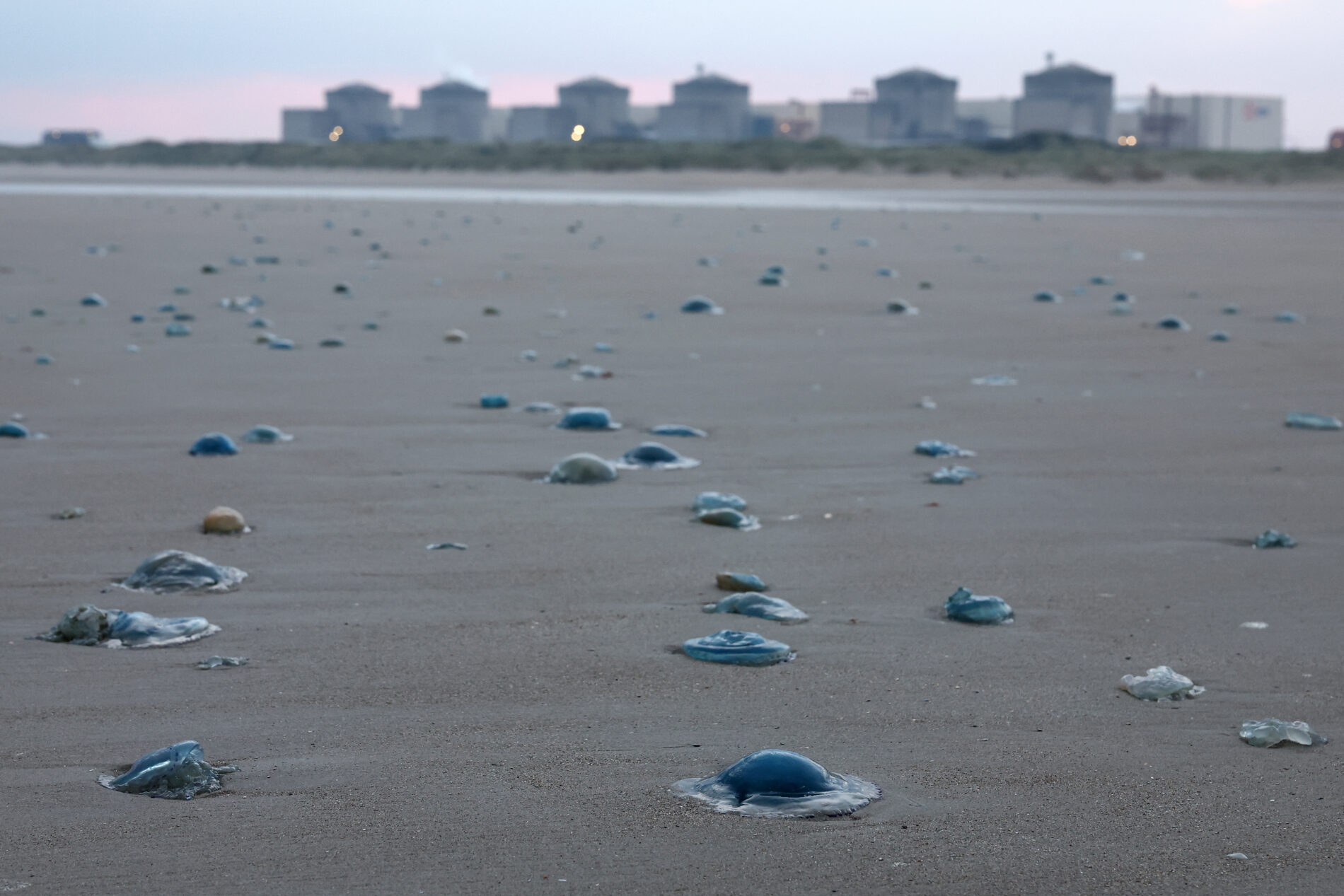
Image: Sameer AL-DOUMY / AFP
The large number of jellyfish along the coast of northern France is a regular, seasonal phenomenon. However, according to experts, reports of massive swarms in the area are becoming more frequent each summer. Jellyfish populations are increasing worldwide, driven in part by rising sea temperatures linked to global warming. Overfishing and plastic pollution are also contributing factors.
France meets around 70 percent of its electricity needs through nuclear power plants. In total, the country has 57 reactors. Eight of them are currently out of service, and five others are not operating at full capacity. Aside from the Gravelines plant, the shutdowns or production cutbacks at other reactors are due to extreme heat and drought, which deprive the plants of the water needed for cooling.
Author: AFP – pe/oer – Translated by Blackout News
Sources: AFP Press Portal